AAIF: A “Standardization Revolution” in AI History | CEO Insights
The Agentic AI Foundation (AAIF) is here, and in a rare move, OpenAI, Google, Anthropic and other tech giants have joined forces to build open-source standards for agentic AI. This piece unpacks why AAIF was formed, its core projects, and what it means for the future AI ecosystem.
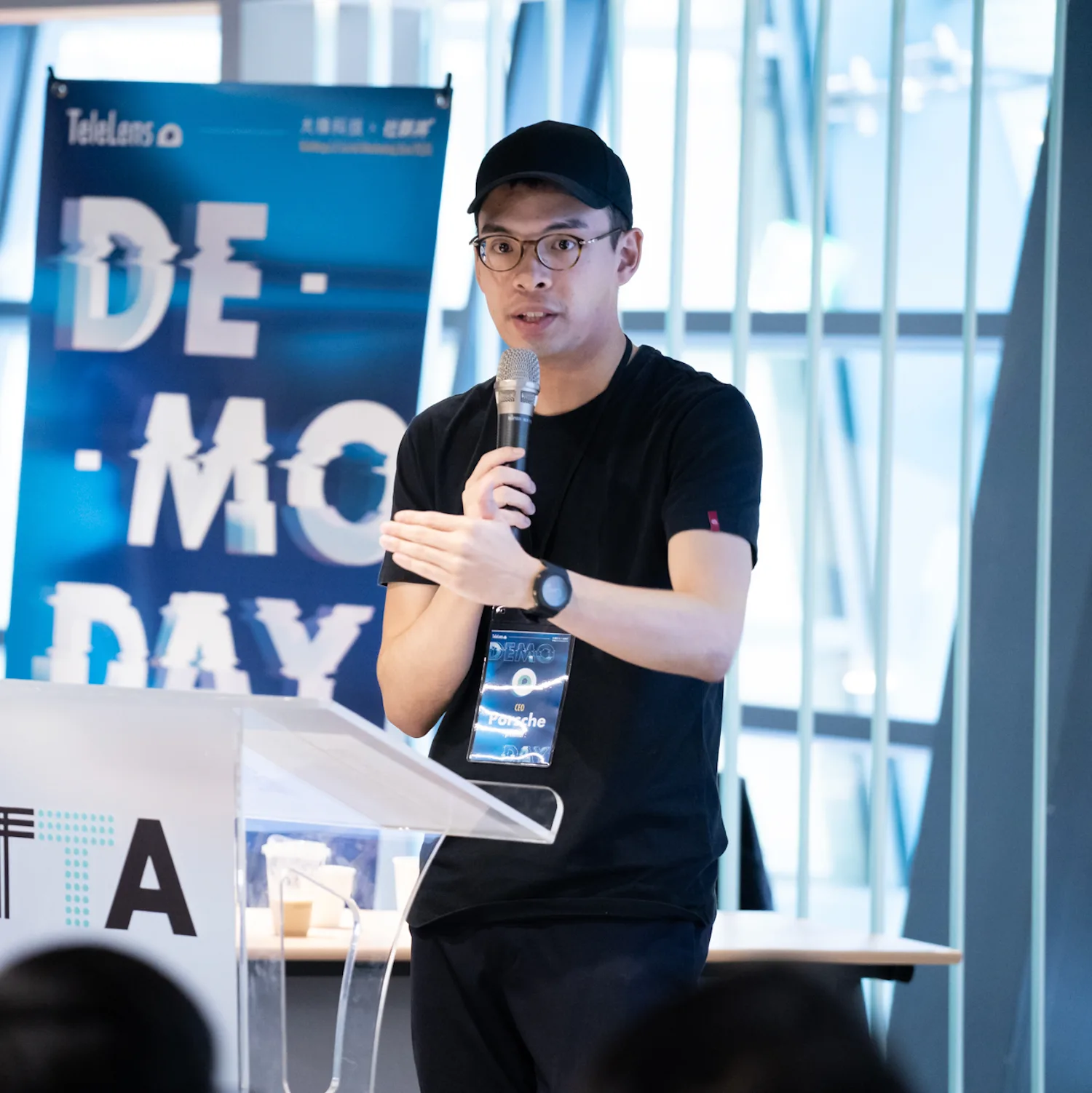 Porsche TsaiCEO

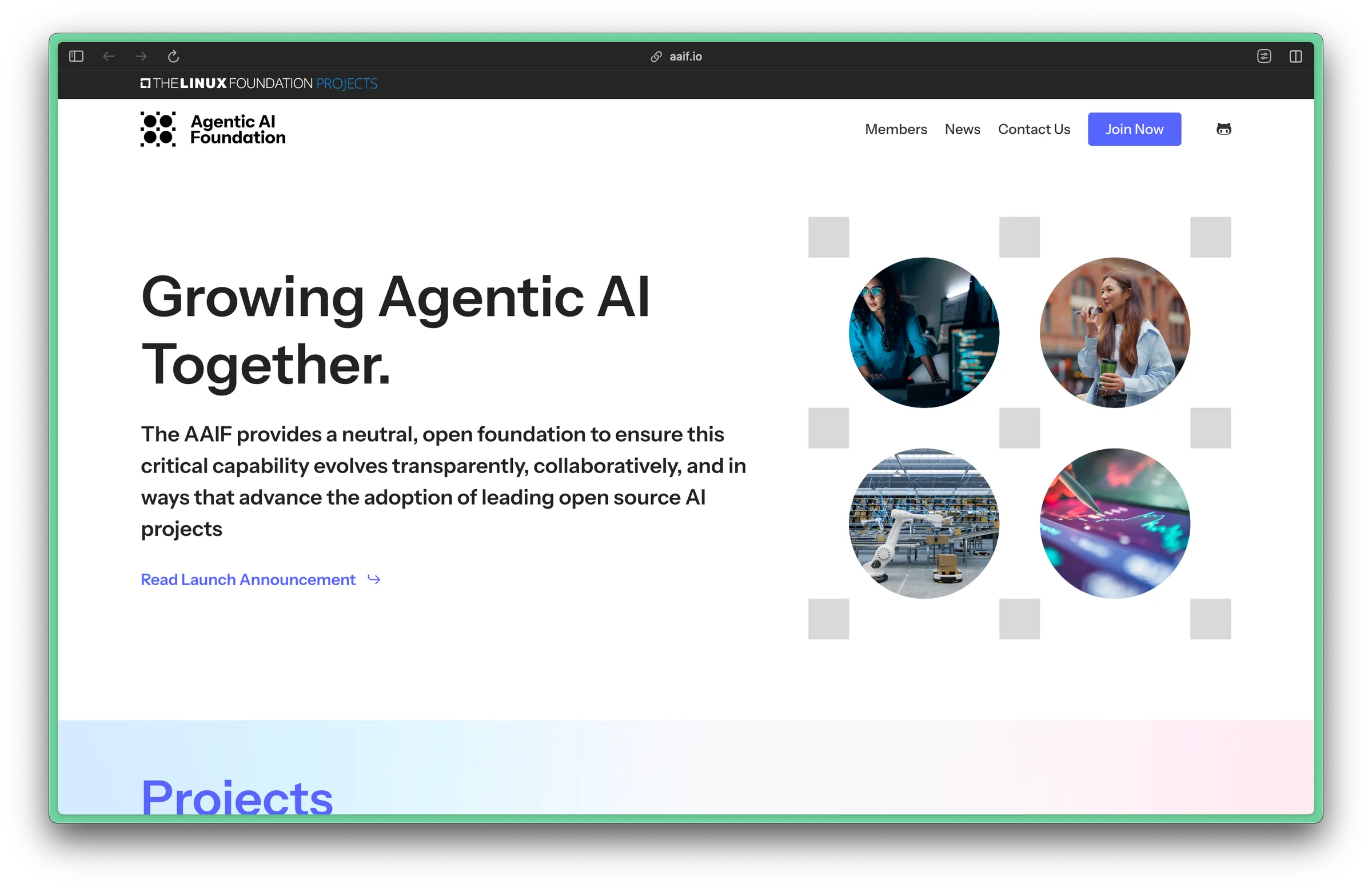
In early December 2025, with winter still lingering, the tech world quietly settled on something you rarely see: a deal where everyone sits at the same table. Over the past year, the world's largest and most influential AI companies—fierce rivals who rarely agree on anything—chose an unusual path under the roof of the Linux Foundation. Together, they formed a brand-new open-source consortium: the Agentic AI Foundation (AAIF).
AAIF's mission sounds simple, but it runs deep. As AI rapidly shifts from “chatting and suggesting” to proactive, task-executing agentic AI, the foundation aims to build a neutral, open, standardized ecosystem in which AI from different companies, technologies and platforms can work together safely and transparently.
Rivals Building Open Standards Together
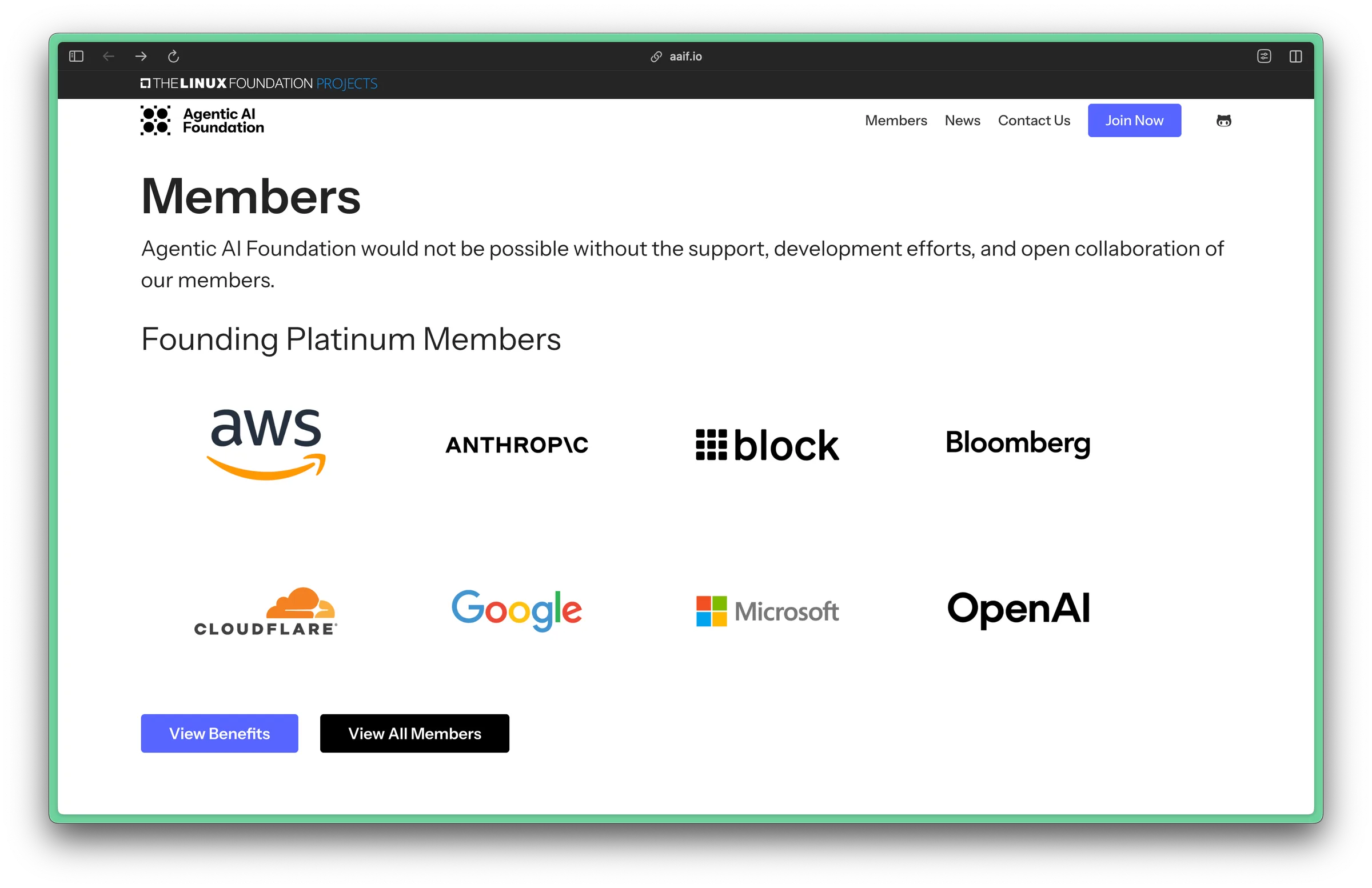
What stands out most is the guest list: OpenAI, Anthropic, Block (Square's parent company), Google, Microsoft, AWS, Bloomberg and Cloudflare, among other industry heavyweights. Companies that compete head-to-head on AI technology and market share have committed to open-sourcing their technology together, with the Linux Foundation acting as a neutral platform to govern it.
Three technical projects sit at the heart of the new consortium:
- Model Context Protocol (MCP): Originating at Anthropic, MCP is a core protocol that lets AI models “understand and connect to external tools, data sources and workflows.” It started as a fix for connecting Anthropic's own products and tools, but it has since become a key interoperability standard across the industry.
- Goose: An open-source AI agent framework contributed by Block. Designed to be local-first and extensible, it lets developers build more sophisticated agent workflows.
- AGENTS.md: A universal file format proposed by OpenAI. Think of it as a clear “operating manual” for AI agents, helping them understand the conventions and expected behavior of any code repository they work in.
These three are the pillars of AAIF—and the language of future “AI agent interoperability.” Housing them in impartial, community-led infrastructure keeps any single company from monopolizing them and ensures that developers and researchers alike can contribute and build on them.
Beyond Technology: The Public Interest
AAIF is more than a technical agreement. It reads like a collective manifesto for the road AI will take.
Over the past two decades, the internet evolved from closed platforms into a vast, interconnected network built on open standards. A similar turning point is now emerging in AI. Once AI agents can complete tasks on users' behalf, connect to tools automatically and even collaborate across platforms, the lack of a shared standard could let each company wall off its technology, leaving a fragmented ecosystem where no one trusts anyone else. AAIF is a direct answer to that risk of fragmentation.
One developer, who asked not to be named, put it this way: “We used to write a different connector for every platform. Now we have a common language—it's like the early web going from no standards to HTTP. Suddenly everything is possible.” That shift means AI's power will no longer be boxed in by boundaries or formats; it can truly work across systems.
Rooted in Open Source, Built for the Future
AAIF is built on the spirit of open source. Shared technology, public standards and transparent governance are the foundation of collaboration. The Linux Foundation, a nonprofit that has long supported the Linux operating system and countless open-source projects, is now carrying those values into a new era of AI.
It's hard not to think back to the early internet. No one could have predicted what email, browsers or the entire internet economy would become—until the standards were in place and the picture slowly came into focus. One day, AAIF may well be seen as a watershed moment in AI history. As agentic AI becomes part of everyday life, these open-source standards could be what makes it safe, trustworthy and ubiquitous.
From startup labs to global information infrastructure, the power of technology often comes from sharing and consensus. The AAIF story is still unfolding. It isn't just a compromise among tech companies; it's an experiment in serving the public interest through global collaboration.
Someday, when AI agents are truly managing our schedules, getting our work done and coordinating complex tasks across platforms, we may realize that the most profound change didn't come from any single company or product. It came from the moment a group of competitors chose to build a common language together.
Do you see AAIF as a wall built by Big Tech, or as a set of standards that will make AI more accessible? Let me know in the comments.