What Is Harness Engineering? A Complete Guide to Adopting AI Agent Frameworks in the Enterprise | CEO Insights
Harness Engineering is the systems-engineering discipline of designing task boundaries, tool permissions, and collaboration architecture for AI agents, so they can carry out multi-step tasks autonomously within a controlled framework. This article walks through its three stages of evolution, real enterprise results (Rakuten cut delivery cycles by 79%, TELUS saved 500,000 hours), and how OakMega uses 100+ agents to boost efficiency fivefold.
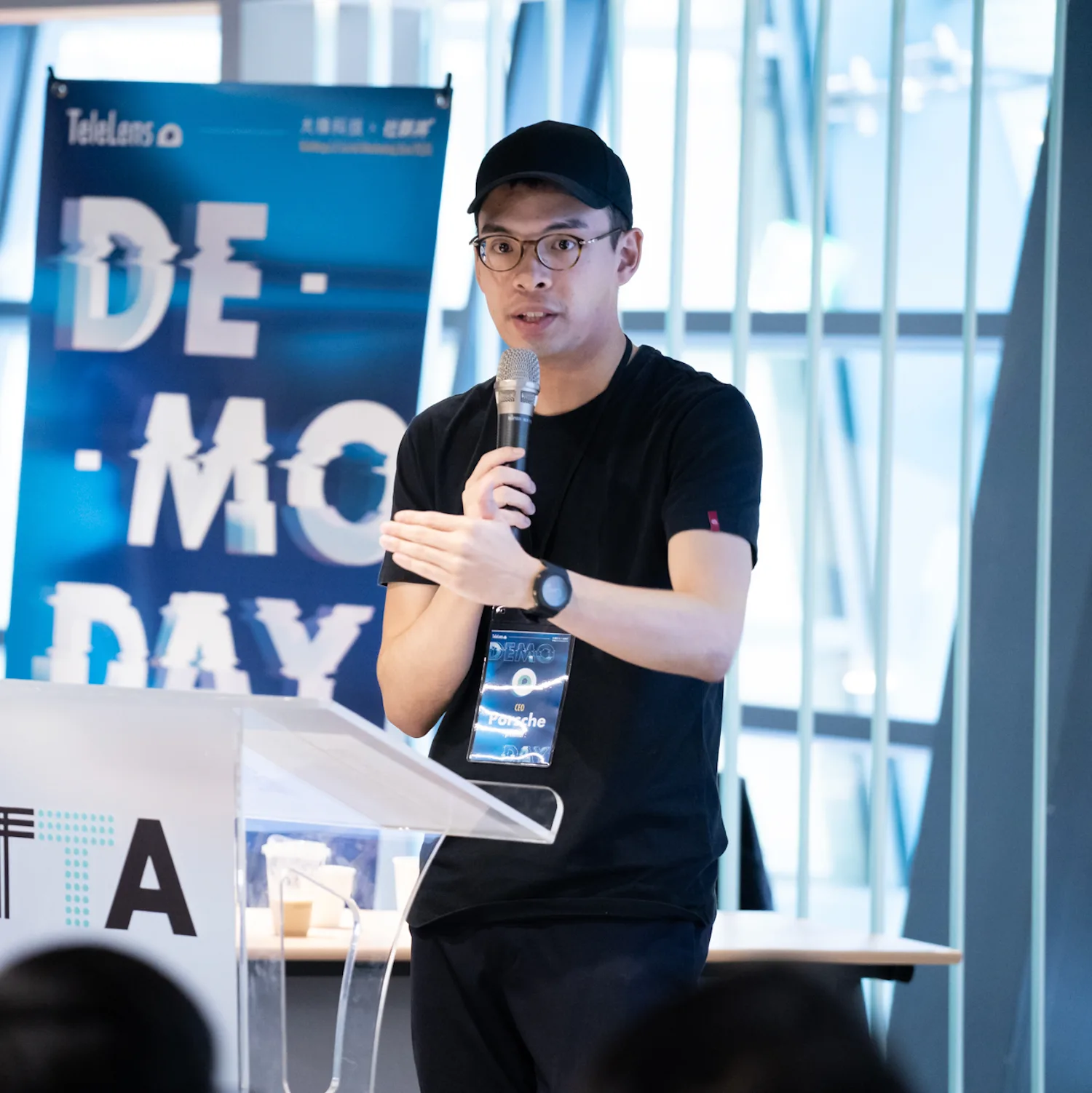 Porsche TsaiCEO
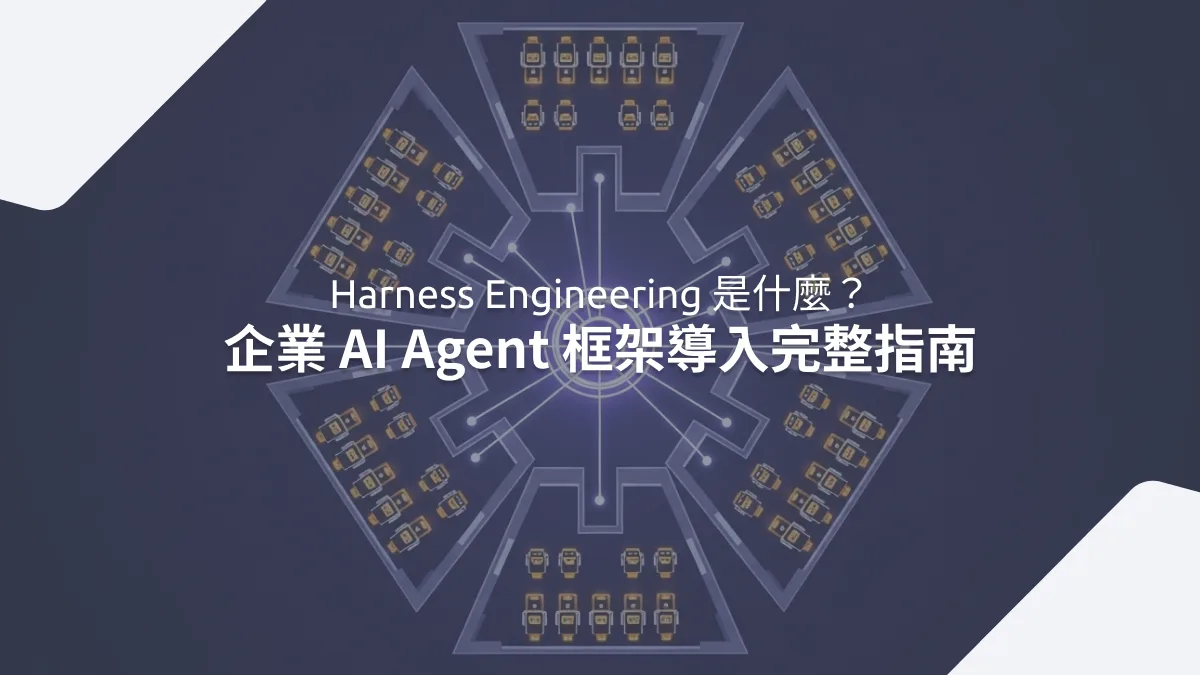
Table of Contents
- When AI's Best-Known Engineer Walked Back His Own Words
- From Prompt Engineering to Harness Engineering: Three Stages of Evolution
- "A Strong Enough Model Is All You Need; Frameworks Are Engineers Indulging Themselves"
- The Business Impact of Harness Engineering: Real Numbers from Rakuten and TELUS
- How OakMega Adopted an AI Agent Framework: 100+ Agents in Production
- Frequently Asked Questions

Harness Engineering is the systems-engineering discipline of designing task boundaries, tool permissions, and collaboration architecture for AI agents, so they can carry out multi-step tasks autonomously within a controlled framework. It isn't about picking a stronger model. It's about designing better system boundaries. In this article, I explain how Harness Engineering differs from Prompt Engineering, what real enterprises have achieved with it, and how OakMega used this AI agent framework to make our teams five times more efficient.
When AI's Best-Known Engineer Walked Back His Own Words
Andrej Karpathy is the former head of AI at Tesla and a founding member of OpenAI. In February 2025, he coined a term: vibe coding. The idea was simple: don't overthink it, hand your requirements to the AI, let it run, and accept the output as long as it "feels right." The term took off across the engineering community and became a cultural shorthand: AI is powerful enough now, the barrier is gone, and anyone can code. Less than a year later, Karpathy himself suggested a new term: "agentic engineering" instead of vibe coding. His reason was simple: "feels right" doesn't ship to production.¹
What struck me about this story wasn't that he changed his mind. It was how fast he did it, and the direction he pointed to. The question was never whether AI is powerful enough. The question is whether, once AI can actually get work done, you can make it do the right things, within the right boundaries, and catch it when it fails. That's what everyone is now talking about as Harness Engineering.

Prompt Engineering, Context Engineering, and Harness Engineering: Three Stages of Evolution
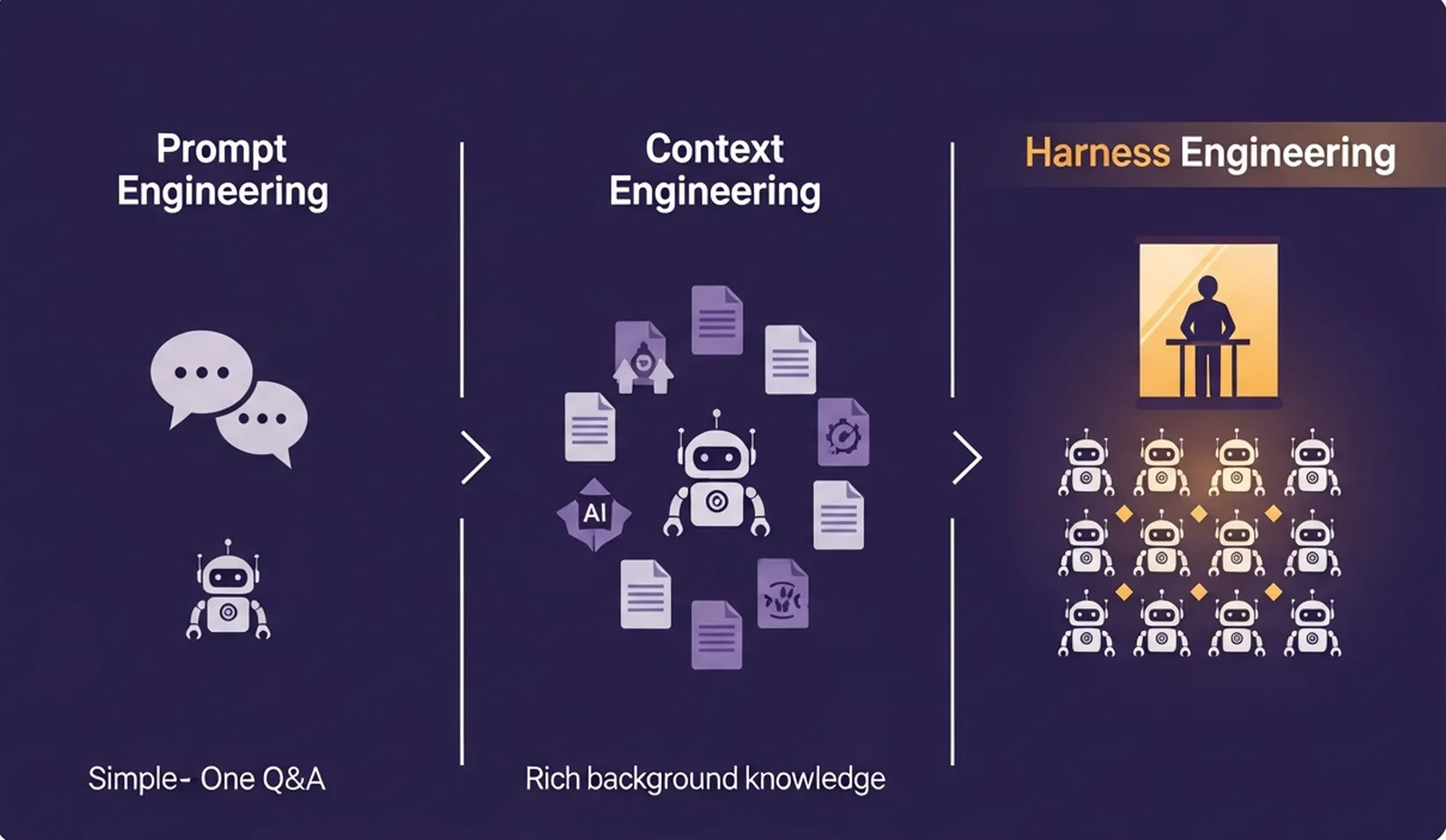
Many people assume that working with AI simply means learning to write good prompts. In 2023, that was true. Prompt Engineering was the core skill: the more precisely you asked, the better the AI answered. But that logic quickly hit a ceiling. You had to restate the background in every conversation, the AI had no memory and no context, and no matter how skilled you were, you were only optimizing a single point. Then came Context Engineering. Engineers began designing system prompts and feeding in background documents so the AI could work with enough context. That was progress, but it was still passive: humans designed the context, and the AI responded within it. Harness Engineering is the next level. Its core idea is that you're no longer just designing the AI's inputs. You're designing a system framework that lets AI operate autonomously, controllably, and at scale, including the agent orchestration layer, the boundaries for tool calling, task division among sub-agents, and the connection layer to external systems. As Kyle Corbitt, co-founder of HumanLayer, puts it: "It's not a model problem. It's a configuration problem."²
In 2026, the agentic AI market is growing at a compound annual rate of 40.5%, from US$9.1 billion this year to a projected US$139 billion by 2034.³ Inquiries about multi-agent systems tracked by Gartner grew 1,445% from Q1 2024 to Q2 2025.⁴ The entire industry is undergoing a systemic restructuring.
"A Strong Enough Model Is All You Need; Frameworks Are Engineers Indulging Themselves"
Still, I hear many executives say: "We've already bought the best model. Let the engineers handle the configuration." Behind that logic sits an unspoken assumption: the AI's ceiling determines everything, and the engineering framework is just extra credit. I understand the instinct. Choosing the strongest model feels like buying the best knife, and what the sheath is made of doesn't seem like a priority. That logic isn't entirely wrong. If your AI use cases are limited to summarizing reports and drafting emails, you really don't need a harness. A ChatGPT account will do.
The Business Impact of Harness Engineering: Real Numbers from Rakuten and TELUS
The problem is that most enterprises today want more than AI-generated report summaries. They want AI agents that run workflows automatically, handle customer data, collaborate across systems, and complete multi-step tasks without supervision. According to Anthropic's Agentic Coding Trends Report 2026, agents can now autonomously complete 20 actions before needing human intervention, up from 10 six months ago.⁵ Capability has doubled, and so has risk. The reality: 97% of enterprises are exploring agentic AI, yet only 36% have centralized AI governance, and only 12% use a centralized platform to control AI sprawl.⁶ AI models fail in production roughly 60% of the time (Forrester).⁷ Buy the knife without designing the sheath, and the people who get hurt are your own.
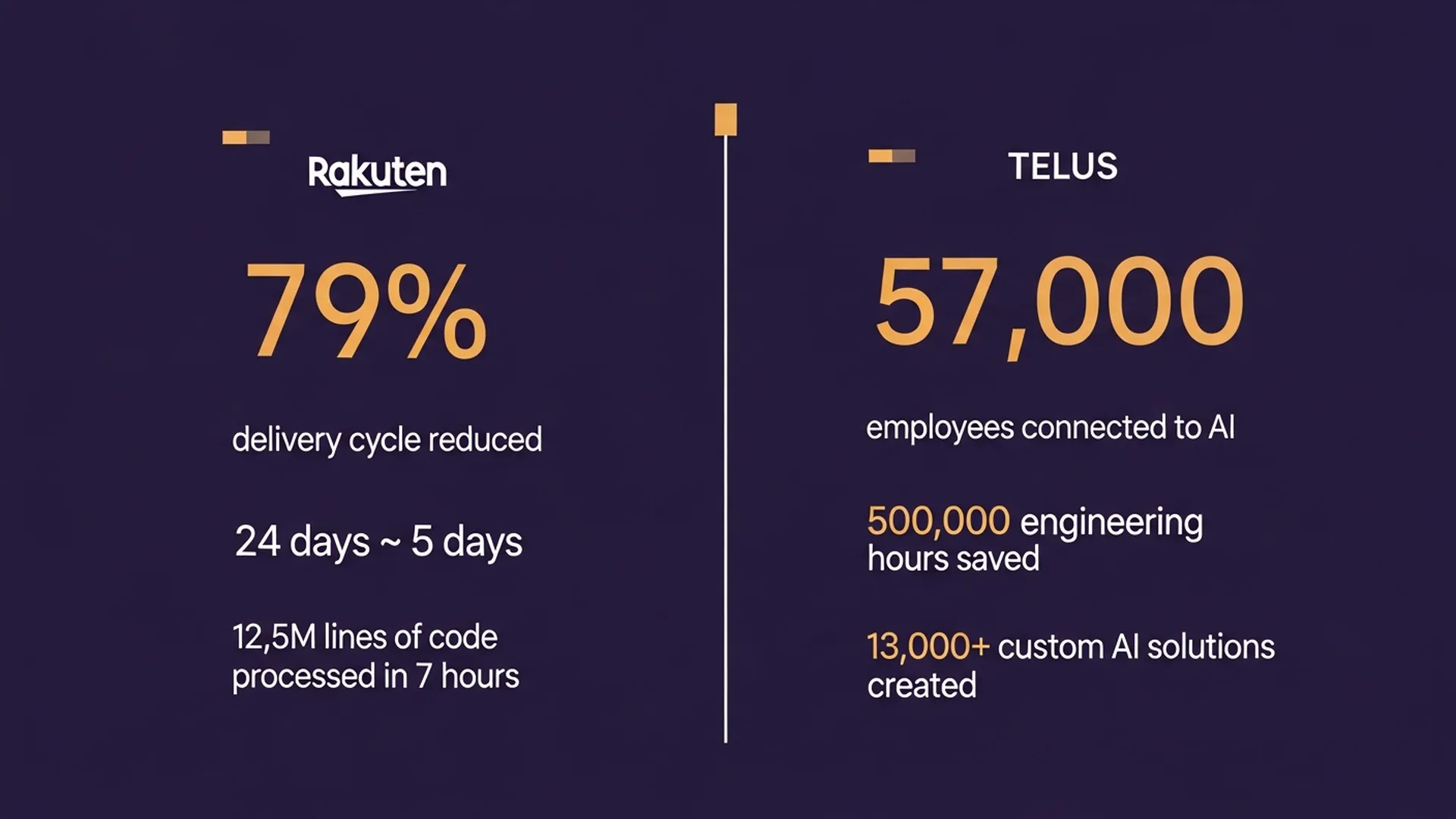
Flip it around, and the companies that get harness design right post completely different numbers. Rakuten used a multi-agent harness to process 12.5 million lines of code in 7 hours, cutting its product delivery cycle from 24 days to 5, a 79% reduction.⁸ TELUS connected 57,000 employees to AI workflows, saving a cumulative 500,000 engineering hours and creating more than 13,000 custom AI solutions.⁹ What these two cases share isn't the strongest model. It's a framework that lets AI operate autonomously within controlled limits. The gap isn't in the model. It's in the harness.
How OakMega Adopted an AI Agent Framework: 100+ Agents in Production
At OakMega, we don't just talk about Harness Engineering. We actually use it. We've rolled out Claude Code company-wide, and more than 100 agents now run in parallel across our operations, sales, marketing, customer success, and product teams. Every agent has clear task boundaries, tool permissions, and a collaboration architecture, along with human-in-the-loop checkpoints so that people still own critical decisions. We didn't bolt AI tools onto existing workflows. We designed, from the ground up, a system that lets AI complete tasks on its own. Departments that adopted Claude Code workflows became five times more efficient.
I believe that from 2026 on, the real dividing line in enterprise AI capability won't be "Do you use AI?" It will be "Can your team design the engineering framework that controls AI?" Before you ask "Which AI tool should we buy?", ask "Can we design a system that lets AI operate in a way we can trust?" Back to Karpathy: he never said vibe coding was wrong. What he said is that if you truly want AI doing work in production, a feeling isn't enough. You need engineering.
Want to know how OakMega uses harness engineering and agents in specific scenarios? Leave a comment and tell me which use case you'd most like to hear about.
I'd love to hear your thoughts in the comments.
Frequently Asked Questions
Q1: What is Harness Engineering?
Harness Engineering is the systems-engineering discipline of designing task boundaries, tool permissions, and collaboration architecture for AI agents, so AI can carry out multi-step tasks autonomously within a controlled framework. It doesn't optimize the input quality of a single conversation (that's Prompt Engineering). Instead, it designs the overall system that keeps AI running reliably over time, including agent collaboration architecture, tool boundaries, and human oversight checkpoints.
Q2: How is Harness Engineering different from Prompt Engineering?
Prompt Engineering optimizes the input quality of a single AI conversation. Harness Engineering designs the system framework that lets AI agents operate over the long term, autonomously and under control, including task division, tool boundaries, and oversight mechanisms. They work at different levels: the former is tactics, the latter is architecture.
Q3: Is Harness Engineering a good fit for small and midsize businesses?
If your AI use cases are limited to one-off tasks (summaries, drafts), you may not need a full harness design. But once you want AI to run cross-system workflows or multi-step tasks automatically, harness design becomes a necessary investment, not an option.
Q4: What technical foundation do you need to adopt Harness Engineering?
You don't need to build your own AI models, but you do need API integration skills, a systems-architecture mindset, and a basic understanding of AI agent frameworks such as Claude Code. Most important, the organization has to be willing to redesign its workflows rather than simply layer AI tools on top of existing processes.
Q5: Why do enterprise Harness Engineering initiatives commonly fail?
The most common failure is layering AI tools onto existing workflows instead of redesigning them. The second is the lack of centralized AI governance. Data shows that only 12% of enterprises have a centralized platform to control AI sprawl, which leaves agents running in uncontrolled environments, with production failure rates as high as 60% (Forrester).
Q6: What should Taiwanese companies watch for when adopting an AI agent framework?
A common blind spot for Taiwanese companies adopting agentic AI is a "procurement mindset": they pick a model but don't build the system design around it. I recommend evaluating three things first: whether your current workflows are suited to agent automation, whether your team has API integration skills, and whether you have a clearly designed human-in-the-loop oversight mechanism.
References
- Karpathy, A. (2025). "Software Is Changing (Again)". X (formerly Twitter). https://x.com/karpathy
- Turing College. (2025). "Vibe Coding vs. Agentic Engineering". https://www.turingcollege.com/blog/agentic-engineering-vs-vibe-coding
- HumanLayer. (2025). "Skill Issue: Harness Engineering for Coding Agents". https://www.humanlayer.dev/blog/skill-issue-harness-engineering-for-coding-agents
- SpaceO Technologies. (2026). "Agentic AI Frameworks 2026". https://www.spaceo.ai/blog/agentic-ai-frameworks/
- Deloitte. (2026). "Unlocking exponential value with AI agent orchestration". https://www.deloitte.com/us/en/insights/industry/technology/technology-media-and-telecom-predictions/2026/ai-agent-orchestration.html
- Anthropic. (2026). "Agentic Coding Trends Report 2026". https://resources.anthropic.com/2026-agentic-coding-trends-report
- TechHQ. (2026). "Agentic AI Governance Is the CIO's Most Urgent Blind Spot". https://techhq.com/news/agentic-ai-governance-enterprise-gap/
- Composio. (2026). "Why AI Agent Pilots Fail in Production". https://composio.dev/blog/why-ai-agent-pilots-fail-2026-integration-roadmap
- Anthropic. (2026). "Rakuten accelerates development with Claude Code". https://claude.com/customers/rakuten
- Anthropic. (2026). "TELUS: AI Coding Trends Report 2026". https://resources.anthropic.com/2026-agentic-coding-trends-report