





EU AI Act vs ISO 42001 vs AISVS: The Fundamental Differences Between Three AI Governance Frameworks | CEO Insights
The EU AI Act is a legal obligation (violations carry fines of up to €35M or 7% of global revenue); ISO 42001 is an AI management system certification (it earns enterprise customers' trust in your AI governance); AISVS is a technical security verification checklist engineers can use today. The three operate at entirely different levels, and Taiwanese SaaS companies should set priorities in this order: “Do you have EU customers? → Do you face B2B procurement requirements? → Engineering security self-assessment.”
 Porsche TsaiCEO
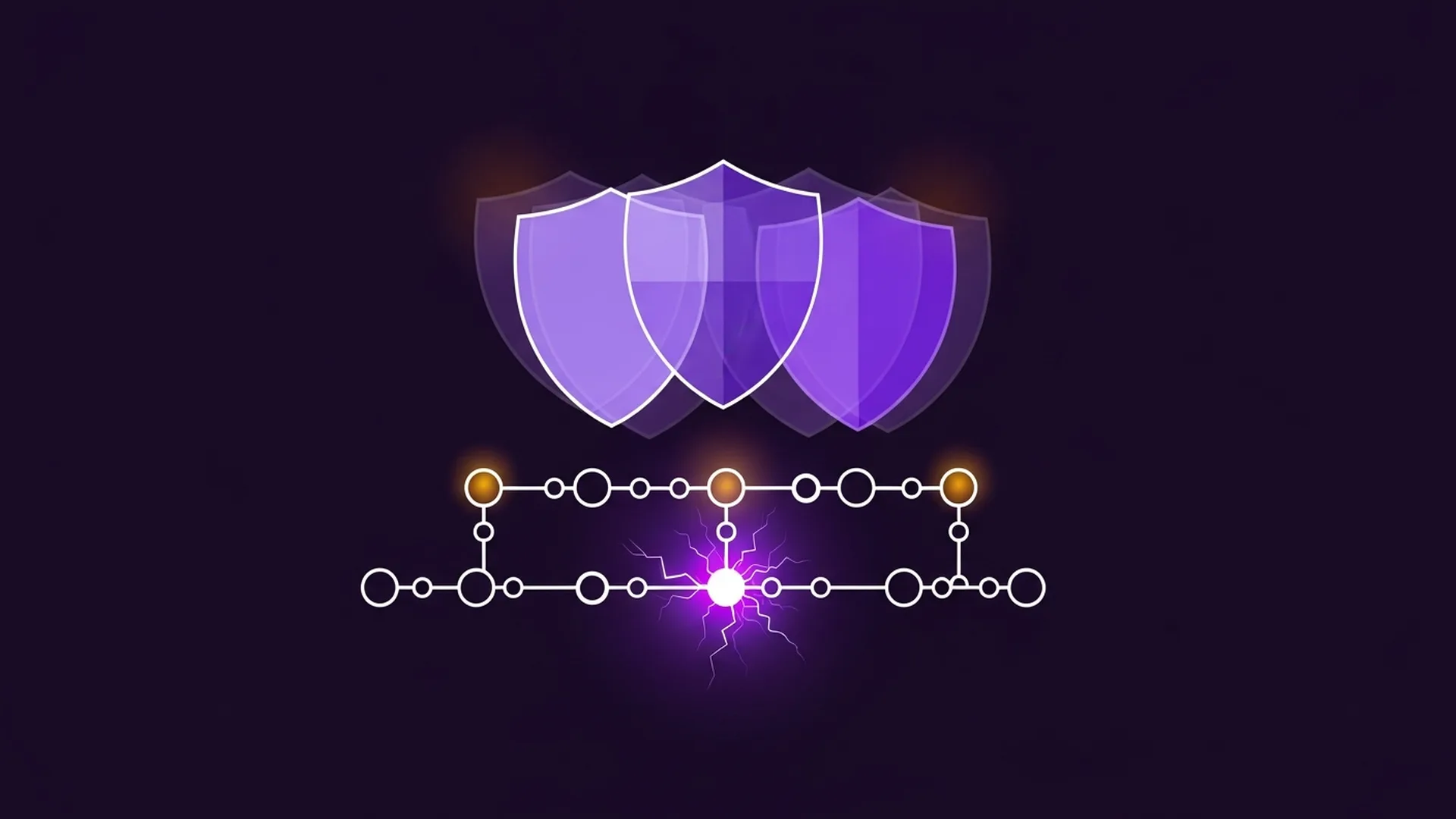
On March 24, 2026, a malicious Python package lived on PyPI for 40 minutes. In those 40 minutes, LiteLLM, a library downloaded 3.4 million times a day, was backdoored. The attacker, TeamPCP, first compromised Trivy, the security scanner used in LiteLLM's CI/CD pipeline, stole PyPI maintainer credentials, and uploaded two malicious versions: litellm==1.82.7 and 1.82.8. The three-stage payload was meticulously engineered: steal credentials, move laterally into Kubernetes clusters, then plant a persistent backdoor that gave the attacker remote code execution. This was not a flaw in an AI model. It was a failure of the entire AI infrastructure supply chain. (Full incident report → Trend Micro, 2026)
Afterward, I watched plenty of engineers debate whether to pin versions or rip out LiteLLM altogether. Those conversations point in the right direction, but they miss the core issue. The real question is this: When your AI product depends on dozens of open-source packages, three cloud platforms, and two third-party API vendors, can your AI governance system detect an anomaly within 40 minutes, confirm the blast radius within 24 hours, and explain to stakeholders exactly what you did within a week?
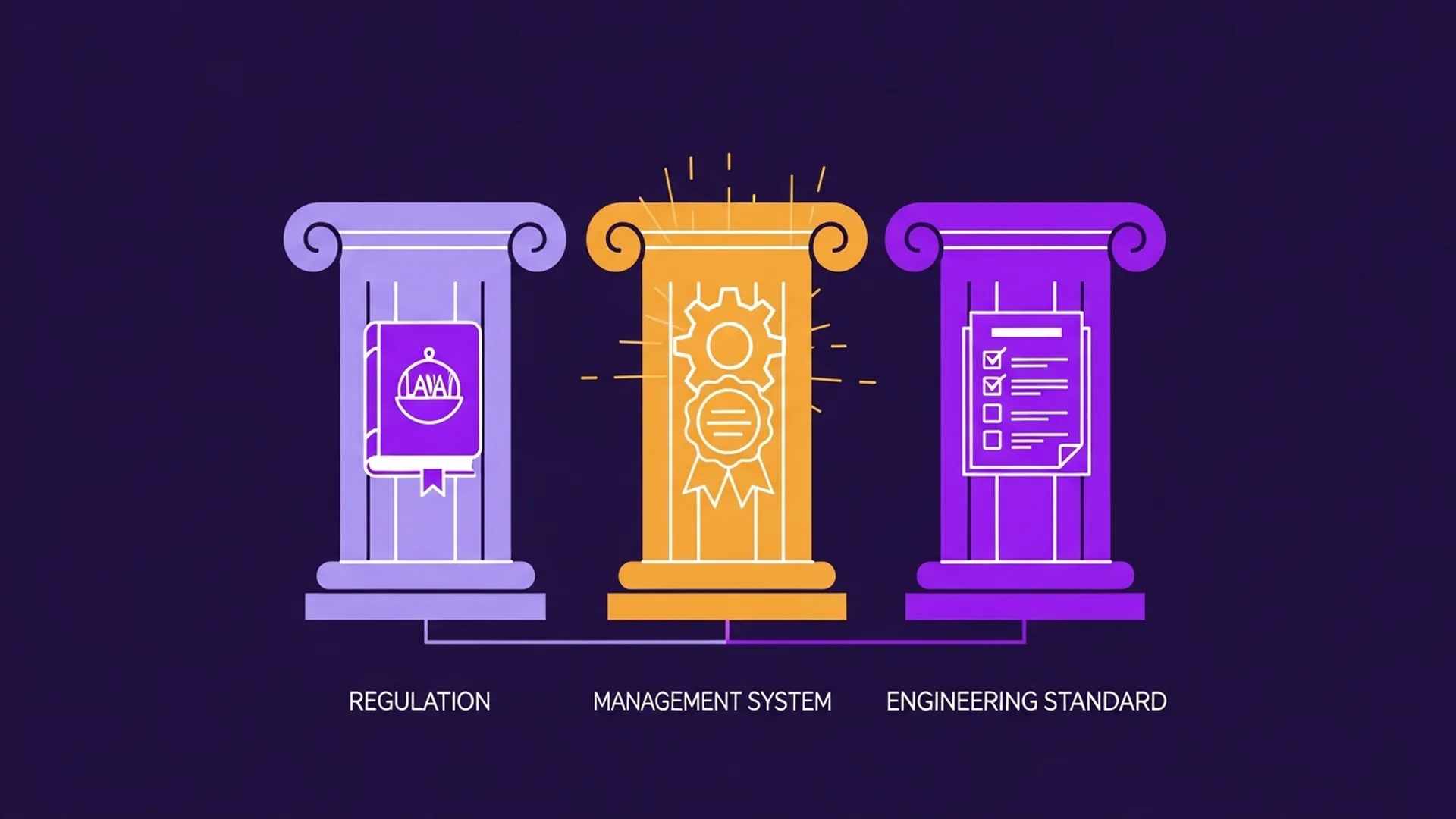
What is the difference between the EU AI Act, ISO 42001, and AISVS? The EU AI Act is mandatory EU regulation: if you don't comply, you are breaking the law. ISO 42001 is a certification standard for AI management systems: earning it proves to the market that you manage AI risk systematically. AISVS is OWASP's technical AI security verification checklist that engineers use for self-assessment. The three don't compete. They address requirements at three different levels: legal, managerial, and technical. Companies need all three; only the priorities differ.
Table of Contents
- AI Compliance Isn't One Problem. It's Three Problems at Three Different Levels
- Using the LiteLLM Incident to Break Down Where Each AI Governance Framework Operates
- EU AI Act vs ISO 42001 vs AISVS: A Complete Comparison of Three AI Governance Frameworks
- An AI Compliance Decision Path for Taiwanese Companies
- Asking the Wrong Question Is More Dangerous Than Doing Nothing: How to Frame AI Governance Correctly
- FAQ
AI Compliance Isn't One Problem. It's Three Problems at Three Different Levels
Over the past two years I've talked with many Taiwanese SaaS founders, and when they ask about AI compliance, the question usually goes like this: "Should I do the EU AI Act or ISO 42001?" The question itself is already the wrong answer.
The EU AI Act, ISO 42001, and AISVS don't compete with one another. Think of corporate law, ISO 9001 certification, and an engineer's code review checklist: each operates at a completely different level. You would never ask, "Should I follow corporate law or get ISO certified?" because the question makes no sense.
The EU AI Act is the EU's mandatory AI regulation, which entered into force in August 2024. Its full name is the Artificial Intelligence Act. It sorts AI systems into four risk tiers (unacceptable risk, high risk, limited risk, and minimal risk) and assigns compliance obligations to each tier. If you sell or deploy AI in the EU market, you must comply. There is no opting out. Its extraterritorial reach works much like GDPR: you may be based in Taiwan, but if your customer is in the Netherlands, it applies to you. Violations carry fines of up to €35M or 7% of global revenue. (Full text of the EU AI Act → artificialintelligenceact.eu)
ISO 42001 is the international standard for AI management systems, published by ISO/IEC in December 2023. Its full name is ISO/IEC 42001:2023 Artificial Intelligence Management System. Earning this certification shows customers, your board, and potential acquirers that you manage AI risk systematically rather than relying on individual engineers' judgment. It matters more and more in B2B enterprise procurement.
AISVS is the AI Security Verification Standard published by OWASP. It defines three verification levels, L1, L2, and L3, and spans 14 chapters of security verification requirements that any engineer can check their AI system against. It carries no certification and no legal force, but it is currently the most concrete, actionable AI security verification tool available. (OWASP AISVS → GitHub)
Using the LiteLLM Incident to Break Down Where Each AI Governance Framework Operates
The AISVS lens: the supply chain attack could have been stopped in advance
Chapter 11 of AISVS covers AI supply chain security verification. At L3, it requires integrity verification for every dependency, including a security review of the CI/CD toolchain itself. Had LiteLLM's engineering team followed AISVS L3, a routine security tooling audit should have flagged the compromise of Trivy as an anomaly. A package that suddenly appears outside the normal version sequence and rapidly racks up downloads is exactly the kind of pattern that should not go unnoticed for 40 minutes in a monitored environment.
Where AISVS operates: when engineers write code, build CI/CD pipelines, and choose third-party tools, they have an AI security verification checklist that tells them what to verify and how deeply.
The ISO 42001 lens: AI governance capability determines how fast you respond
After the incident, companies using LiteLLM responded at wildly different speeds. Some engineers only realized there was a problem after seeing the news on social media; other companies finished inventorying affected systems within hours. That gap isn't about technical skill. It's about AI governance processes. In a company running an ISO 42001 management system, vendor risk assessment is a formal process: every AI-related package that enters production is recorded, version updates go through approval, and the moment a vendor has a security incident, the team can immediately identify which systems run which version.
Where ISO 42001 operates: when something goes wrong, does your organization have an AI management system that lets you quickly scope the impact and trigger a standard response process?
The EU AI Act lens: AI compliance obligations turn supply chain problems into regulatory problems
If your AI system is classified as high risk (for example, used in medical diagnosis, hiring decisions, or critical infrastructure management) and it ran a backdoored version of LiteLLM, that isn't just a technical incident. It's an AI compliance violation, because you failed to meet your obligation to monitor supply chain components.
Where the EU AI Act operates: does your AI system meet the minimum AI compliance standard the law requires? If it falls short, you are breaking the law.
EU AI Act vs ISO 42001 vs AISVS: A Complete Comparison of Three AI Governance Frameworks
An AI Compliance Decision Path for Taiwanese Companies
Priority one: you have EU customers or plan to enter the EU market. August 2026 is the EU AI Act's full enforcement deadline for high-risk AI systems. It's now May 2026, which leaves less than three months. If you haven't started risk classification, this isn't the moment to "consider whether to do it." It's the moment to decide "who we're bringing in today." If your AI system is classified as high risk, you'll need to complete technical documentation, build a risk management system, and ensure your data governance meets the requirements. Every one of those takes time.
Priority two: you sell B2B and need enterprise customers to trust your AI product. ISO 42001 certification is becoming an unwritten threshold in enterprise AI procurement, just as ISO 27001 became the baseline for information security compliance a few years ago. Companies that already hold ISO 27001 can save roughly 40% of the time on ISO 42001 certification (source: IS Partners, 2024), so the marginal cost is lower than you think. OakMega is currently evaluating the priority and timeline for ISO 42001 certification as well.
Priority three: your engineering team wants to make your AI product more secure. AISVS is free, open source, and usable starting today. Start at L2 at a minimum, focusing on Chapter 11 (supply chain security) and Chapter 7 (monitoring and observability). At OakMega, our engineering team has run quarterly AI security self-assessments against AISVS L2 since 2025. It's our most direct, actionable starting point for AI supply chain security.
Asking the Wrong Question Is More Dangerous Than Doing Nothing: How to Frame AI Governance Correctly
"Should I choose the EU AI Act or ISO 42001?" is the wrong question. The right one is: How far has my organization gotten at each of the three levels: AI legal compliance, AI management systems, and AI technical security?
LiteLLM's 40 minutes remind us that the attack surface of AI infrastructure is already real. AI governance frameworks aren't bureaucratic paperwork. They are the systemic capability that, when things go wrong, lets you quickly understand what happened, who was affected, and what to do next.
Three things you can do right now:
- This week: Determine which EU AI Act risk tier your AI system falls into. If you're unsure, have a legal advisor who knows the EU AI Act do an initial assessment. The clarity a single consultation buys is worth it. (Official EU AI Act risk classification guidance → artificialintelligenceact.eu)
- This month: Have your engineering team run a security self-assessment of your production AI systems against the AISVS L2 checklist, focusing on Chapter 11 (AI supply chain security) and Chapter 7 (monitoring and observability). It can be done within two weeks. (Get AISVS for free → OWASP GitHub)
- This quarter: If you hold ISO 27001, seriously evaluate the feasibility of ISO 42001 certification. If you don't, get 27001 in place first, and the cost of 42001 AI compliance certification will drop significantly.
If you have any questions about AI compliance architecture, EU AI Act applicability assessments, or adopting AISVS, reach out to us through the OakMega website.
FAQ
Q: Do Taiwanese companies need to comply with the EU AI Act?
The EU AI Act has extraterritorial reach. What matters is where the people your AI system serves are located, not where your company is registered. If you have EU users or sell AI services in the EU market, you fall within the EU AI Act's scope, following the same logic as GDPR. Taiwanese SaaS companies whose target markets include Europe should assess their EU AI Act compliance obligations immediately.
Q: How long does ISO 42001 certification take, and what does it cost?
According to IS Partners (2024), companies that already hold ISO 27001 need about 6–9 months to achieve ISO 42001 certification, saving roughly 40% of preparation time; companies starting from scratch need about 12–18 months. Certification costs vary with company size and typically range from NT$300,000–800,000 (including consulting and audit fees).
Q: Can we pursue the EU AI Act, ISO 42001, and AISVS at the same time?
Yes, and the three reinforce each other. The EU AI Act defines what you must do from a regulatory standpoint, AISVS provides the operational checklist for verifying at a technical level that you've done it, and ISO 42001 establishes the management system that keeps this work running continuously. For most Taiwanese companies, the recommended sequence is: start with an AISVS L2 self-assessment (free and immediately available), assess your EU AI Act risk classification in parallel, then decide on an ISO 42001 certification timeline.
Q: What's the difference between AISVS L1, L2, and L3, and which companies should use each?
The three AISVS levels map to different degrees of AI system risk. L1 suits low-risk AI features (such as recommendation systems) and covers basic security verification. L2 suits production AI systems that handle sensitive data or carry meaningful impact, and it's a reasonable starting point for most B2B SaaS. L3 suits high-risk AI applications (such as finance, healthcare, and safety-critical systems) and requires the most rigorous supply chain and persistence security verification. The OWASP AISVS documentation is available for free on GitHub.
Q: Are AI governance frameworks only for large enterprises?
No. The LiteLLM incident didn't just hit large enterprises. Any startup using open-source AI packages is exposed to supply chain risk. AISVS is free, and engineering teams of any size can adopt it immediately. EU AI Act obligations depend on the AI system's risk tier, and requirements for low-risk systems are relatively light. The most dangerous mindset is "we'll do it once we're bigger," because by then your system architecture will be hard to refactor and governance will cost far more.