




The number the live-ops team was watching on the eve of a collaboration event
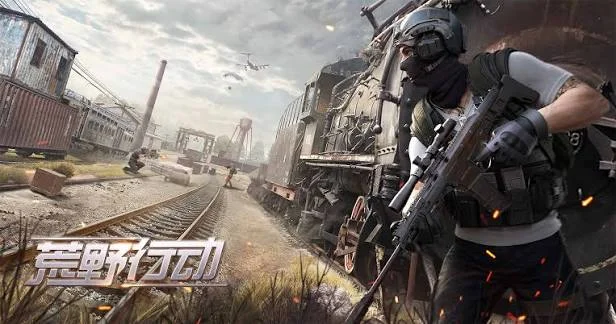
2.21 million. That was the number of friends on the Knives Out LINE Official Account in Japan.
For a mobile game that once topped Japan’s iOS top-grossing chart, that number wasn’t a surprise. What the live-ops team really cared about was something else: of those 2.21 million people, how many would still open the next message?
Some players had already uninstalled the game. Some had switched off in-game notifications. Many more simply scrolled past the official account in their chat list without ever tapping it. Mobile gamers rarely say goodbye; they just slowly stop opening the app.
A major collaboration event was about to launch. Everything inside the game was ready, but what about outside it? Could the official account sitting quietly in players’ LINE become the door that brought them back?
Wide reach, little response
The problem wasn’t the number of messages. It was the missing bridge between the LINE Official Account and the game itself.
Dormant players were out of reach. For players who had uninstalled the game or turned off notifications, nothing happening in-game mattered. LINE was one of the few channels still open, but a one-way campaign announcement rarely convinces anyone to reinstall or relaunch a game.
The chat experience was disconnected from the game. In the game, players have quests, progress, and instant feedback. Back on LINE, there were only announcements and images. For gamers used to a sense of achievement, that kind of conversation is boring, and boredom is where blocking begins.
Social sharing was bottlenecked by manual work. Encouraging players to share screenshots and repost promo videos is common practice, but every single post had to be checked by hand before a reward went out. The more people shared, the heavier the review load, and the campaign had to be scaled back.
There was no way to tell who the core players were. Broadcasts said the same thing to everyone. The team couldn’t see who came back every day, who was willing to bring friends into the game, or whose voice carried weight in the community.
If nothing changed, the buzz from the collaboration would stay inside the game, and 2.21 million friends would remain just a nice-looking number. Friend counts show who once joined; engagement shows who still cares.
LINE gamification starts with giving players a reason to play along
LINE gamification marketing means adding game mechanics such as quests, points, leaderboards, and rewards to a LINE Official Account so users take part actively through the chat. The point isn’t to send more broadcasts. It’s to use a loop of quests, progress, and rewards that gives users a reason to keep coming back.
The team realized players weren’t unwilling to engage; the official account had simply never given them a reason to. Games bring people back every day through exactly this loop. If the LINE chat window itself could offer the same experience, the official account would stop being a bulletin board and become part of the game.
This principle goes well beyond mobile games: bring your most valuable experience to wherever your users spend their time. For gamers, the most valuable experience is playing itself.
Gamified promotion outside the game helped one mobile title generate a million interactions in two weeks.
How they did it with OakMega, step by step
OakMega is a Social CRM platform focused on the LINE ecosystem, serving more than 300 enterprise clients and certified as a LINE Account Solutions Tech Partner. During the collaboration event, Knives Out used OakMega’s Interactive broadcasts and Module Store to turn its LINE Official Account into a complete quest system.
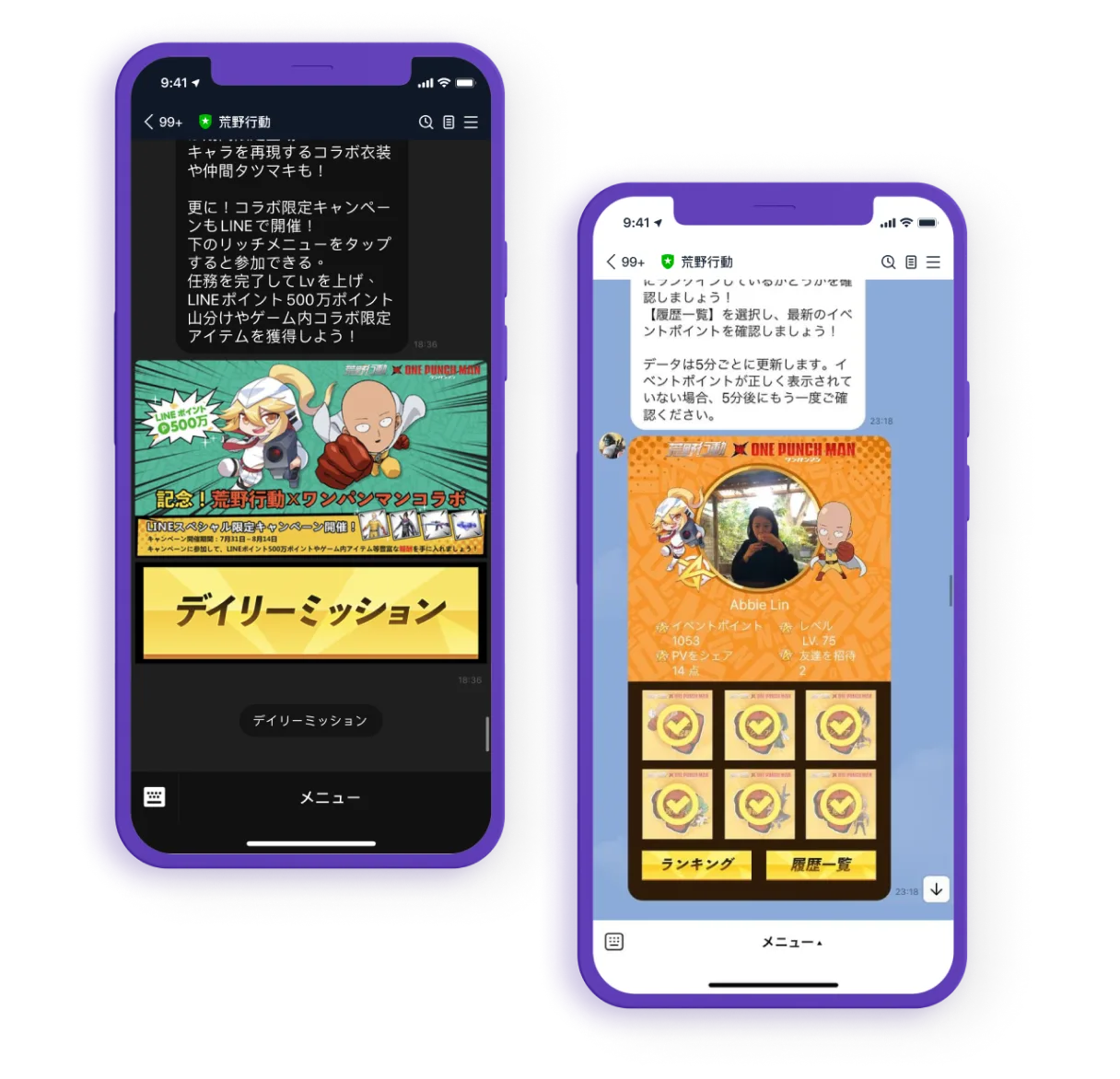
Step 1: Move daily quests into the chat
Players complete daily quests right inside the LINE chat window, building a habit of returning every day and gradually growing a pool of loyal fans. Alongside this, the team used data analysis to see how players preferred to take part, continually refining the quest flow to raise participation and lower the block rate.
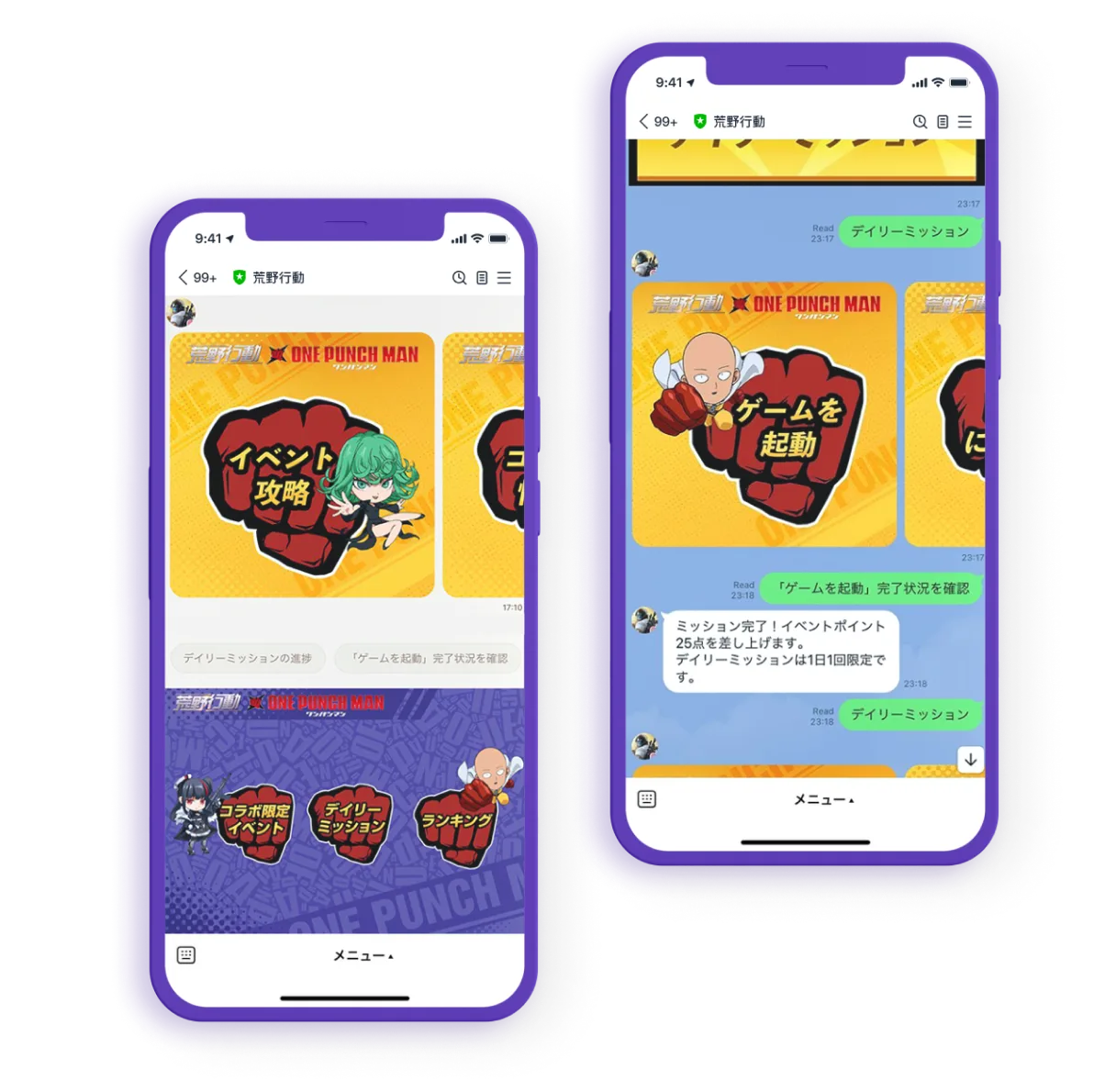
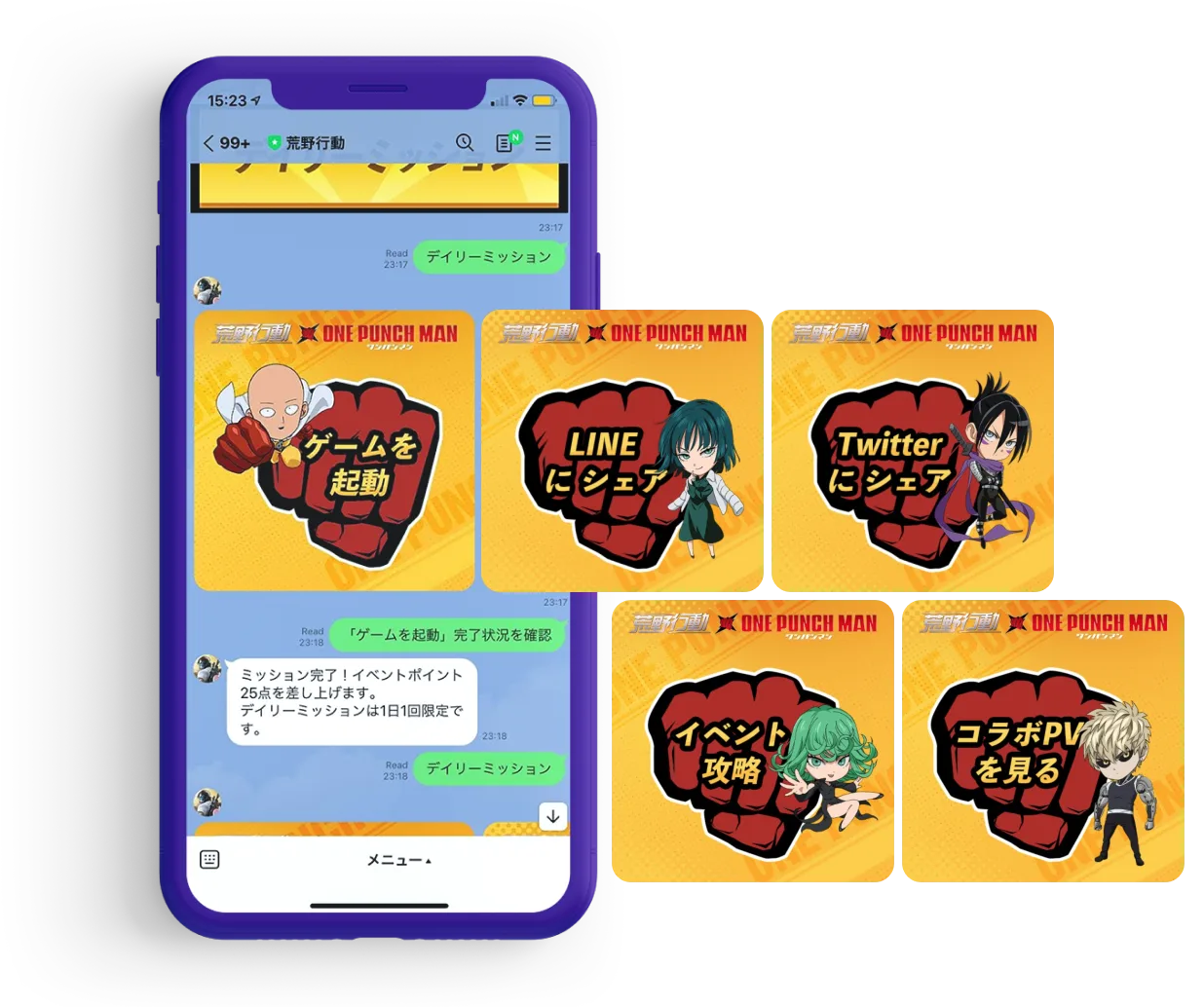
Step 2: Design tiered quests, from easy to deep
The simplest quest is just tapping a broadcast message. Next come sharing to LINE or Twitter, watching the collaboration promo video, and reading the event guide. The deepest tier uses deep links to take players straight into the game. The lower the barrier, the easier the first step; the easier the first step, the more likely deeper conversions become.
Step 3: Use advanced quests to find core players
Advanced quests encourage high-level players to invite friends. Beyond growing the audience, the invitation data lets the team identify the KOLs within the player base, who can seed future buzz.
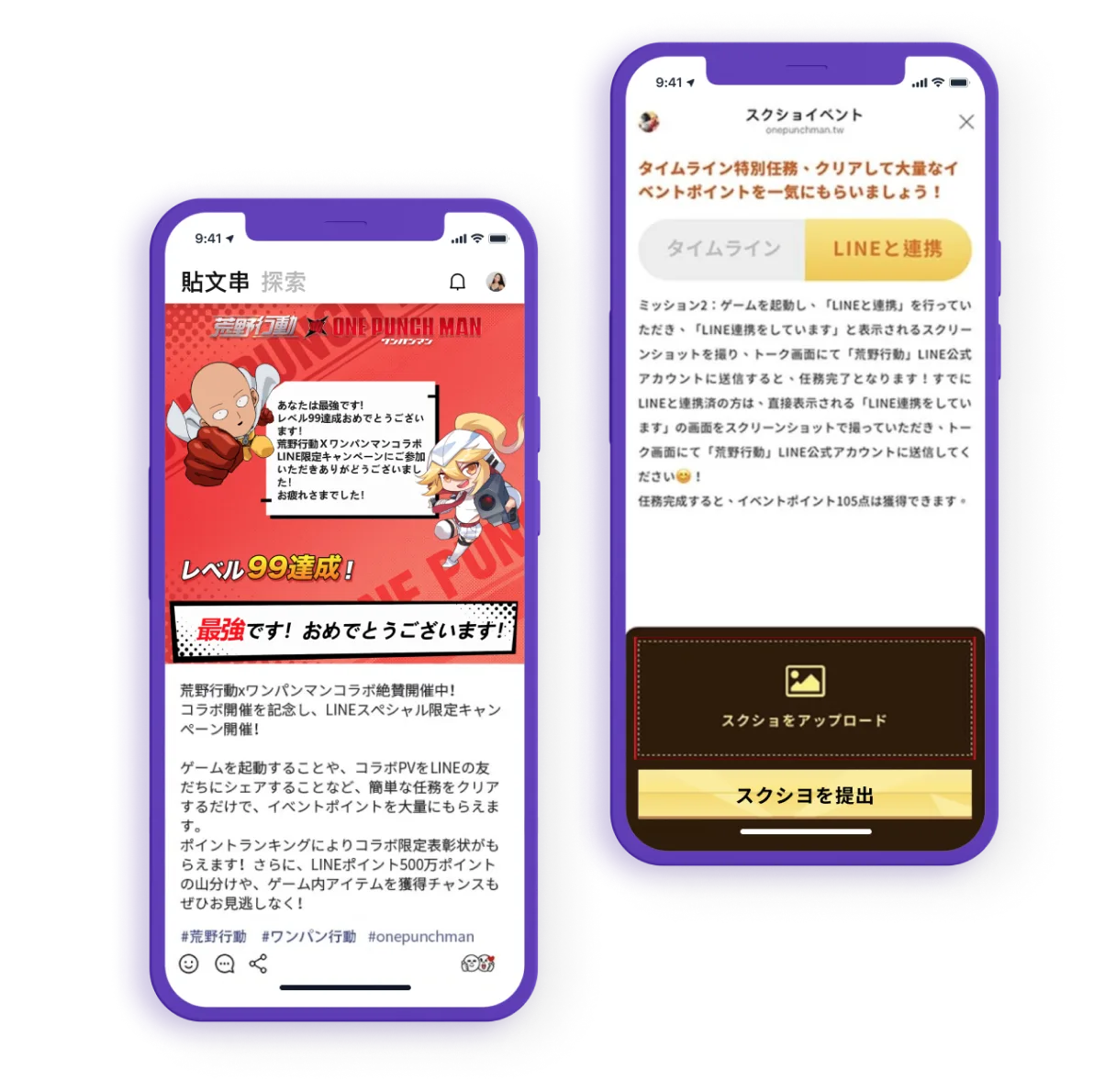
Step 4: Automate share reviews
Players earn points by uploading game screenshots or sharing promo videos. Smart recognition assists with reviewing the content, saving a great deal of manual work, so sharing could scale to tens of thousands of posts.
Step 5: Wrap it up with points and a leaderboard
Every quest and share converts into action points, paired with a leaderboard and tiered rewards, including LINE Points, in-game items, and exclusive high-resolution game artwork, so engagement outside the game delivers the same sense of achievement as playing it.
| Problem to solve | Feature used | How it worked |
|---|---|---|
| Dormant players out of reach | Interactive broadcasts | LINE broadcasts carried campaign news to players who had uninstalled the game or turned off notifications |
| No incentive to engage in chat | Multi-panel rich messages, segmented rich menus | Daily and tiered quests designed as conversational actions |
| Social sharing bottlenecked by manual work | Module Store share quests + smart recognition | Screenshot and video shares reviewed with automated assistance, with points awarded automatically |
| No way to identify core players | Member growth, points leaderboard | Invitation quests and ranking data revealed the most influential players |
| Rewards that lacked appeal | Coupon code delivery, character profile pictures | Tiered rewards of LINE Points, in-game items, and exclusive assets |
Dividing total interactions by the number of participants, each player came back about 10 times on average. Players weren’t tapping once and leaving; they kept returning to complete quests, which is exactly what the daily quest and points loop was designed to do.
The 250,000 participants made up about 11% of the 2.21 million friends, showing that tiered quests successfully lowered the barrier to the first step and got friends who used to only read the messages to start taking part.
The 25,000 cross-platform shares carried the campaign beyond the official account’s friends. Smart recognition made that volume of sharing operationally feasible, without trading headcount for scale.
If you face the same challenge
Bring mechanics your users already know into the chat. Gamers know quests and rewards; retail shoppers know point collection and membership tiers. Start by identifying the interaction patterns your users are most used to, then move them into your LINE Official Account.
Tier your quests and raise the bar gradually. Don’t ask users to take your most valuable action right away. Start with a single tap, then guide them step by step to sharing, purchasing, or launching, with each step making the next one easier.
Let behavioral data tell you who matters most. Who comes back every day and who is willing to invite friends say more about who deserves focused attention than basic profile data does. With a Social CRM tool like OakMega, the engagement data generated by LINE gamification turns into data you can use for segmentation.