Apple Podcasts Subscriptions Are Here. Are You Tuned In?
Whether you listen to Gooaye to sharpen your gray-area thinking, unwind on weekends with the two hosts of Tai Tong, or lie awake with Tang Yang Chicken Bar's astrology deep-dives running through your head, podcasts have grown for another year. Audiences keep expanding, creators keep arriving, and content keeps getting richer. Platforms have noticed the potential and rolled out subscription business models.
 Howard HuangMarketing Specialist
Whether you listen to Gooaye to sharpen your gray-area thinking, unwind on weekends with the two hosts of Tai Tong, or lie awake with Tang Yang Chicken Bar's astrology deep-dives running through your head, podcasts have grown for another year. Audiences keep expanding, creators keep arriving, and content keeps getting richer.
Podcast platforms have noticed the market's momentum and potential, and they are rolling out subscription business models.
Apple Podcasts Subscriptions Officially Launch
According to Apple's press release from last June, the iOS 14.6 update added support for podcast subscriptions, letting listeners in more than 170 countries and regions subscribe to podcast channels and individual shows.
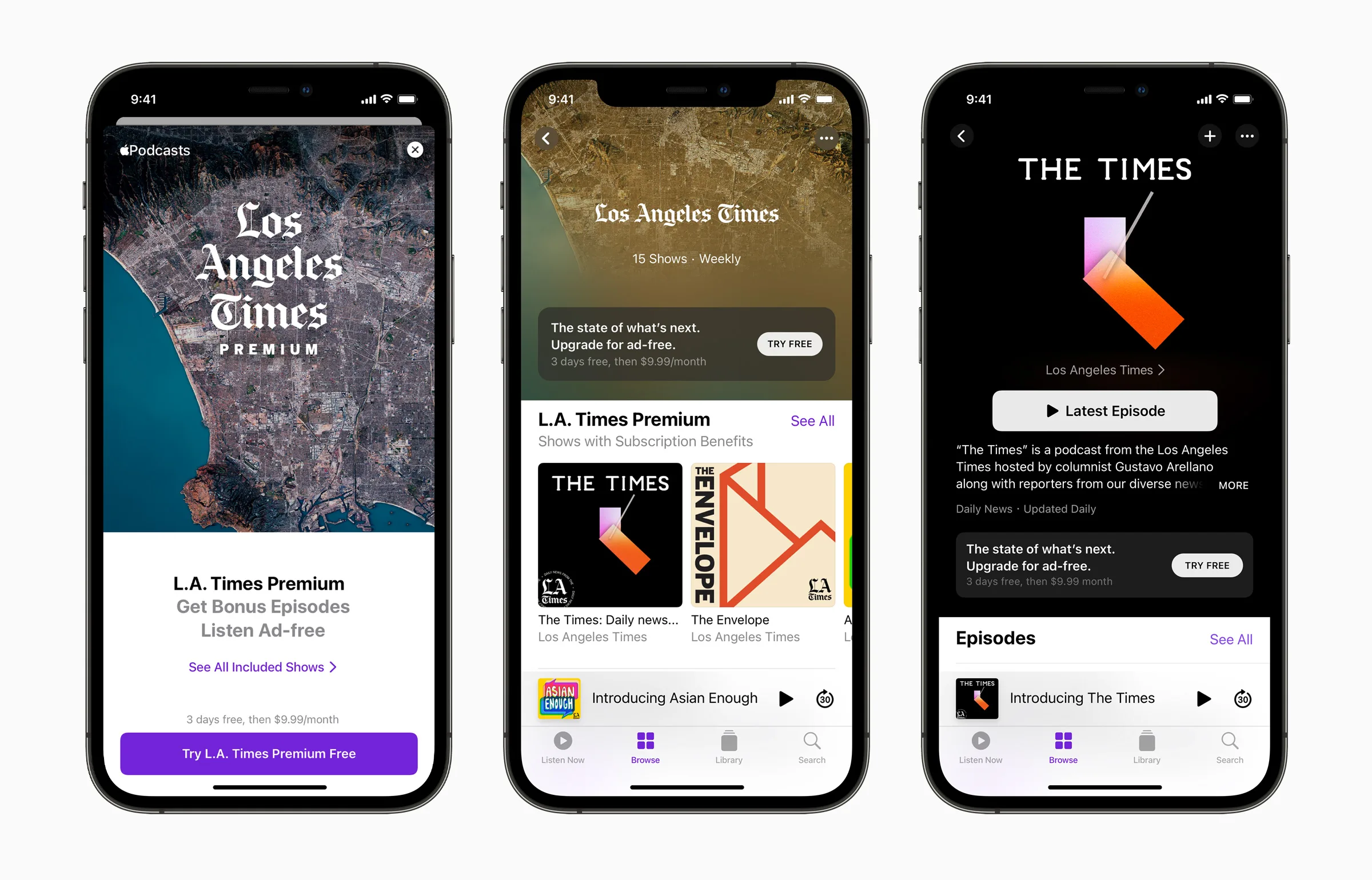 Photo Credit: Apple Newsroom
Here is how Apple describes its podcast service on its website:
Beyond millions of shows you can listen to at no extra cost, you can support many of your favorite podcasts by subscribing. Premium subscriptions unlock perks such as bonus episodes, ad-free listening, early access to new shows, and easy access to archived content.
About Apple Podcasts Subscriptions
Apple has invested in podcasts for a long time. But only in recent years, with backing from music streaming platforms and a pandemic that reshaped how people live and work, have podcasts moved back into the spotlight.
How Listeners Get Started with Apple Podcasts Subscriptions
By subscribing to a channel, listeners get new, original shows without ads, plus early access to exclusive series from that channel. Plans range from monthly to annual, and content can be shared with up to six family members.
Note: Unfollowing a podcast in Apple Podcasts does not cancel your paid subscription.
How Creators Offer Apple Podcasts Subscriptions
Creators simply join the Apple Podcasters Program to open subscriptions to their listeners. Creators set their own prices, starting at NT$10. Apple charges an annual fee of about US$19.99 (NT$570 in Taiwan), plus a share of subscription revenue over the first two years: 30% in year one and 15% in year two (all other income, including ads, goes 100% to the creator). Once enrolled, creators get every tool they need to run a subscription, including analytics and Apple Podcasts integration, website placement, and affiliate marketing to earn a share of ad clicks.
Look closely at Apple's first wave of partners, including CNN, The Washington Post, and Sony Music, and you'll see most offer subscriptions at the channel level rather than per show. Subscribe to CNN's channel and you get every show it produces. Clearly, only large production houses have enough exclusive content to make this work and to bundle their offerings through subscriptions.
Spotify's Ambitions as a Music Streaming Platform
At the end of April, music streaming platform Spotify also announced podcast subscriptions, delivered through Anchor, the podcasting platform it acquired in 2018. Monthly prices range from US$2.99 to US$7.99, but listeners can't subscribe in-app, a move meant to avoid Apple's steep App Store fees.
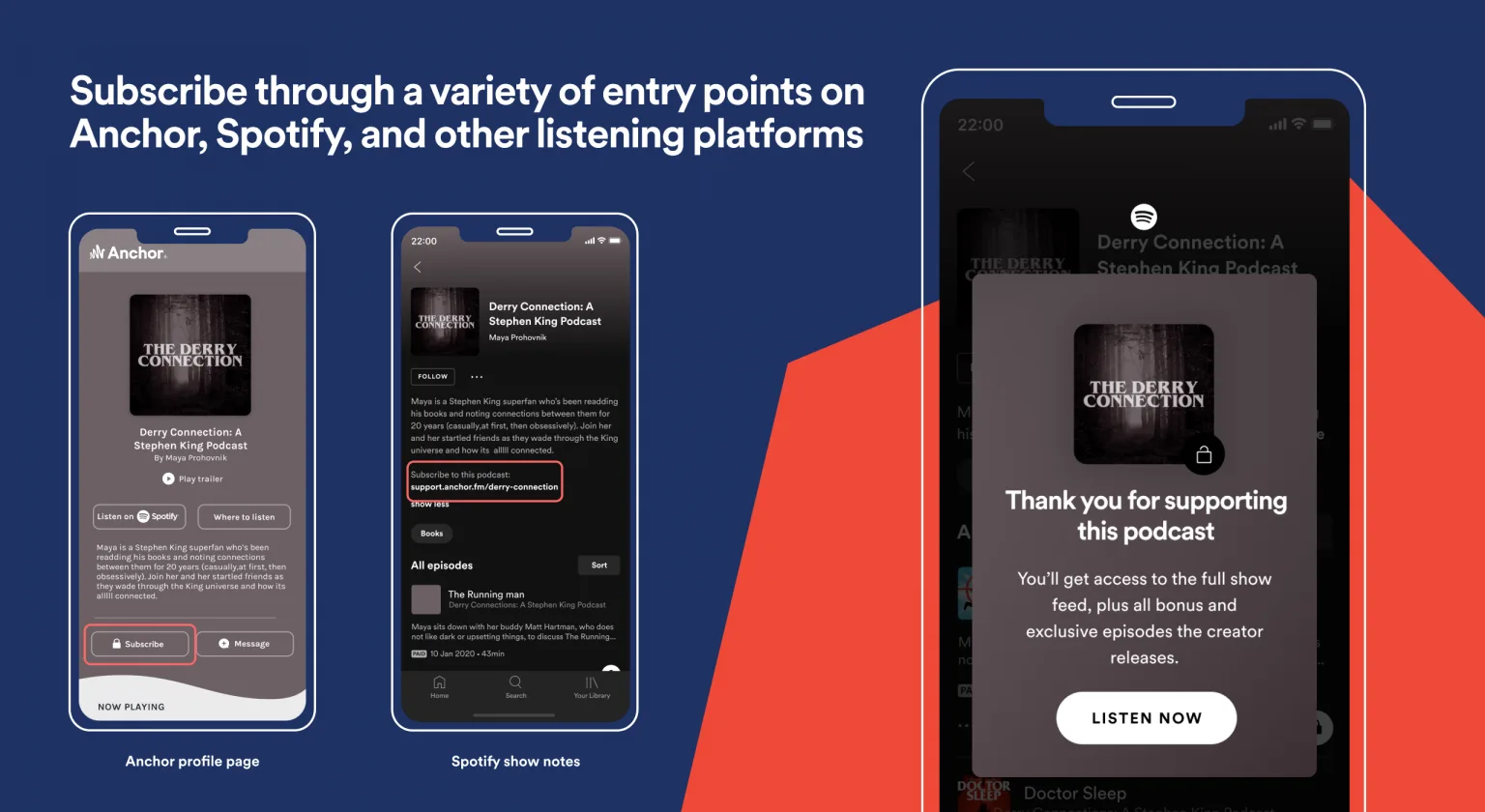 Photo Credit: Spotify Newsroom
Spotify has invited 12 brands to join its subscription service so far, available only in the US. Its main advantages are value for creators and integration with its music streaming platform. Spotify has announced it won't charge creators anything until 2023, and after that will take at most 5%, far more affordable than Apple's annual fee plus hefty revenue share.
Subscriptions Are Building a New Kind of Business Model
 Steady subscriber growth and a constant flow of rich content are the keys to keeping a subscription model alive.
As podcasts have matured and merged with music streaming, users can now move across devices and choose whether they want music or podcasts at any moment. With more creators joining, podcast topics keep multiplying, and brands and advertisers are starting to see podcasts as a new blue ocean.
Subscriptions have become the dominant business model for software companies in recent years. B2B players and consumer brands like Netflix and Spotify alike keep asking two questions: “How do we grow sign-ups steadily?” and “How do we keep delivering rich content?” Now that Apple, Spotify, and other podcast platforms have adopted subscriptions, they too need to focus on giving creators enough technical resources to enrich their content.
How Taiwanese Podcast Startups Are Responding
Taiwan's podcast boom has produced homegrown platforms such as SoundOn and Firstory. Firstory is especially ambitious. It recently updated its subscription and sponsorship plans and partnered with Taiwanese music streaming platform KKBOX to launch a “music embedding” feature. Shows hosted on Firstory and published to KKBOX Podcast can use KKBOX's vast music catalog legally and for free. That solves the old licensing barrier to adding music and opens up more possibilities for integrating music streaming with podcasting.
The Many Possibilities of Audio Experiences
To make subscriptions work on podcasts, creators clearly need to invest more in producing richer, more differentiated content. Today's subscription approach suits large production houses best. But growing the podcast ecosystem and building a stable business model will take many more independent creators, which challenges platforms to develop a more complete subscription strategy.
Meanwhile, Facebook recently launched three social audio features: podcast listening directly on Facebook, Live Audio Rooms with recording, and Soundbites, a kind of audio version of TikTok. The all-in-one approach is Facebook's counterattack against competitors and its bid to build audio experiences on a social platform. Whether or not this multi-pronged strategy pays off, it certainly creates more possibilities for audio services like podcasts.