What Is a Subscription Business? 5 Subscription Models You Need to Know
Subscriptions are the dominant business model of our time, and they have dramatically changed how people buy. We subscribe to Spotify Premium for music and Uber Pass for 10% off every ride, and businesses now subscribe to many software tools to run daily operations. Banks and card issuers made credit cards ubiquitous, and mature cloud computing lets subscription services update in real time to deliver what best serves consumers.
 Porsche TsaiCEO

Subscriptions: The Dominant Business Model of Our Time
Subscriptions are the dominant business model of our time. They have changed how people buy so thoroughly that it's hard to remember how the “ancients” used to shop. Take music: the ancients went to a record store to buy CDs, while we subscribe to Spotify Premium. Or taxis: the ancients flagged one down on the street, while we not only book rides on Uber but also subscribe to Uber Pass for 10% off every trip, plus free Uber Eats delivery on orders over NT$199. Opinion leaders of old shared their views in writing and published books for followers to buy. Today's opinion leaders use YouTube, podcasts, and livestreams, and their huge fan bases subscribe to get the content. Whether the product is tangible or intangible, subscriptions are everywhere.
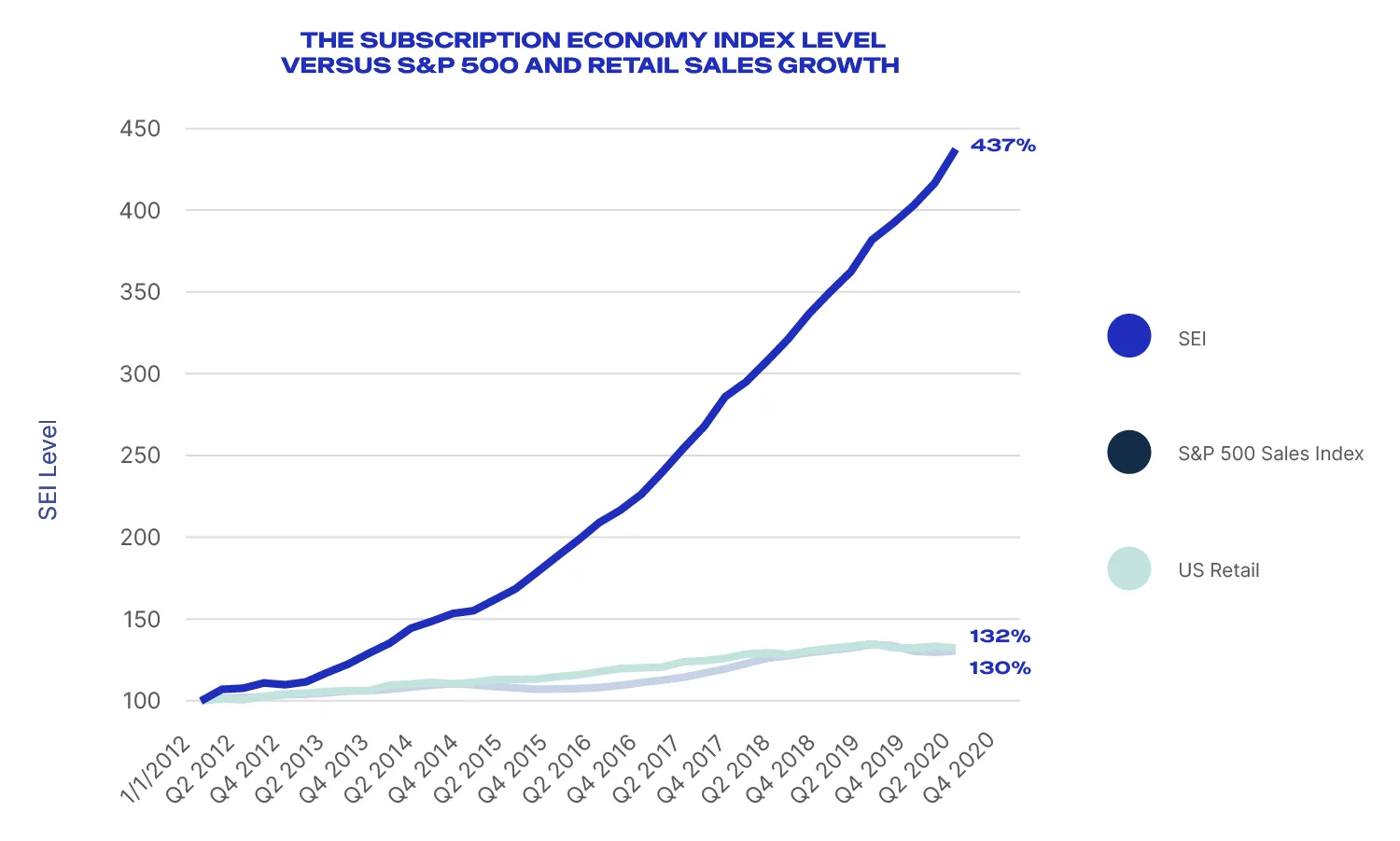 Source: Zuora
Still, subscriptions aren't some great 21st-century invention. American newspapers offered subscriptions as early as the 18th century. Subscriptions only exploded in the past 20 years thanks to widespread credit cards and mature cloud computing. Credit cards made buying online easier, and because banks and card issuers built a bridge of trust, consumers don't have to worry about a company taking their money and disappearing, while companies can count on getting paid regularly. That's the foundation subscriptions rest on. Cloud computing also means the services we buy can update instantly. Compared with a one-time purchase, subscribing to get the latest version continuously serves consumers' interests best, creating demand for ongoing, subscription-based spending.
A Whole New Way of Running a Business
Subscriptions are where the market is heading. But adopting them isn't as simple as a CEO announcing in a meeting, “Let's switch to subscriptions!” It takes an entirely new way of thinking about the business.
One-time purchases used to dominate, so companies got used to tracking monthly, quarterly, or annual sales. Under a subscription model, customers pay regularly, creating stable recurring revenue. That's why modern companies care about retention and growth (upgrades) to raise lifetime value, and about acquisition, winning new customers on top of the existing base, to create the dream J-curve.
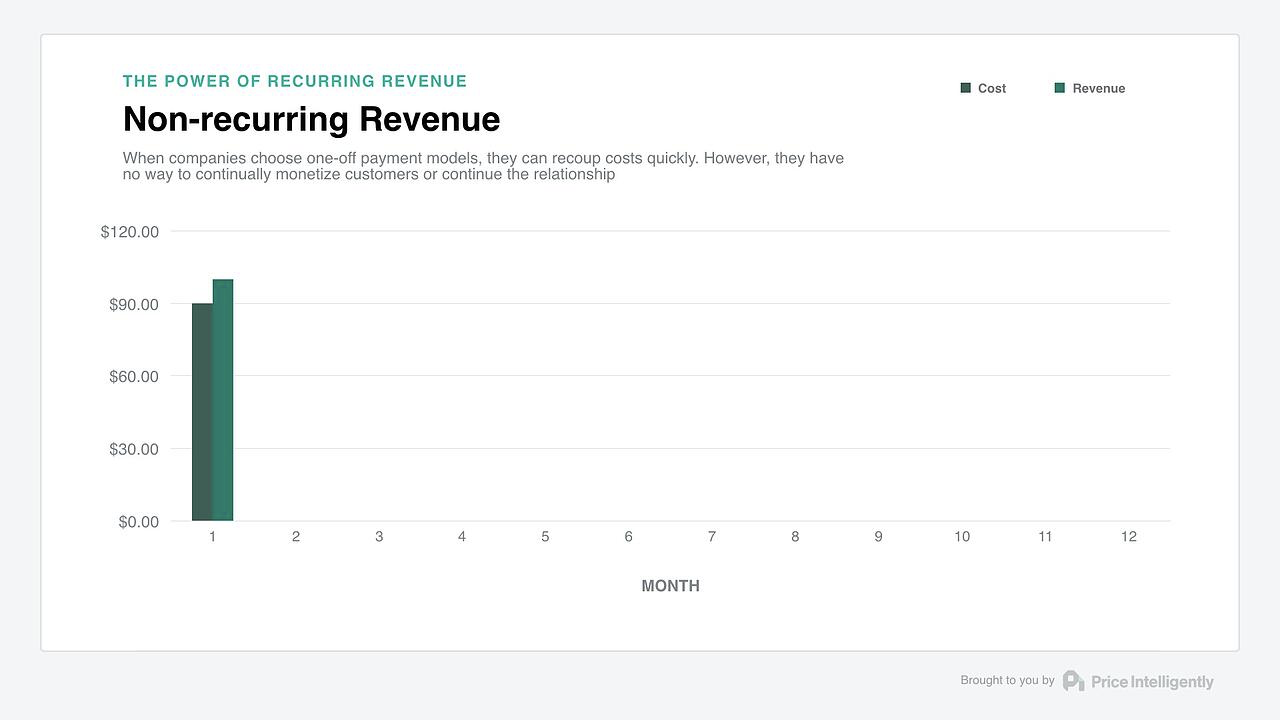 Source: ProfitWell
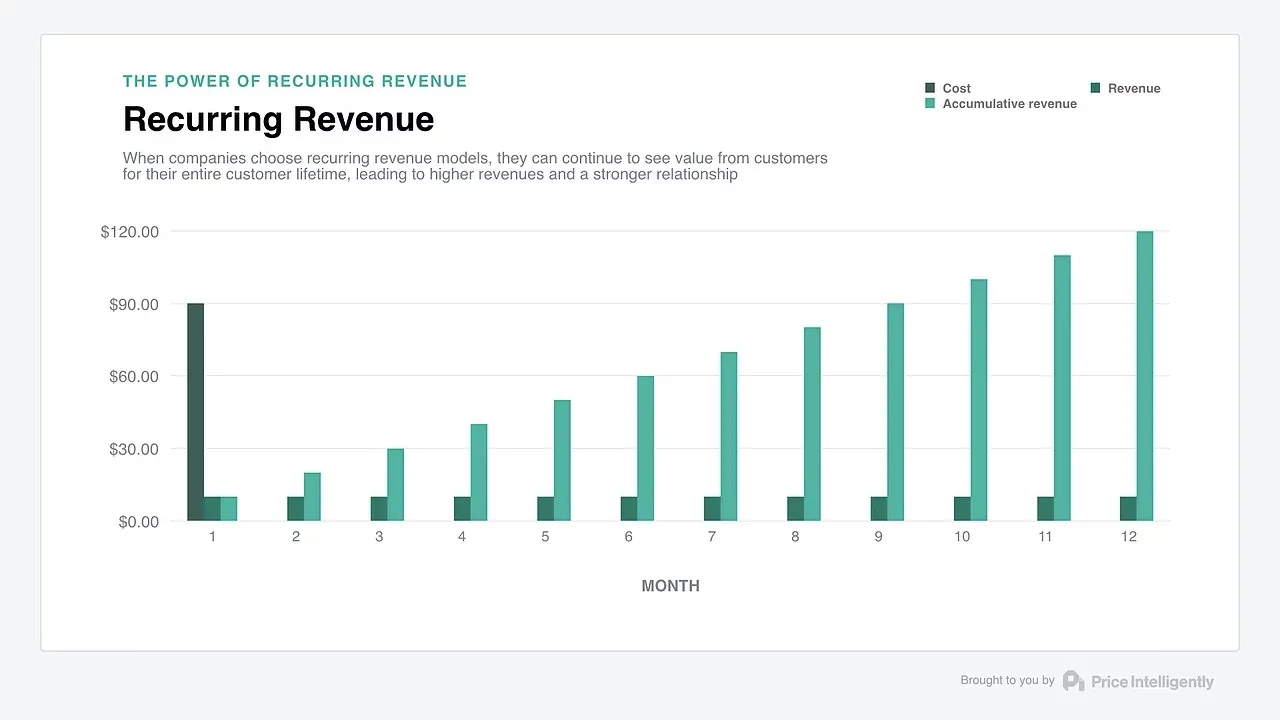 Source: ProfitWell
To build a successful subscription business, companies must maintain long-term, trusted relationships with customers. That's why subscription businesses have a customer nurturing strategy. Modern companies tend to use the marketing flywheel concept together with a customer journey map, rather than the traditional marketing funnel.
The marketing funnel suits one-time purchases. Say you're selling ballpoint pens at Taipei Main Station: you want to reach as many people as possible in one place, then use human impulses to boost conversion. Who the customer is, what problem your product solves for them, whether they'll come back, whether they'll recommend you to friends and family: none of that factors into your thinking.
Companies that use a marketing flywheel care whether customers see the value of the brand and product. With a customer journey map, they segment customers, deliver tailored content, and turn passersby into VIPs step by step. If you run a winery, for example, you'd want to understand how deep a customer's wine knowledge goes and which regions and styles they prefer, then recommend the right first bottle and guide them to try more.
Companies embracing subscriptions need a mindset completely different from traditional businesses. Only by putting customers at the center, understanding their journey, and knowing where they can upgrade can you build a successful subscription business.
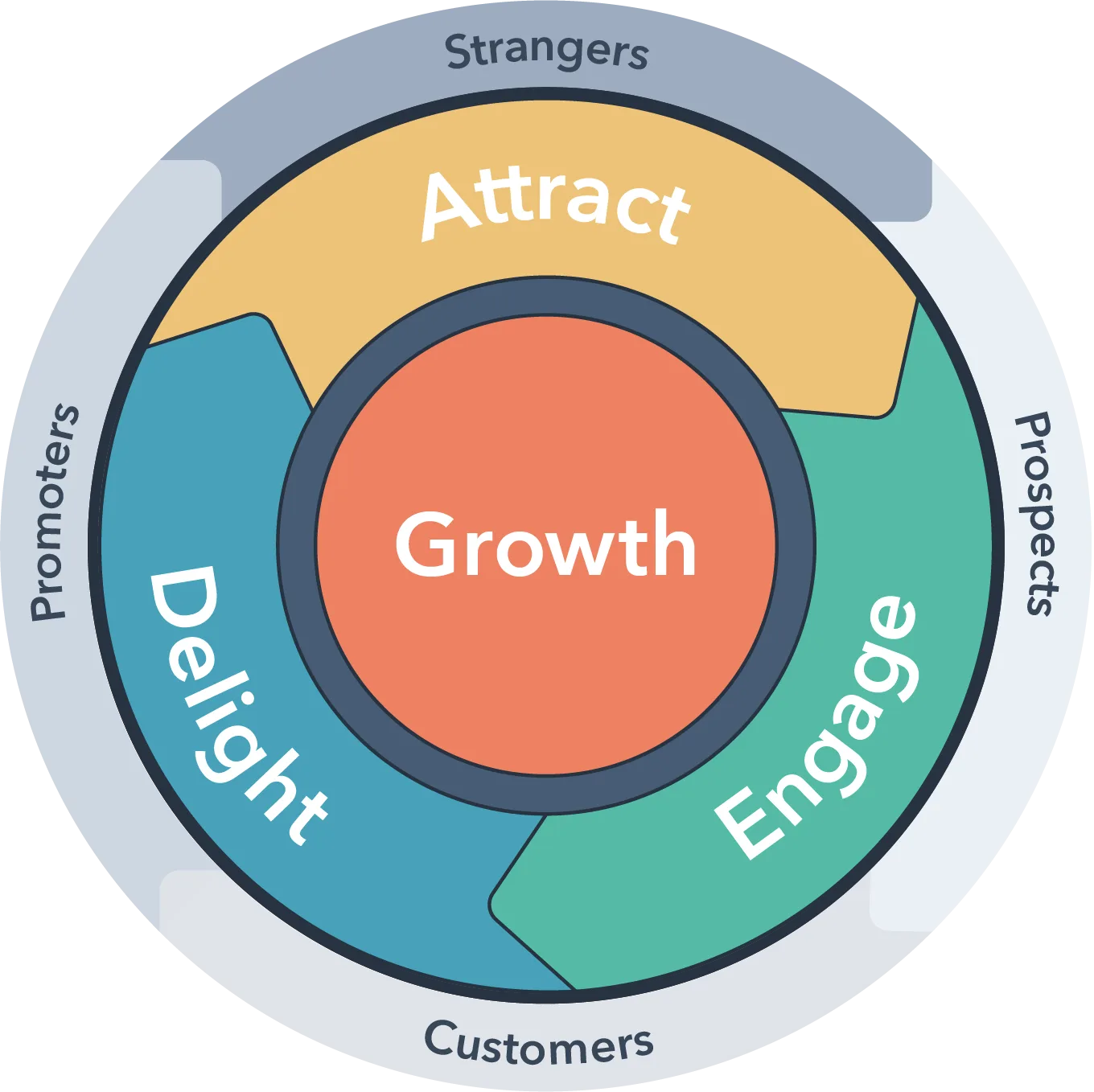 Source: HubSpot
5 Common Subscription Models
Subscriptions take different forms depending on the product and business model. Here are five common ones:
1. Accessibility
Everyone's favorite for value! Pay a little each month and enjoy a seemingly endless ocean of content. The benchmark services are Spotify and Netflix.
These platforms keep releasing the hot new titles you'll chat about over lunch with coworkers. They also tend to have powerful algorithms that find what you'll like among tens of millions of items and build a personalized recommendation list for you.
This model works offline too. The gyms that have sprung up everywhere in recent years are a great example.
2. Discount
This is the model that pulls you deep into a platform's clutches. Pay a monthly fee and you get “privileges” such as exclusive discounts or super-fast shipping. Users can't break free because they think, “I've already paid, so the more I buy, the better the deal!” That dramatically boosts stickiness and spending.
Uber Pass and Amazon Prime are the best-known culprits. Give them a try.
For an offline example, think back: every time you shop at COSTCO, don't you end up buying more than you planned?
3. Software
Thanks to advances in cloud computing and faster internet everywhere, Software as a Service (SaaS) has gone mainstream, letting everyone use constantly updated software right away. Few people buy boxed software outright anymore. Individuals and companies alike rely on many software tools: Google Workspace apps like Gmail and Calendar for daily operations, Notion as the team's knowledge base (single source of truth), or Figma to bring together all UI/UX design work and the design system.
Unlike the other four models, these software subscriptions usually don't charge a fixed price. Pricing depends on usage and the features you need. That sounds contradictory: if you pay by usage, why call it a subscription? Because these services offer discounts to encourage annual contracts or auto-renewal, so they still count as subscriptions!
Of course, OakMega's Social CRM service runs on subscriptions too. For less than NT$1,000 a month, you can use the most powerful customer relationship management system on social channels and build your most loyal VIP customers.
4. Publications
This is the model I personally respect most: users pay for knowledge, which lets creators produce deeper work instead of chasing ads and clicks. People used to take free content for granted, but as the Netflix documentary The Social Dilemma puts it:
If you’re not paying for the product, then you’re the product.
Creative work needs to be paid for if we want to move society toward a better future.
Transforming publishing isn't easy. In 2011 (the era of the iPhone 4s and iPad 2), The New York Times decided to launch subscriptions, asking readers to pay for timely, high-quality news paired with personalized newsletters. By 2020, after ten years of effort, 5.7M of its 6.5M subscribers were digital-only, and digital subscription revenue finally overtook print, marking a successful digital transformation.
Beyond traditional publishers using subscriptions to transform, new kinds of content creators are embracing them too. That's why YouTube, Spotify, and Apple Podcast have rolled out subscriptions one after another, hoping to build a healthier cycle.
5. Boxes
This model blends online and offline: pay a monthly fee and receive physical products. You may not know that Netflix started by mailing DVDs, and that service is still running today! In the early days, subscribers received two DVDs a month; mail them back to Netflix and new movies would arrive the next month.
Another well-known example is Dollar Shave Club. Besides the catchy YouTube promo it shot in its early days, which racked up 27M views, it offered F***ing Great razors delivered to your door for US$1 a month. It upended how men think about buying shaving supplies and took the market by storm.
In Taiwan, many florists have launched flower subscriptions. Plantbe, for example, delivers flowers weekly and pairs them with online flower-arranging classes, earning rave reviews in the neighborhood.
Conclusion
If you now understand what subscriptions are and have picked a model that fits your product, congratulations! You've taken the first step toward running a subscription business.
Subscriptions come in many more variations, and there are plenty of nuances in execution. Click the emoji below to share your feedback. If the response is good, I'll share more about the joys, and the blood and tears, of subscriptions.