How to Use ChatGPT for Content Marketing: Strategy, Methods, and Examples in One Guide
ChatGPT, the AI chatbot that exploded in 2023, is transforming how we work. This guide shows marketers how to use ChatGPT for content marketing—especially if you’re a one-person team juggling multiple channels, fast-turnaround copy, and a constant need for fresh ideas.
 Wayne ChungCustomer Success Specialist
Boost Your Digital Marketing Productivity with ChatGPT
ChatGPT, the AI chatbot that took off in 2023, is reshaping the workplace with new ways to get more done, faster. If you’re a marketer, this article will spark ideas for using ChatGPT to make your content marketing more productive. And if, like most marketers, you find yourself “running multiple marketing channels solo,” “churning out different kinds of copy on tight deadlines,” and “always needing new sources of inspiration,” the sections below will help you put ChatGPT to work and sharpen your content marketing.
Short on time? Use this outline to jump to what you need:
How to Build a Content Marketing Strategy with ChatGPT
- Create a content strategy by combining scenarios, content, and keywords
- Brainstorm product use cases
- Understand customer purchase motivations
- Generate keywords from use cases and motivations
- Go from divergent to convergent thinking to put your industry experience to work
Three Ways to Use ChatGPT to Simplify Marketing Work
- How to use ChatGPT to generate new sources of ideas
- How to use ChatGPT to produce marketing copy at scale
- How to use ChatGPT to create content for different marketing channels
Marketers Will Focus on Industry and Strategy Expertise
- ChatGPT can replace execution, but not necessarily strategy
- Competitive marketing strategies win faster in the market
How to Build a Content Marketing Strategy with ChatGPT
Keywords are a core element of content marketing. Pair a variety of keywords with the right scenarios and purchase motivations, and you have the makings of a solid content strategy. We can use the material ChatGPT provides as a starting point for brainstorming strategy, then develop the final content themes from there.
Combine Scenarios, Motivations, and Keywords into a Content Marketing Strategy
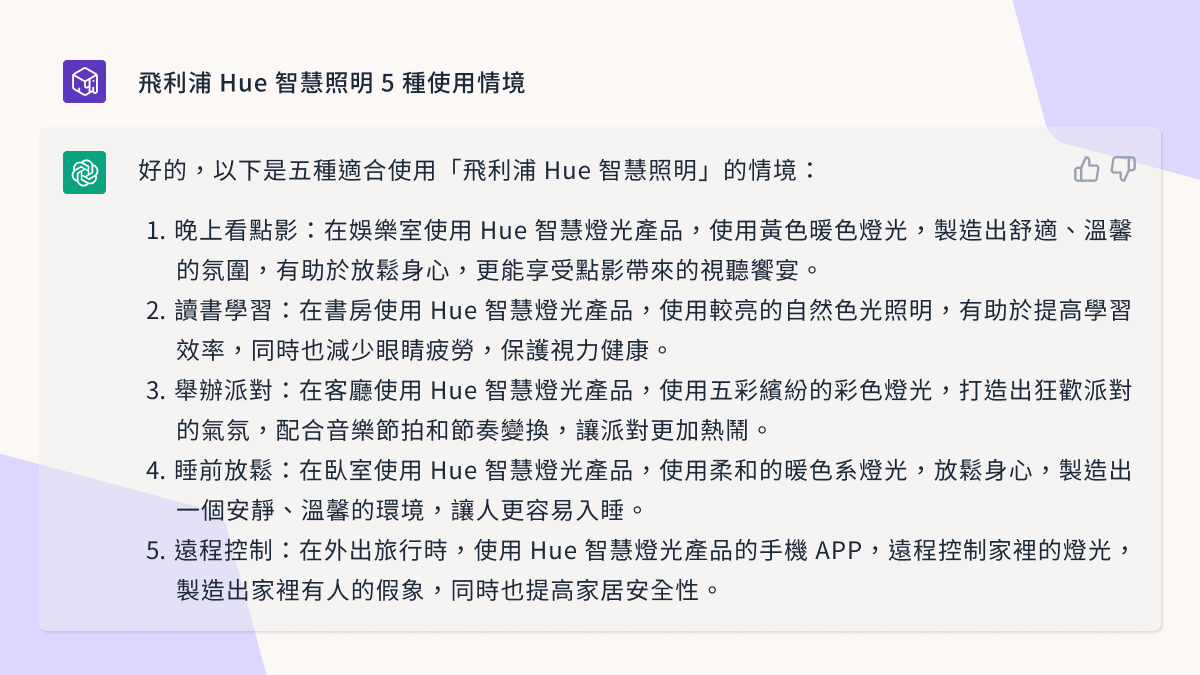
Let’s use the Philips Hue smart lighting system as an example. From brainstorming scenarios and hypothesizing purchase motivations to drafting parent and child keywords, ChatGPT can handle every step. Start with scenarios to understand how consumers picture using the product, then use purchase motivations to generate keywords, and finally use those as the basis for parent and child keywords. That’s how you build a complete content strategy.
Step 1: Discover Product Use Cases
Use the product’s use cases as themes to package it around.
- Prompt: “[Product name]—give me five different use cases for this product.”
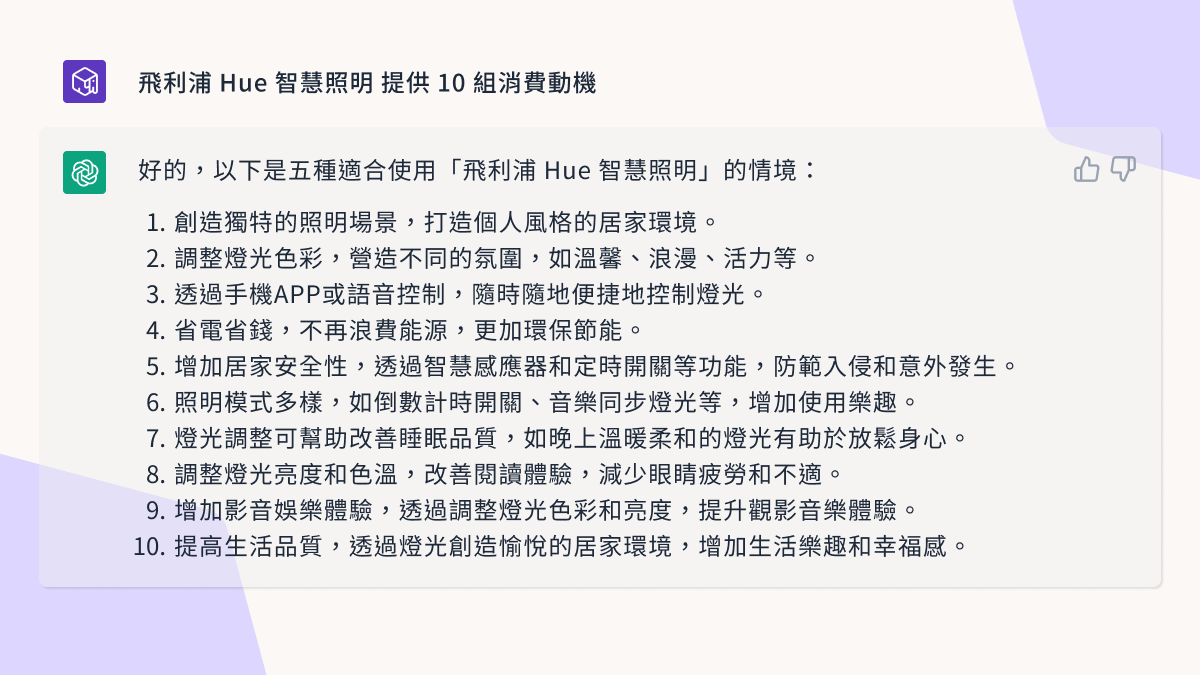
Step 2: Understand Customer Purchase Motivations
Use the product’s purchase motivations as the backbone of your marketing content and as direction for persuasive copy.
- Prompt: “[Product name]—give me ten different purchase motivations for this product.”
Step 3: Generate Keywords from Use Cases and Purchase Motivations
Take 10 parent keywords covering different aspects of the product and pick 3–5 of them as seeds for child keywords. Generate 3 keywords from each parent keyword to get 9–15 keywords in total, then use this growing list as a reference for planning your content.
- Prompt: “[Product name], [number] keywords”
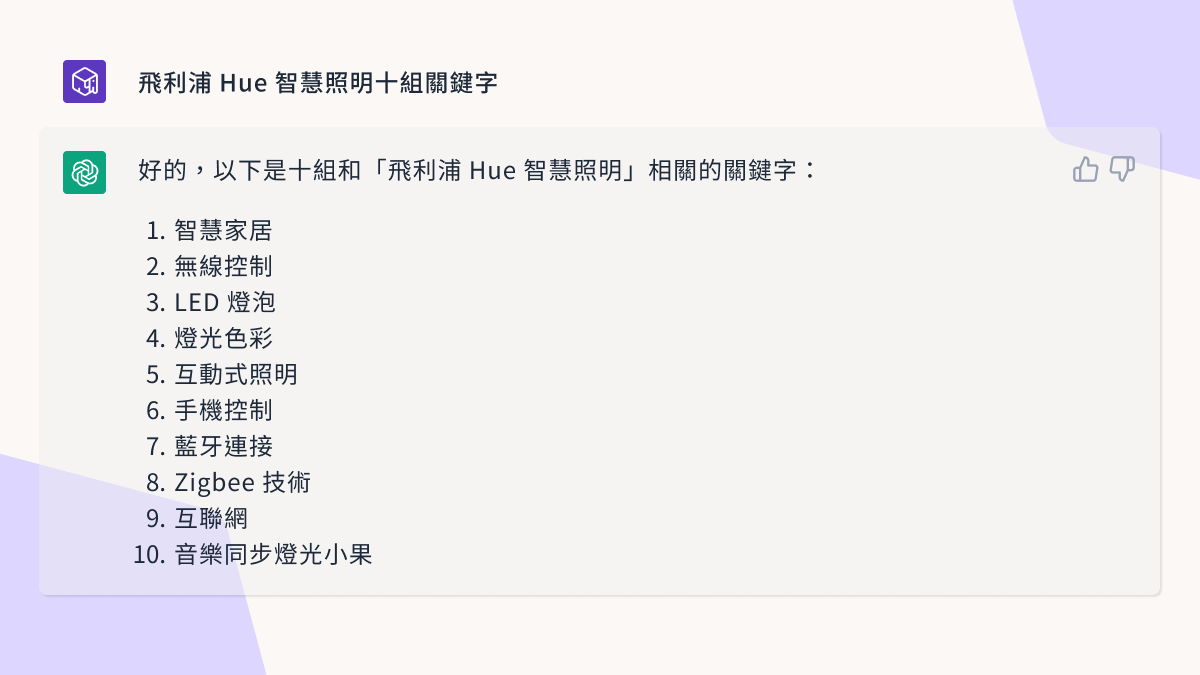
Go from Divergent to Convergent Thinking to Put Your Industry Experience to Work
With these keywords, use cases, and purchase motivations—backed by market research and industry experience—you can develop marketing strategies for Philips Hue smart lighting along several dimensions. Suppose “watching movies at night” is the scenario driving most early buyers of these bulbs, and the purchase motivations are “adding value to the home” and “control over color.” You can then build the product’s content marketing strategy around them.
Three Ways to Use ChatGPT to Simplify Marketing Work
How to Use ChatGPT to Generate New Sources of Ideas
As a versatile chatbot, ChatGPT gives content marketers a wide range of creative input through features like topic generation, copy generation, and Q&A generation. Topic generation helps marketers quickly come up with keywords and headlines related to a specific theme. Copy generation helps create all kinds of original content, including product descriptions, press releases, and ad copy. Q&A generation answers customer questions quickly, helping improve customer satisfaction. If you’re still struggling to find prompts that produce useful content, try the example below to give your marketing productivity a serious boost.
- Prompt: “Using [theme] as the theme, give me 10 social media engagement ideas to grow followers for [brand/product].”
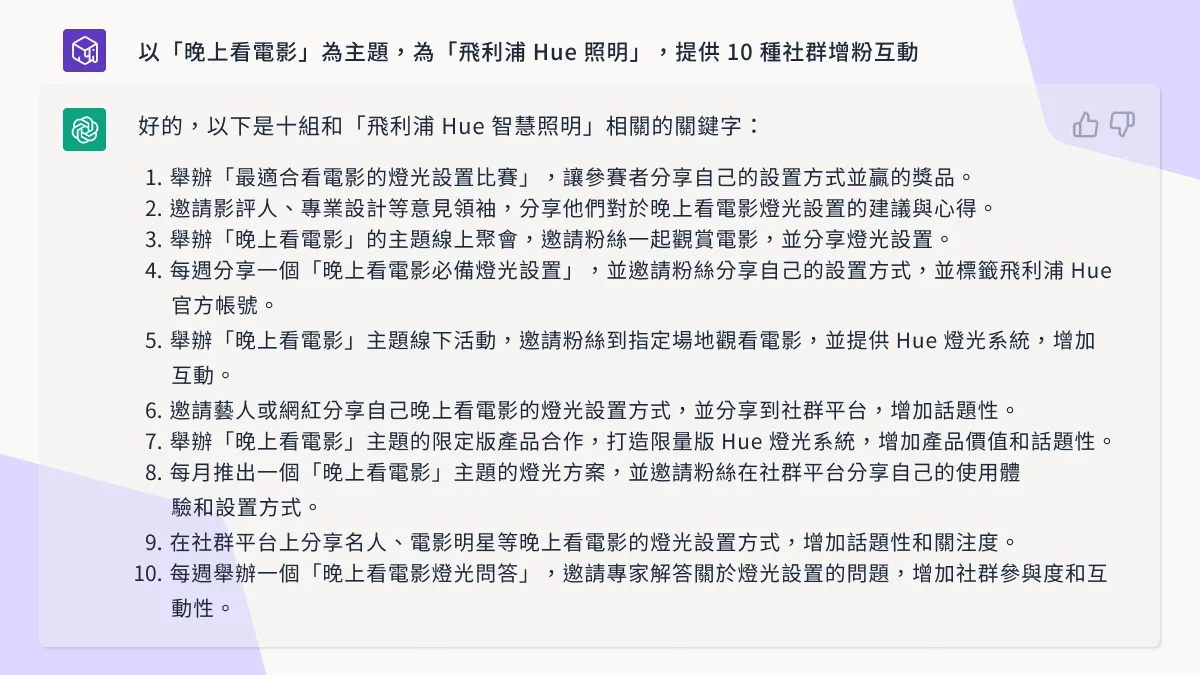
How to Use ChatGPT to Produce Marketing Copy at Scale
To generate marketing copy with ChatGPT, first prepare the relevant material, such as your company’s product overview, campaign details, and competitor information. You can then use that material to produce marketing copy in volume for your content marketing.
You can also set specific parameters for the copy—such as theme, style, and tone—to make sure the output meets your requirements. This makes the copy a better fit for your campaign and more in tune with your target audience’s tastes and needs. The approach below will help you create a richer pool of copy.
-
Prompt: “Write a [word count]-word product description for [product] with emojis, on the theme of [theme], in a [tone] tone.”
-
Set a word limit (length is usually the most important constraint for each channel)
-
Suggest a style (audiences on different channels expect different tones)
-
Ask for emojis (they’re common on social platforms)
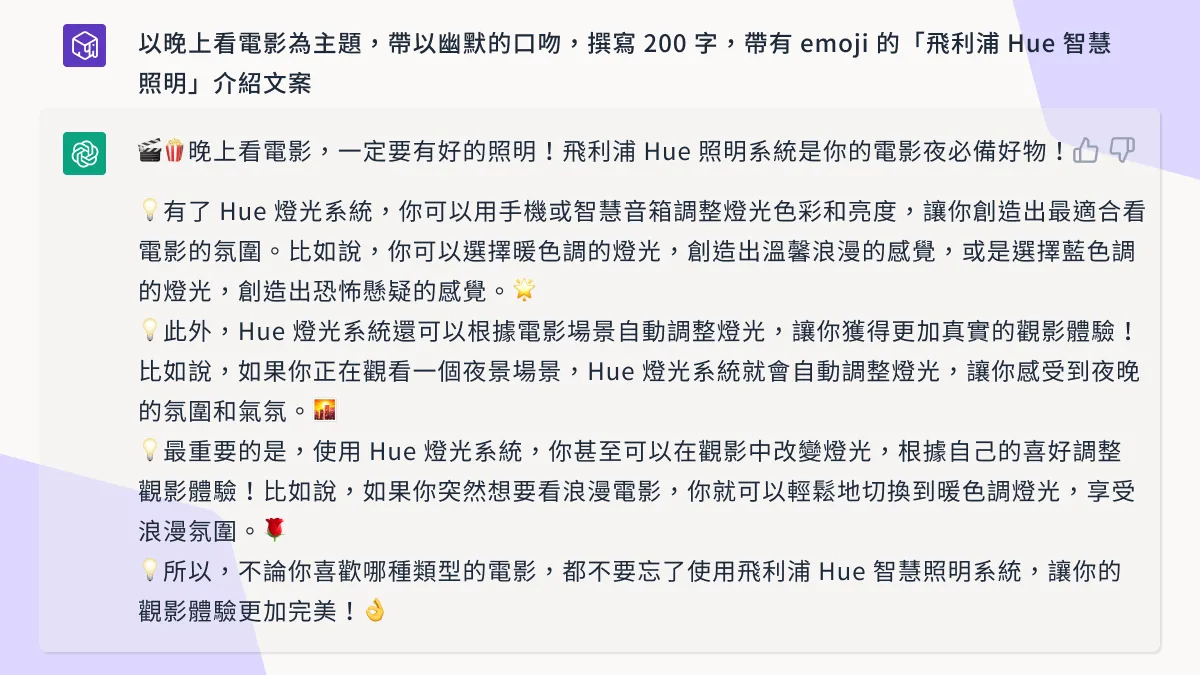
How to Use ChatGPT to Create Content for Different Marketing Channels
ChatGPT can help marketers create content for different channels, including Facebook, LINE, Instagram, websites, and email. Just enter the content requirements for each type of platform, and you can produce distinct versions of your content as differentiated marketing assets.
- Prompt: “Rewrite the content above as [X]-word, [Y]-word, and [Z]-word versions.”
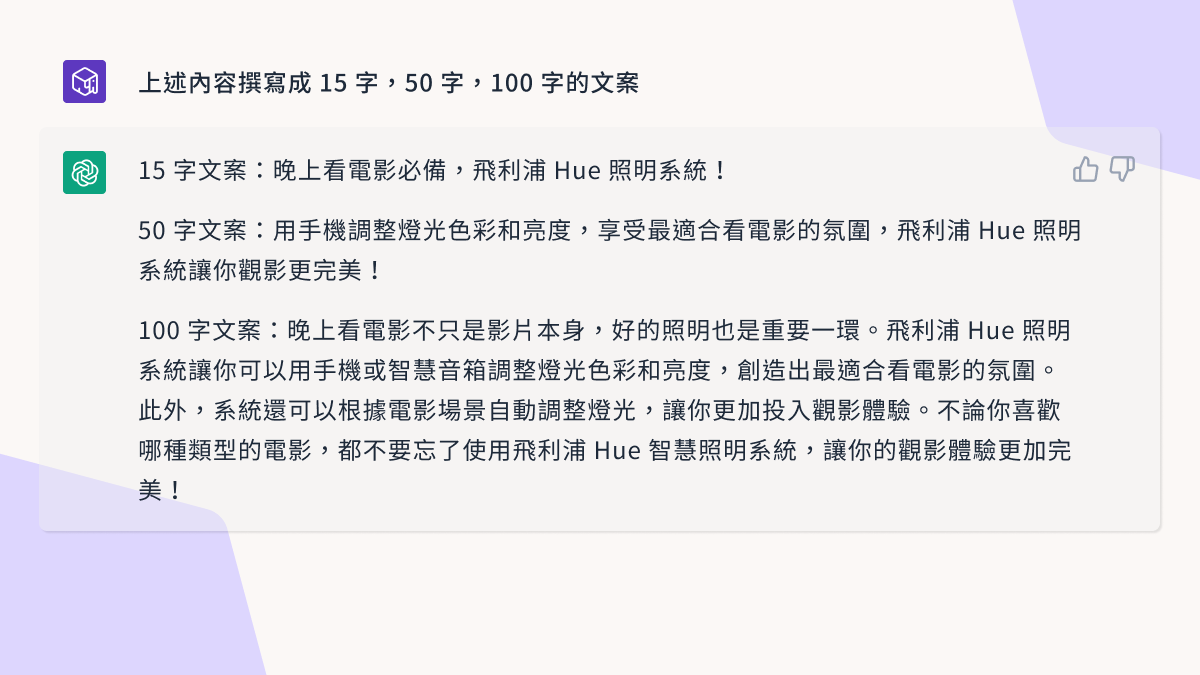
Marketers Will Focus on Industry and Strategy Expertise
ChatGPT Can Replace Execution, but Not Necessarily Strategy
Tomorrow’s marketers will need stronger data analysis and big-picture thinking. Beyond knowing how to run a range of digital media platforms, they’ll need to craft comprehensive, effective marketing strategies that raise brand awareness and drive sales. Technologies like ChatGPT can generate a huge range of creative combinations; marketers then apply their industry experience and judgment to get far more out of their marketing.
Competitive Marketing Strategies Win Faster in the Market
Marketers will inevitably face an increasingly competitive market. They’ll need to explore new tactics and strategies and keep sharpening their skills to secure a stronger position. Deeper market experience and more agile strategic thinking will help marketers build buzz for their brands in a fast-changing market—and move closer to their sales goals.