






NVIDIA Unveils the Vera Rubin Platform: AI Computing Enters the Era of System-Level Reinvention | CEO Insights
Unveiled at CES, NVIDIA's Vera Rubin platform cuts inference token costs to one-tenth, accelerating the shift to the Agentic Enterprise.
 Porsche TsaiCEO
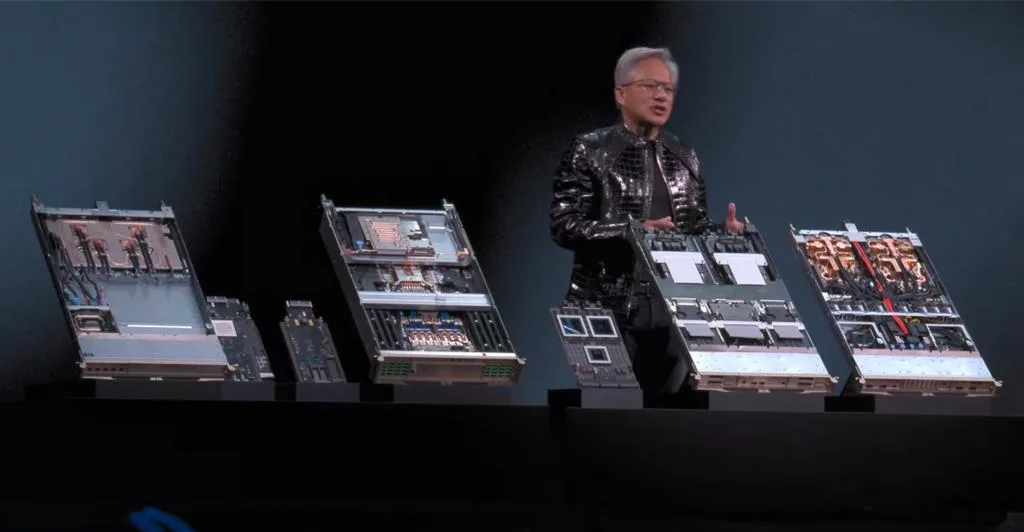
In the fast-moving world of AI computing, hardware platforms typically turn over on a yearly cycle. Yet less than a year after launching the Blackwell architecture, Jensen Huang took the stage at CES to reveal NVIDIA's next-generation AI computing platform: Vera Rubin. It's a clear sign that this race is no longer just about faster individual chips. It's about redefining the entire AI computing architecture.
Vera Rubin isn't about chasing higher peak performance for its own sake. It answers a more practical problem: as AI models keep scaling and inference workflows grow longer and more complex, the traditional GPU-centric, stack-the-modules approach has become a bottleneck for both performance and cost.
Named After an Astronomer: A Metaphor for a System-Level Shift

Vera Rubin was an astronomer best known for confirming the existence of dark matter. Her research revealed a crucial fact: what truly governs the motion of galaxies isn't the matter we can see, but an invisible structure behind it that rules everything.
By giving this name to its new AI platform, NVIDIA signals a shift in its technical direction. The key to AI no longer lies only in the models themselves, but in the invisible system structure that keeps them running. The Vera Rubin platform aims to rebuild the foundation of AI computing at exactly that level.
Extreme Co-Design: From Chip Design to Systems Engineering
Vera Rubin isn't a single processor. It's a complete platform built on an extreme co-design philosophy. From day one, NVIDIA designed for how six key chips work together, folding compute, memory hierarchy, interconnect, networking, and system-level performance into a single design goal.
This is a sharp break from the old model of designing components first and integrating the system later. At its core, Vera Rubin ensures data moves through the entire system along the shortest path with the lowest latency and energy use, dramatically cutting training time and inference costs. This system-level optimization is what makes its generational leap in performance possible.
No Cables, No Vents, No Fans: A Physical Design Built for AI Inference
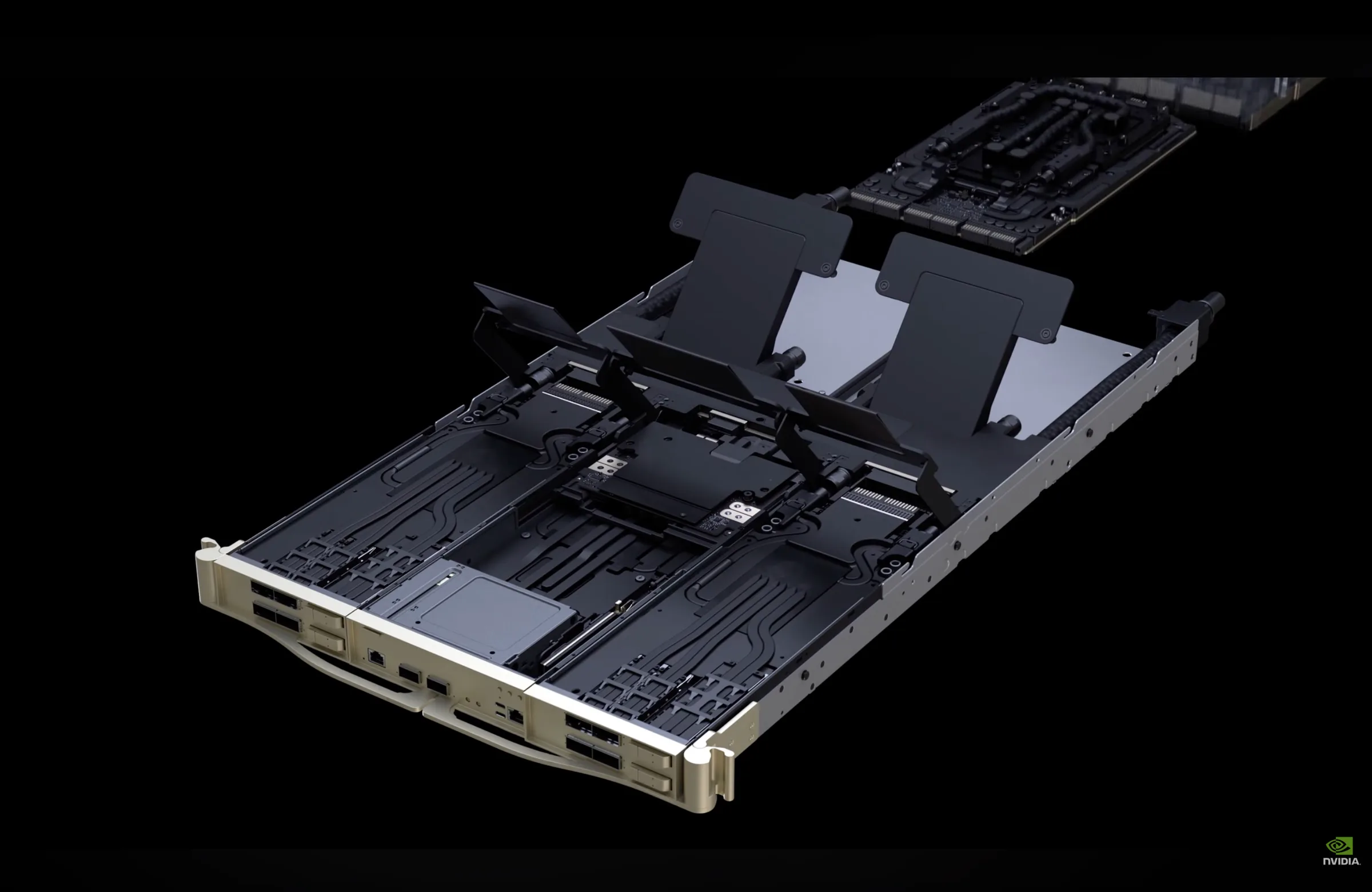
This systems thinking shows up concretely in Vera Rubin's Compute Tray design. To maximize transfer efficiency and reduce power consumption, NVIDIA adopted a cable-free, vent-free, fan-free structure, integrating power and data transmission into the backplane and direct-contact interfaces.
This design not only reduces the impedance and failure risks that come with cabling, but also lets cooling and power management be optimized at the rack level. For AI inference and agentic workloads that run for long periods and are highly latency-sensitive, this kind of stable, predictable system behavior is worth more in practice than single-point performance.
When a Rack Becomes a Logical AI Processor
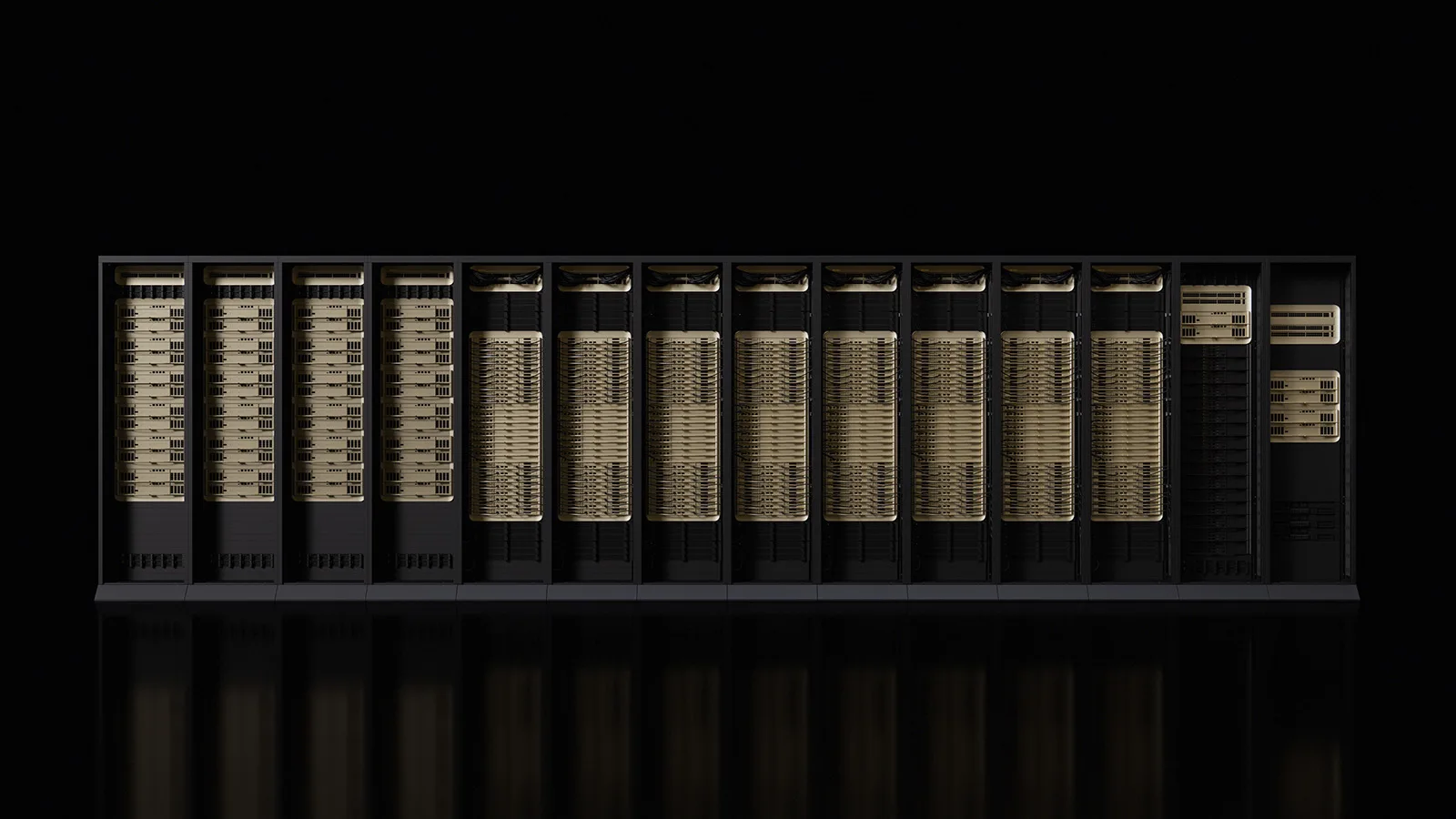
At scale, Vera Rubin's system-level positioning becomes even clearer. A single rack consists of 18 Vera Rubin Trays, totaling more than 220 trillion transistors. That's a level of complexity far beyond what any single chip or server could handle.
At this level, the unit of design is no longer the GPU but the entire rack. Data transfer, synchronization, latency control, and reliability all have to be considered holistically at the system level. Vera Rubin's design philosophy is precisely to treat the whole rack as one logical AI superprocessor.
Built for Inference: Meeting the Demands of Large and Reasoning Models
Vera Rubin responds to a structural shift in where AI is heading. As models keep growing, and especially with the rise of reasoning models, AI no longer produces results in a single pass. It needs to consume large numbers of tokens and run multi-step, long-sequence reasoning to arrive at more accurate answers.
The bottleneck for these workloads often isn't peak compute. It's whether inference costs stay under control and whether the system can run reliably for long periods. Vera Rubin's goal is to make this kind of inference a reality that can be deployed at scale.
From Personal Use to the Agentic Enterprise
This also explains why Vera Rubin's real audience is enterprises, not just personal use cases. As AI moves into core business processes, it must be able to securely access internal data, follow existing workflows, and act automatically after understanding and reasoning, becoming part of how the business runs.
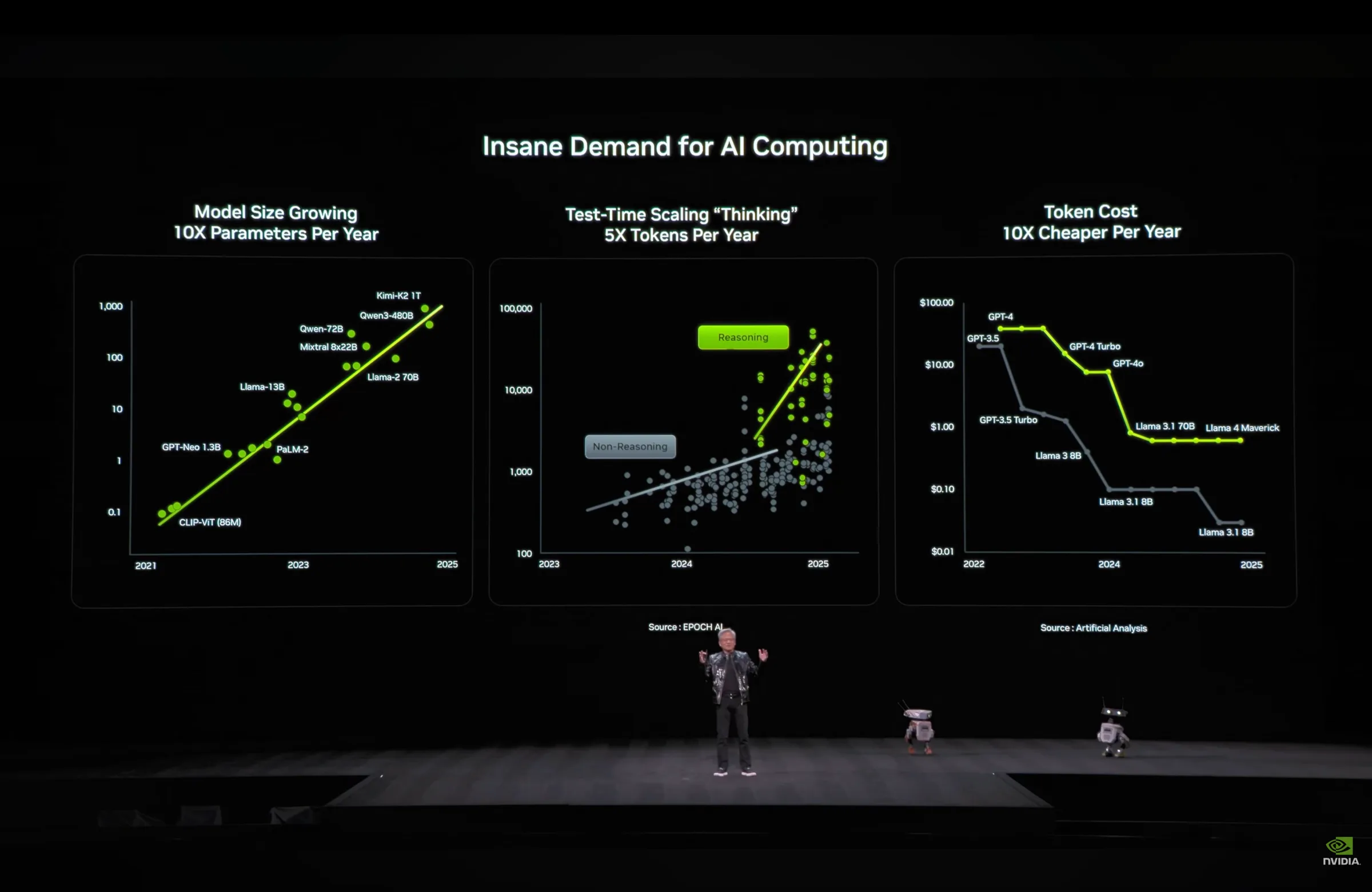
In this Agentic Enterprise scenario, lower inference costs are decisive. Vera Rubin brings the cost of each inference token down to one-tenth of the previous generation, letting enterprises shift resources from raw compute toward the AI applications and process design that truly create value.
When the Platform Is Redefined, So Are the Possibilities of AI
Vera Rubin matters for more than a performance number. It declares that AI computing has entered a new stage. As the unit of computing expands from chip to system, and from server to rack, the role AI can take on changes with it.
What do you think: did enterprises' demand for smarter, more autonomous AI drive the birth of this platform? Or did the platform itself open up an entirely new vision of what AI can do for enterprises? Let me know in the comments.