




A NT$24 Billion Drug Resilience Plan: You Can Buy Factories, but Can You Buy Resilience? | CEO Insights
Taiwan is spending NT$24 billion on its National Drug Resilience Preparedness Plan. But does bringing factories home actually make a supply chain resilient? Starting from a counterintuitive EU study, I argue that real resilience lives in the flow of information, and that this is not just a pharma problem but one every manufacturer in Taiwan shares.
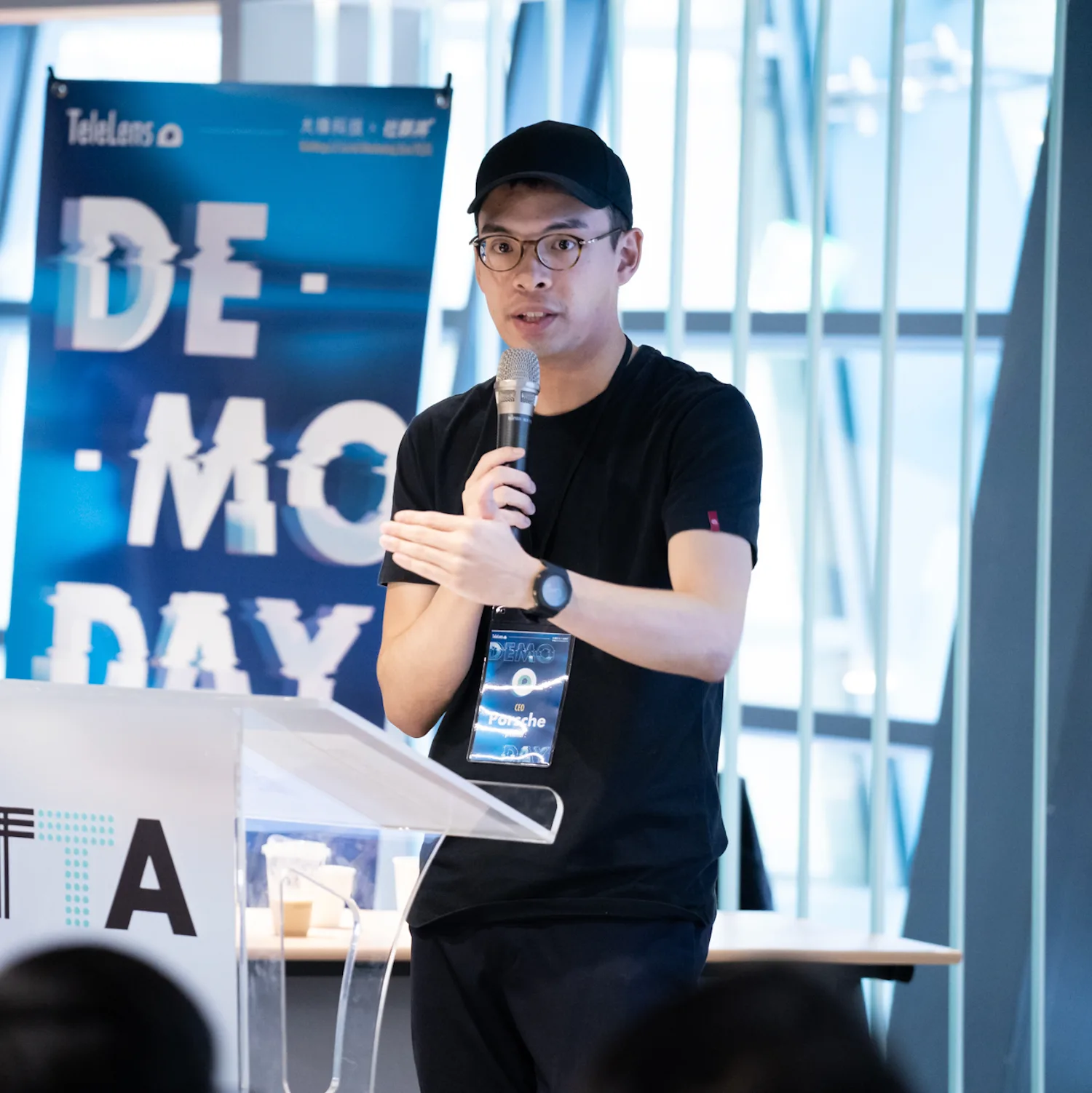 Porsche TsaiCEO
 Resilience isn't about geography. It's about whether information can flow.
On March 5 this year, President Lai Ching-te personally chaired the seventh meeting of the Healthy Taiwan Promotion Committee and announced a four-year, NT$24 billion "National Drug Resilience Preparedness Plan." When a head of state steps up to back a single industry program, every manufacturing owner in Taiwan should stop and think about what that means.
Once drug supply is elevated from a public health issue at the Ministry of Health and Welfare to a national security priority at the Presidential Office, the signal reaches far beyond pharmaceuticals. It's a flare lighting up the next question every manufacturer in Taiwan has to answer: resilience. My answer is this: you can buy factories, but you can't buy resilience. Real supply chain resilience isn't about where your production lines sit. It's about whether information can flow and whether resources can be redeployed in real time.
Contents
- Why the President stepped in personally
- Does bringing factories home make us resilient?
- The last mile of resilience runs through information
- A pharma problem, and every manufacturer's problem
- FAQ
Why the President stepped in personally
Start with what the government is worried about. According to the Ministry of Health and Welfare, about 64% of Taiwan's essential medicines are imported, and domestically produced active pharmaceutical ingredients account for only 16.8% of use. In practice, that means if international shipping is disrupted, geopolitical tensions rise, or a major upstream supplier exits the Taiwan market to cut costs, our healthcare system will feel the pressure very quickly.
We already had a dress rehearsal during the pandemic. Shipping bottlenecks and concentrated capacity caused shortages of many drugs worldwide, and for the first time drug supply was widely seen as a matter of national security rather than just business. The NT$24 billion plan is essentially the government's response to that lesson. It rests on three pillars, "domestic production for domestic use, smart allocation, and international alliances," with the goal of making at least 50 critical drugs locally within four years.
It's worth noting that Taiwan isn't alone. In 2023 the EU published its first Union list of critical medicines, covering more than 200 drugs, and in March 2025 it went further by proposing the Critical Medicines Act. The US and Japan have also made reshoring critical drug production a strategic priority. We're not an outlier. We're riding a global wave in which economic security means supply chain autonomy.
Does bringing factories home make us resilient?
So far the story sounds intuitive: heavy reliance on imports is dangerous, so move production home and resilience goes up. But I want to offer a counterintuitive observation.
While pushing the Critical Medicines Act, the EU produced a thought-provoking study. Its conclusion: highly localized medicines are actually more vulnerable to supply chain disruptions. What really matters isn't where production happens, but how concentrated the market is and how transparent information is.
That's worth reading twice. If all the capacity for a drug sits with a single plant or a single supplier, moving that plant from India to Taoyuan doesn't reduce the risk. You've just moved your eggs from someone else's basket into your own, and there's still only one basket. Real resilience comes from being able to see what's happening across the entire chain and being able to move resources to fill the gaps.
In other words, resilience isn't a geographic concept. It's an information concept.
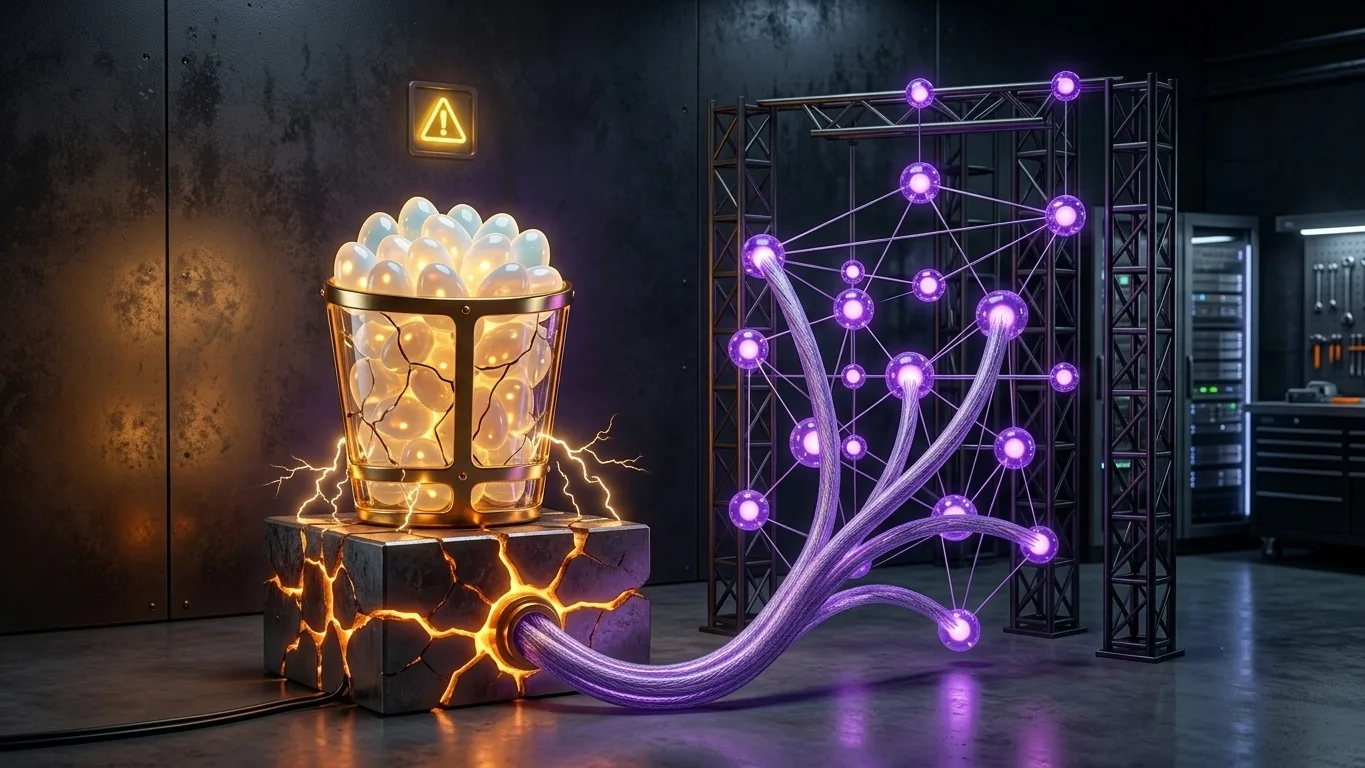 Move the eggs to another basket, and there's still only one basket.
The last mile of resilience runs through information
This is the part of the NT$24 billion plan that's easiest to overlook, yet may matter most: "smart allocation." The government plans to set up a national smart drug logistics and stockpiling center (the PILLS Center) with intelligent supply-and-demand early warning and allocation. In plain terms, the government has finally realized that factories alone aren't enough. You need to know where shortages are coming, where inventory sits, and how to move it there in real time.
But there's a gap. While the government builds smart allocation, information flow on the business side is often stuck a decade in the past. I've seen this scene far too many times: a drug maker communicates with thousands of downstream hospitals, clinics, and pharmacies through sales reps' personal phones, scattered Excel files, and noisy personal LINE groups. It works fine on a normal day. But the moment a real shortage hits and the company needs to send urgent notices, deliver different clinical information to different segments, or collect inventory reports from the channel in real time, this makeshift system collapses instantly.
Pharma adds another layer of difficulty: compliance. By law, academic information about prescription drugs can't be shown to the general public. Drug makers need to show specific content precisely to verified physicians and pharmacists only, something traditional mass-messaging tools can barely do.
At OakMega we build Social CRM, and in recent years we've run into exactly this kind of problem more and more: how to build an information layer that segments audiences by verified identity and has compliance built in, so every interaction a company has with external customers reaches the right people and leaves an auditable trail. This isn't about replacing factories. It's about adding the invisible line of defense beyond the factory. As I often say, information flow is the nervous system of the supply chain. Factories are the muscle, but without nerves, even the strongest muscle doesn't know where to push.
 A real information layer reaches the right people and leaves a trail.
A pharma problem, and every manufacturer's problem
I've spent a lot of words on drug makers, but what I really want to talk about is what this means for every manufacturer in Taiwan.
Taiwan's biotech industry posted revenue of about NT$775.4 billion in 2024, yet its market capitalization reached NT$1.6 trillion, a P/S ratio of only 2.07x. Even the Minister of Economic Affairs said bluntly that "output and market value are always far apart." That gap tells us something: capital markets have high expectations, but real commercialization and channel management capabilities haven't caught up. And underneath channel management is the digitization of customer relationships and information flow.
This problem isn't limited to biotech. The following types of manufacturers in Taiwan are nearly all stuck in the same place:
- Brand manufacturers with large dealer and distributor networks: channel communication is scattered across individual sales reps, and headquarters can't see the front line
- B2B industrial manufacturers with long sales cycles: months pass between inquiry and deal, and the record of customer interactions never builds up
- Regulated industries (pharma, medical devices, food): external communication requires segmentation and compliance auditing
- Equipment makers that depend on after-sales service and repeat purchases: the customer relationship stops at the moment of sale, with no long-term nurturing
What they have in common: world-class R&D and production capacity, but commercial information systems still stuck in the business-card-box era.
So when you see news about the National Drug Resilience Preparedness Plan, don't treat it as a windfall for biotech alone. It's really asking every manufacturing owner a question: you've spent heavily upgrading your production lines, but have you upgraded your customer relationships, channel communication, and data flow?
Resilience has never been just about bringing things home. It's about making every link, from production line to channel and from inventory to customer, visible and movable. NT$24 billion can buy back factories, but this nervous system has to be wired up yourself, one connection at a time. And that is the real competitive threshold of our era.
FAQ
What is the National Drug Resilience Preparedness Plan?
It's a four-year plan approved by Taiwan's Executive Yuan at the end of 2025 and set as a priority by President Lai Ching-te in March 2026, with a total budget of NT$24 billion (2026 to 2029). Built on three pillars, "domestic production for domestic use, smart allocation, and international alliances," it aims to make at least 50 critical drugs locally within four years and to establish a national smart drug logistics and stockpiling center, strengthening the autonomy and resilience of Taiwan's drug supply chain.
Why has drug supply been elevated to a national security issue?
Because about 64% of Taiwan's essential medicines are imported and domestically produced active pharmaceutical ingredients account for only 16.8% of use, the supply chain is highly concentrated and fragile. Global drug shortages during the pandemic proved that once shipping is disrupted or geopolitical tensions rise, the healthcare system takes a hit quickly. That's also why the US, the EU, and Japan have all made reshoring critical drugs a strategic priority.
Can supply chain resilience be achieved just by moving factories home?
Not necessarily. EU research shows that highly localized production can actually be more fragile. The key issues are market concentration and information transparency, not geography. Real resilience comes from visibility into and the ability to redeploy across the entire supply chain, in other words, the health of information flow, not just where capacity is located.
What can manufacturers outside pharma take from this policy news?
Supply chain resilience, channel communication, and digitized customer relationships are shared challenges for every B2B manufacturer. The government's investment in smart allocation for drugs reflects how much the whole industry now values information flow. Any manufacturer with long sales cycles or a large network of dealers and channels to manage can use this as a chance to ask whether its own customer data and communication systems have kept up.
Further reading
- OakMega manufacturing solutions
- OakMega's complete guide to CRM for the biotech and pharmaceutical industry
References
- Office of the President news release: President chairs 7th meeting of the Healthy Taiwan Promotion Committee, proposes the "National Drug Resilience Preparedness Plan" (2026/3/5)
- Executive Yuan: National Drug Resilience Preparedness Plan (2026–2029)
- Central News Agency: To strengthen resilience, Executive Yuan approves NT$24 billion over four years to make 50 critical drugs locally (2025/12/4)
- United Daily News: Executive Yuan approves NT$24 billion over four years to boost national drug resilience; special imports allowed when supply falls short (2025/12/4)
- GeneOnline: EU proposes Critical Medicines Act to boost supply chain resilience and pharmaceutical competitiveness (2025/11/2)
- Central News Agency: Economics Minister Kung Ming-hsin says the gap between output and market value is wide and biotech should scale up operations (2025/12/16)
- Economic Daily News: BIO Asia–Taiwan opens on the 15th with three main themes to build Asia's leading platform for biotech exchange and partnering (2026/7/3)