




When Every AI Is Smart Enough, What's Left for the Product? | CEO Insights
When GPT-6, Claude, Gemini, and Grok are all smart enough, what still sets an AI product apart? OakMega CEO Porsche Tsai breaks down the next battleground, from Model to Context, Action, and Trust.
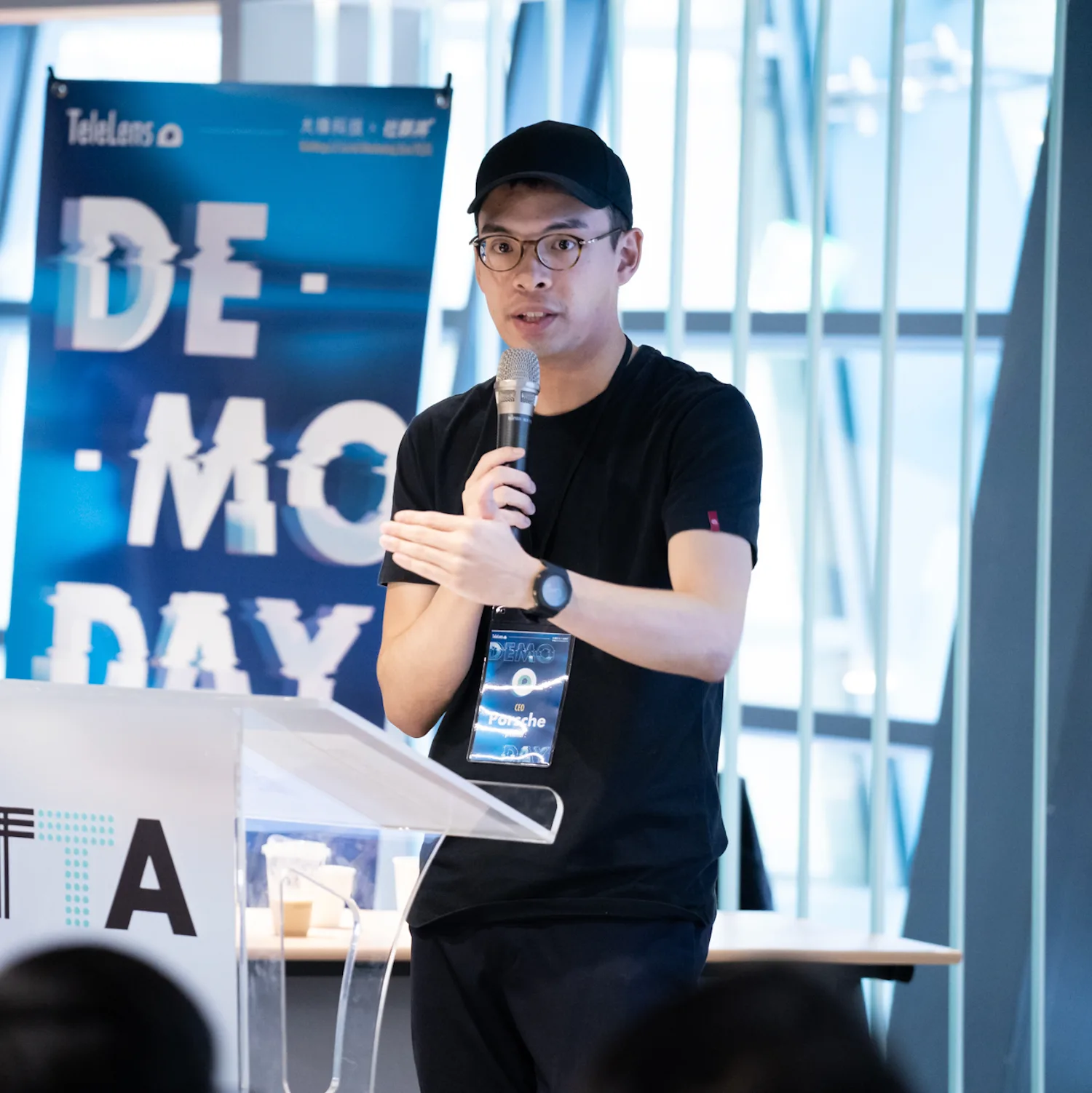 Porsche TsaiCEO
Table of Contents
- What McDonald's Taught Us
- This Wave of Launches Is Saying the Same Thing
- The Moat Is Moving: From Model to Context
- Trust Is Becoming a Product Design Problem
- The "Best Model" May Not Be the Answer at All
- OakMega: Context, Action, and Trust in One Place
- FAQ
 Intelligence spreading out from a single core into a whole network of context and action. The model is only the starting point; the real competition lies in everything that grows around it.
What McDonald's Taught Us
Starting in 2021, McDonald's partnered with IBM to test an "AI voice ordering" drive-thru system at more than 100 US locations. The vision was compelling: customers would no longer have to shout their orders into a speaker over and over. The AI would understand them, place the order, and check them out, with plans to roll it out nationwide.
It didn't take long for fail videos to go viral. The AI misheard customers, piled one order up to 260 chicken nuggets, and put bacon and butter on ice cream, and no amount of correcting got through to it. (One of the most widely shared clips shows a customer shouting at the speaker while the AI cheerfully reads back nine sweet teas, a caramel sundae with bacon, and roughly $222 worth of nuggets. She never ordered any of it.) After the clips blew up on TikTok and Twitter, McDonald's announced in June 2024 that it was ending the test (CNBC). The machines at more than 100 test locations were all pulled by the end of July that year, and ordering went back to humans (Al Jazeera).
When I read that story, my takeaway wasn't "AI doesn't work." It was this: it reveals something more fundamental — no matter how strong the intelligence, that doesn't mean it can be trusted to act at scale. However good the speech recognition, without enough context (the background noise, what the customer actually wants, when to hand off to a human) and without a way for customers to stop or correct it at any moment, even the smartest system can turn into a disaster filmed and shared across the internet.
That question is also the one I haven't been able to shake after watching a full round of launch events from the major AI labs over the past few weeks: as model capabilities rapidly converge, what is actually left to differentiate an AI product?
The bottom line up front: As the intelligence of GPT, Claude, Gemini, and Grok rapidly converges, AI product differentiation is shifting away from "how smart the model is" toward three things — the Context it has, the Action permissions it's granted, and the Trust users are willing to give it. Models will keep commoditizing. These three layers won't.
This Wave of Launches Is Saying the Same Thing
Over the past four to six weeks, almost every major player has moved in the same direction. OpenAI's GPT-6 Astra isn't pitched as "better at chatting." Its headline features are Computer Use, Browser Use, and the ability to produce complete work like documents, spreadsheets, and slide decks — and when requirements change, it keeps refining the output instead of starting over. SpaceXAI is even more direct, positioning Grok Bot as "an AI teammate for the enterprise": each Bot gets its own cloud computer, uses websites and apps on its own, and keeps working in the background after you log off. Meta's Muse goes more personal. Rather than waiting for your questions, it continuously learns your context and proactively moves your goals forward. Anthropic's Claude Fable 5.1 and Mythos 5.1, released in the same window, also focus on long-running, multi-step work such as coding, knowledge work, and scientific research.
Put these launches side by side and it's no coincidence. It's an industry-wide shift in consensus: in 2026, the competitive focus has moved from "Intelligence" to "Execution." We used to care whether a model could answer cleverly. Now everyone cares whether it can actually get a whole piece of work done.
But precisely because everyone is racing toward "getting more done," a sharper question emerges: if GPT, Claude, Gemini, and Grok are all smart enough to finish an entire workflow, why would a user need any particular one of them?
The Moat Is Moving: From Model to Context
The answer is converging on a single idea: whoever understands "the work at hand" best.
Claudeforce, announced by Salesforce and Anthropic in late August, is the most straightforward demonstration I've seen so far. At its core, it isn't another model launch at all. It connects Claude to Salesforce's own real-time revenue data, workflows, business logic, and governance rules. The first wave of "Salesforce in Claude" ships with 37 sales skills that let Claude reason directly over live pipeline data, update deal status, and take governed actions. What makes these skills valuable has never been which company's model sits behind them — swap in any model of similar intelligence and the results wouldn't differ much. What's truly valuable is the data and rules Salesforce holds on "what this company's customer relationships actually look like."
It confirms a formula I'm increasingly convinced of:
Better AI ≠ Better Model Better AI Product = Model × Context × Tools × Memory
Context here means the data and rules layer that lets an AI Agent understand a company's unique customer relationships, business logic, and governance rules. It isn't the model itself. It's the layer outside the model that tells the Agent "how to act."
Model intelligence may commoditize faster than we think. Multiple 2026 business analyses make the same point: models themselves are quickly becoming "about the same no matter who makes them," and the advantages that actually accumulate — the ones that don't evaporate with every model upgrade — are the "connectors, evaluation harnesses, agent orchestration, and guardrails." Put plainly, that's Context and the way that Context is governed. It's really just another way of saying what we've always said about first-party data: in the AI era, the value of customer data isn't that "it can be analyzed," but whether "it lets an Agent know how to act."
This isn't unique to Silicon Valley, either. MaiAgent, an AI Agent platform from Taiwan, made almost the exact same case at VivaTech 2026: enterprises don't need yet another siloed AI tool. They need a "governed AI Core" that lets teams safely use the right data under the right permissions — a different way of stating the same argument this article makes.
 The moat moves from the glowing orb at the center to the wider amber ring around it. The moat hasn't disappeared; it has just moved somewhere the model can't reach.
Trust Is Becoming a Product Design Problem
Once Agents can actually do things, the nature of the problem changes completely. Before, when AI got something wrong, it got one answer wrong. When an Agent gets something wrong, it sends the wrong email, edits the wrong CRM record, orders the wrong item, or runs an entire workflow incorrectly.
That's why we're seeing Permission and Governance move from "an after-the-fact compliance checklist" to a product layer of their own. Meta Muse is a clear example. It deliberately splits "execution" and "authorization" into two agents isolated at the system level. Muse itself plans and makes recommendations, but without approval from a separate agent called Sentinel, no network action or connector operation can run. Sensitive steps always go back to the user for confirmation, and users can see the full audit trail. GPT-6 Astra is taking a similar path. Because its cybersecurity capabilities reached the "Critical" level in OpenAI's own safety framework for the first time, OpenAI actually stepped up behavior monitoring: if the system judges that Astra may have misunderstood an instruction, it pauses work and waits for the user to confirm before continuing.
A set of numbers is worth putting side by side here: more than 60% of enterprises are already experimenting with AI agents, but only 20–30% have deployed them at scale in any function. Even more telling, only just over 10% of IT leaders believe they can effectively govern their agents. That gap isn't about technical capability. It's about trust mechanisms.
Future product interfaces probably won't be a binary "allow AI / don't allow AI" choice. They'll offer a whole row of finer-grained permissions:
- Read ✓
- Analyze ✓
- Draft ✓
- Update CRM ✓
- Send externally → Ask me
- Spend money → Ask me
- Delete data ✕
In other words, Trust in the Agent era is no longer just a question of brand trust. It has to be built into the product architecture itself.
The "Best Model" May Not Be the Answer at All
Google's Gemini 3.8 Flash, released the same week, gave me a reminder from another angle. Its positioning isn't "we built the smartest model." It's pitched as a low-cost, high-performance workhorse, priced at $0.75 per million input tokens and $3.75 per million output tokens. Google even openly recommends keeping some workloads on older models instead of upgrading every time.
This matters especially for Agents. A chatbot might be done after a single round of reasoning, but to get one thing done, an Agent often has to reason, search, reason again, read, reason again, use tools, check, retry, produce, and verify — running dozens or even hundreds of inferences. At that point, the question is no longer "which model is the smartest" but "for this step, which model is cheapest while still reliable enough." The hybrid local-plus-cloud inference Perplexity recently showed follows the same logic: sensitive data stays on the device, and work escalates to the cloud only when it truly needs more capability.
So I believe a product's core competitive edge is gradually shifting away from "which company's model we use" toward "how we pick the right intelligence for each task." That's Model Orchestration — put simply, dynamically choosing the best-fit, most cost-effective combination of models based on the nature of each task, rather than throwing every step at the same "strongest model." And it's really just another facet of the same thing as the Context and Trust discussed above: you have to understand the work and the company's rules first before you can decide which task needs which model and which action needs which permission.
Back to OakMega: Context, Action, and Trust in One Place
After watching these past few weeks unfold, I'm actually more certain about the path OakMega is taking next.
The first part is the role of Social CRM. We've productized "understanding and managing customer relationships," so brand clients that have reached a certain scale and have relatively standardized data structures can get this Context Layer capability directly through Social CRM. This is the path to scale: Social CRM used to be "a tool for managing customer relationships"; going forward, it's closer to "the Context Layer that lets AI understand and manage customer relationships."
The second part is the role of FDE (Forward Deployed Engineering). The reality is that every company's data structure, business logic, and permission rules are different — no off-the-shelf product fits every situation. That's exactly why FDE exists. When a company doesn't need to "buy a feature" but needs to "turn our unique customer relationship logic into a system Agents can safely run," our engineers embed themselves in the client's data and processes and build out the three layers of rules — Context, Action, and Trust — one company at a time. The patterns validated in FDE projects ultimately feed back into the Social CRM product, so the next wave of clients benefits directly.
Whatever stage a company is at — with standardized needs already, or still needing a customized rollout — I believe what OakMega offers is really two forms of the same thing: making AI truly understand your customer relationships, and trusting it to manage them.
Salesforce's Claudeforce has made one thing clear: the AI model itself isn't the CRM's moat. The customer context, business logic, permissions, and actions inside the CRM are. As model intelligence keeps commoditizing, I believe this is exactly what OakMega will put the most effort into building next — whether at scale through Social CRM, or customized one company at a time through FDE.
FAQ
Q1: Is there really a consensus that models will be commoditized?
Industry commentary is pointing in a fairly consistent direction — including discussions that models are becoming "more and more like commodities." Most observers see the differences in model intelligence itself shrinking, with lasting advantages shifting to assets "around the model," such as connectors, data, and governance rules. But this is a read on the trend, not a settled conclusion, and it's worth continuing to watch.
Q2: Where do enterprises usually get stuck when adopting AI Agents today?
Based on the industry observations available so far, most enterprises aren't stuck because "the model isn't smart enough." They're stuck on governance and trust mechanisms — unsure how much permission to give an Agent, who's accountable when something goes wrong, and how to track what it did. That's why Permission/Governance is becoming a product design problem in its own right.
Q3: How should an enterprise choose between OakMega's Social CRM and FDE services?
Simply put, if a company's data structures and processes are already relatively standardized, Social CRM can provide Context Layer capabilities directly. If the company has unique business logic, system integrations, or governance rules that need a customized rollout, FDE is the better starting point. You can also validate with FDE first, then gradually adopt Social CRM.
Q4: What is a Context Layer?
A Context Layer is the data and rules layer that lets an AI Agent understand a company's unique customer relationships, business logic, and governance rules. It isn't the model itself. It's the layer outside the model that tells the Agent "how to act" — and it's exactly where this article argues the next moat lies.
References
- OpenAI, GPT-6 Astra: A new generation of intelligence
- Fortune, OpenAI launches GPT-6 Astra
- CSO Online, OpenAI launches GPT-6 Astra, its first model to cross a critical cybersecurity threshold
- Salesforce, Salesforce and Anthropic Announce Claudeforce
- Anthropic, Introducing Claude Fable 5.1 and Claude Mythos 5.1
- Enterprise DNA, SpaceXAI Launches Grok 4.6 for Enterprise Agents
- Reworked, xAI Wants In on the Enterprise With Grok Bot
- about.fb.com (Meta), Introducing Muse: The World's First Personal AI Agent
- Help Net Security, Google's Gemini 3.8 Flash takes on bigger AI models at a lower cost
- VentureBeat, Perplexity AI unveils hybrid local-cloud inference system at Computex 2026
- Seeking Alpha, AI's Next Moat: What Survives When Models Become Commodities
- Accelirate, Agentic AI Statistics 2026
- CXO XPERTS, AI Agent Governance: Why It's Enterprise AI's Biggest Challenge in 2026
- CNBC, McDonald's to end AI drive-thru test with IBM
- Al Jazeera, McDonald's scraps AI pilot after order mix-ups go viral
- Restaurant Dive, McDonald's ends IBM drive-thru voice order test
- Restaurant Business, McDonald's is ending its drive-thru AI test
- TikTok (@tech360.tv), McDonald's withdraws AI technology after bacon ice cream and nugget overload orders
- PR Newswire, At VivaTech 2026, Taiwan-Based MaiAgent Says Enterprises Should Stop Building RAG and AI Agent Systems From Scratch