





What Is an Ideal Customer Profile? How to Use It with Buyer Personas to Find Prospects and Optimize Your Sales Process
An ideal customer profile helps brands reach prospects more precisely when setting sales goals and running the sales process. So how do you build an ideal customer profile for your brand? And how does it differ from a buyer persona in definition and use cases?
 Howard HuangMarketing Specialist
An ideal customer profile helps brands reach prospects more precisely when setting sales goals and running the sales process. So how do you build an ideal customer profile for your brand? And how does it differ from a buyer persona in definition and use cases?
What Is an Ideal Customer Profile (ICP)?
According to HubSpot, an ideal customer profile (ICP) is a hypothetical description of the ideal prospect, defined by a brand based on its product and service positioning, business model, and existing sales process. A good ICP helps marketing and sales teams generate leads more efficiently, helps marketing target ads and plan campaigns more precisely, and helps sales filter out poor-fit leads right away so they can get the most value out of the leads that remain.
How Do You Start Building an Ideal Customer Profile?
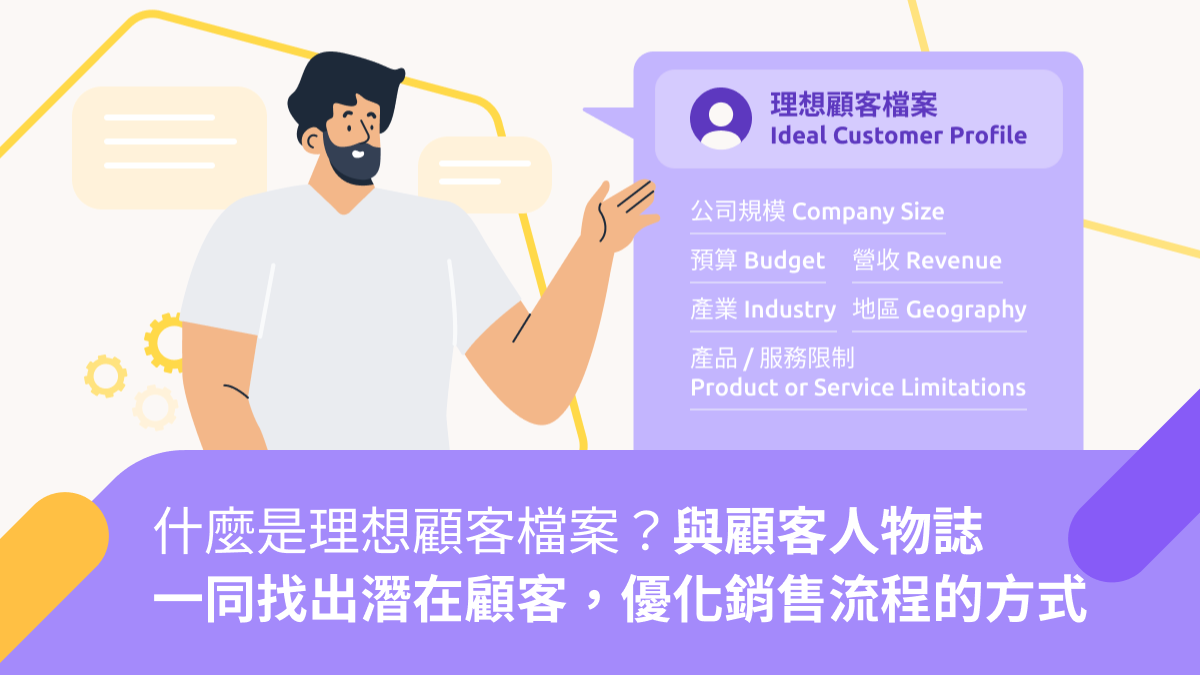
We typically use the following common criteria, map what we know about our target audience to each one, and then condense everything into a bulleted description of a complete “hypothetical organization”:
- Company Size
- Budget
- Revenue
- Industry
- Geography
- Product or Service Limitations
Ideal Customer Profile Example
For OakMega, a SaaS company focused on providing Social CRM services for brands, an ideal customer profile might look like this:
- Company size | 50+ employees: The organization needs a certain level of departmental structure and division of labor, as well as a meaningful amount of accumulated customer data, before it needs a CRM to analyze customer behavior profiles and optimize the service experience.
- Marketing budget | Over NT$500,000 a year: Compared with simply buying third-party tools, such as marketing automation software or an e-commerce platform, adopting a CRM involves higher implementation and maintenance costs and often requires cross-department collaboration. A certain budget is needed for a productive conversation.
- Industry | Industries that value after-sales service: Brands that prioritize customer relationships, keep communicating with customers after a product or service is sold, and help customers reach their business goals are more likely to need tools like a CRM for data-driven management and precise responses.
- Product or service limitations | Willing to allow time for implementation and testing: Because of the preparation and testing involved in onboarding, as well as CRM use cases for Channel A that aren't yet available, brands that can accept a certain lead time are a better fit.
Ideal Customer Profile vs. Buyer Persona: What's the Difference?
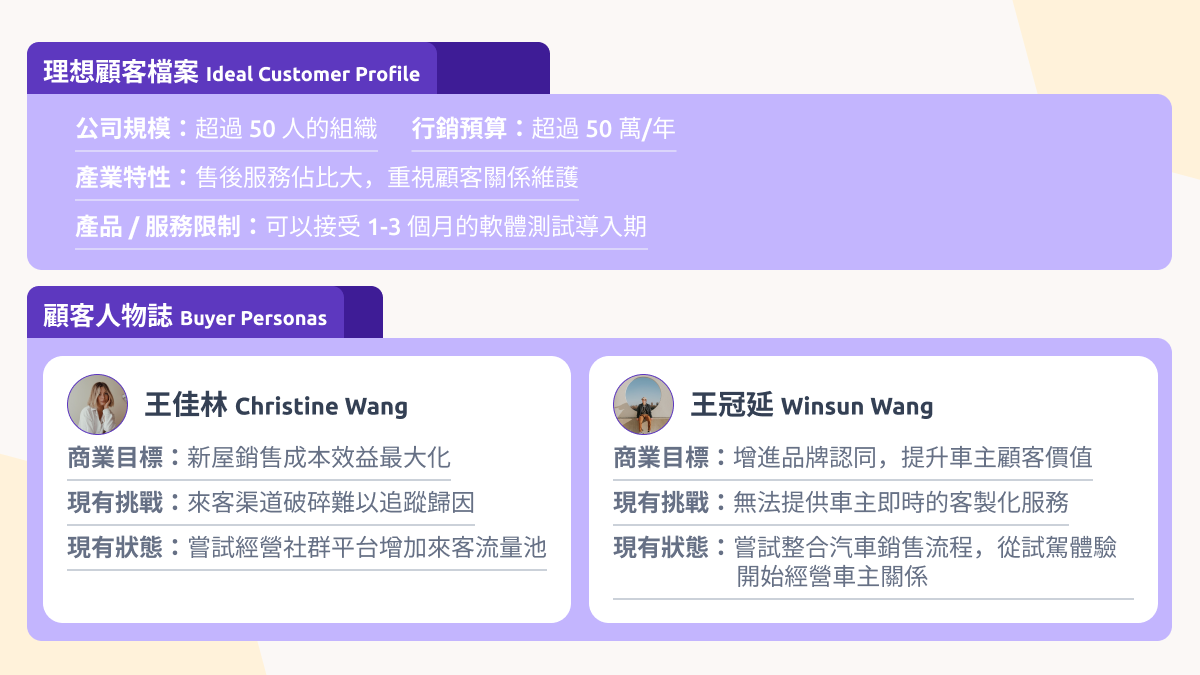
After reading the ICP overview and example above, you may be wondering: how is it different from a buyer persona? Do I really need both?
A buyer persona is real, qualitative data. It's first-hand qualitative research a brand creates from surveys and interviews with existing customers, and it represents what users are really like.
An ideal customer profile, on the other hand, is quantitative and hypothetical. It represents the type of prospect a company wants to reach and serves as a reference for marketing and sales teams.
With buyer personas, brands can better understand users' pain points, why they adopt a solution, and what business goals the solution helps them achieve. Brands can then go back and optimize the content they deliver at every touchpoint of the customer journey map.
Use It with Buyer Personas to Uncover Valuable Prospects and Improve Sales Performance
Although ideal customer profiles and buyer personas differ in definition and application, both are built from the customer's point of view, which is what connects them. You may have a complete ICP but not a full buyer persona database because your company doesn't have many customers yet. In that case, you can write buyer personas based on the customers your current ICP helps you find. Or, the other way around, you can spot criteria that come up often in your buyer personas and add them back to your ICP, giving your sales team more precise analysis and recommendations.
OakMega Social CRM helps brands build a real-time first-party data platform on messaging apps. With a well-planned ideal customer profile and buyer personas, you can create customized, real-time experiences and engage customers directly. Click to contact our team and learn more.