AI-Powered Digital Transformation for Healthcare Professional Sales: Biopharma CRM Seminar Recap
OakMega's third CRM industry seminar of 2022 took place online on September 14, continuing June's biopharma theme with strategies for building a funnel-based, integrated communication channel for healthcare professionals. This time we partnered with IBM, using its AI solutions and tools to explore how AI can be applied in biopharma and help sales teams identify high-value prospective healthcare professionals.
 Howard HuangMarketing Specialist

OakMega's third CRM industry seminar of 2022 took place online on September 14, 2022. Continuing June's biopharma theme, it showed biopharma professionals how to build a funnel-based, integrated communication channel for healthcare professionals (HCPs).
As host, OakMega partnered with IBM on the content this time. Using IBM's AI solutions and tools as examples, the seminar explored how AI can be applied in biopharma to help sales teams identify high-value prospective HCPs and streamline their workflows.
PART 1|New white paper: The Complete Guide to CRM for Biopharma
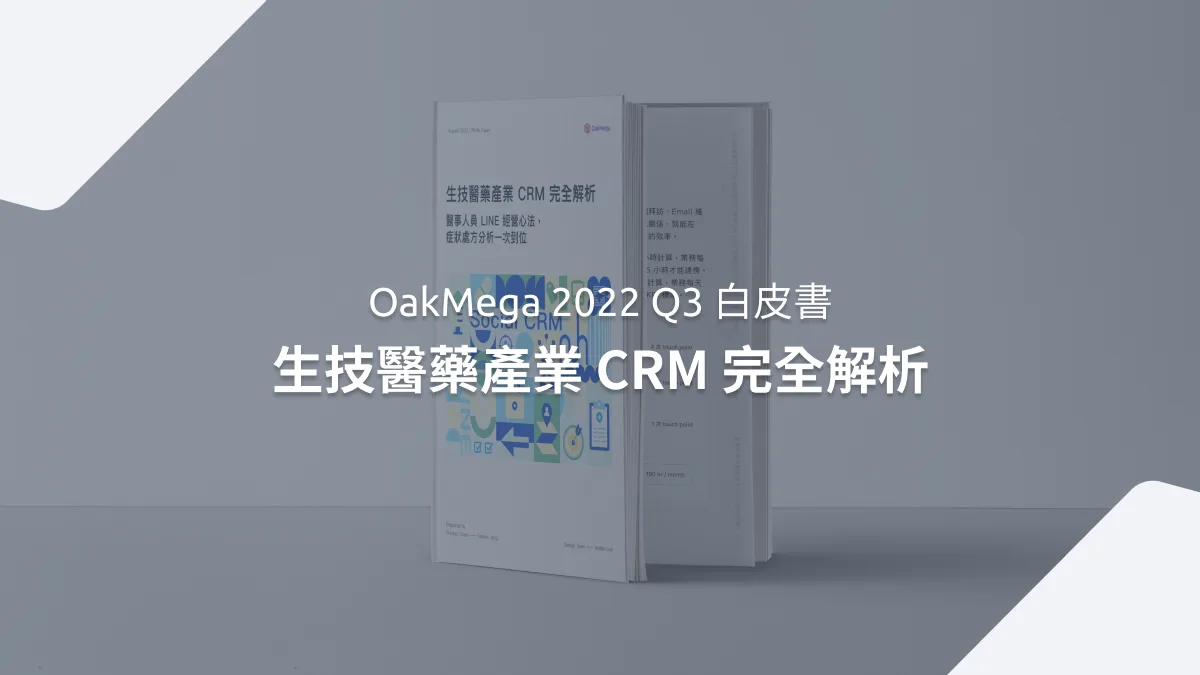
In Q3 2022, OakMega released a new free white paper. Drawing on our deep experience in biopharma and helping several industry clients break through in their transformation, it diagnoses the most common digital transformation pain points and lays out complete solutions.
OakMega Product Manager Samuel Jeng walked through the four symptoms identified:
- Symptom 1: HCPs won't add the LINE Official Account
- Symptom 2: Strict regulations on HCPs keep marketing from promoting
- Symptom 3: Online and offline symposiums underperform
- Symptom 4: HCP relationships are hard to maintain
Building Social CRM touchpoints: a solution for digitizing the sales process
In 2022, the global biopharma industry is moving beyond traditional offline touchpoints between sales reps and HCPs, breaking physical barriers and shifting toward an integrated OMO communication model. In the U.S., for example, as compliant messaging platforms have matured, sales reps have begun engaging HCPs through digital touchpoints built on HIPAA Compliant Messaging APPs. APIs connect to identity databases to verify HCP credentials automatically, and interactions on the platform carry restrictions on sending, viewing, and sharing, keeping the process compliant with local regulations while instantly bringing sales teams closer to HCPs.
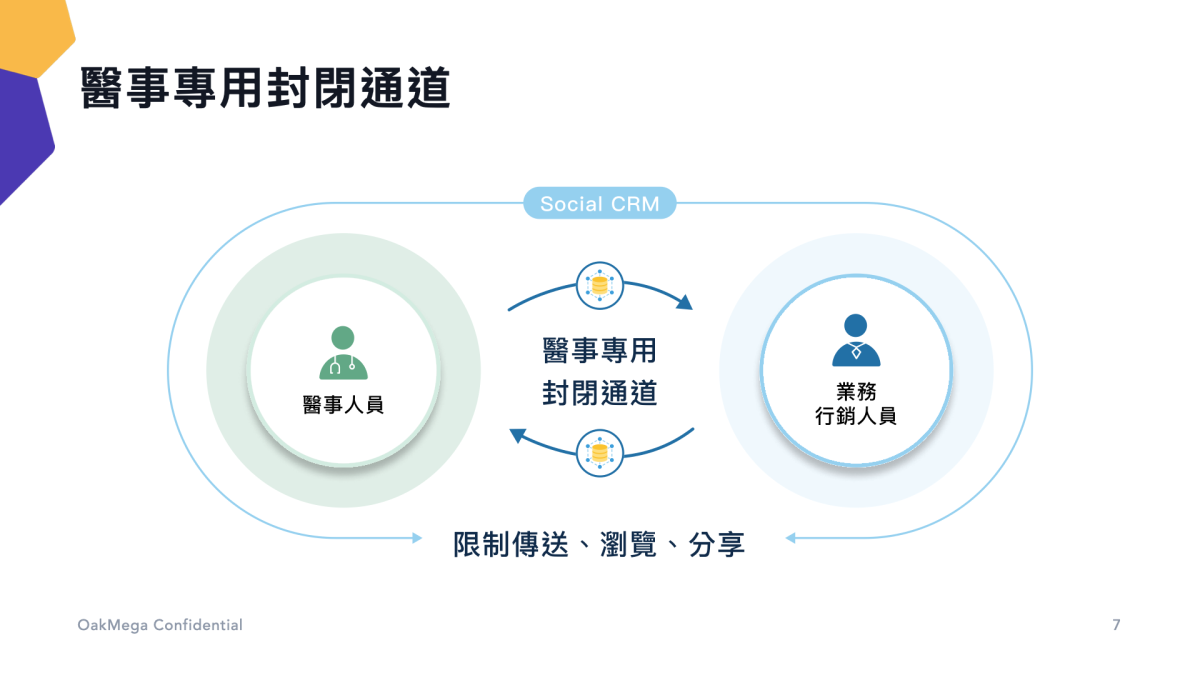
As these digital touchpoints are adopted, HCP data not only keeps growing but also becomes more varied. Existing CRM databases like Salesforce and Veeva struggle to clean and activate this customer data in real time. With its HIPAA digital engagement model and synchronized, integrated data updates, Social CRM has become the best solution for digitizing biopharma sales processes.
Key Takeaways
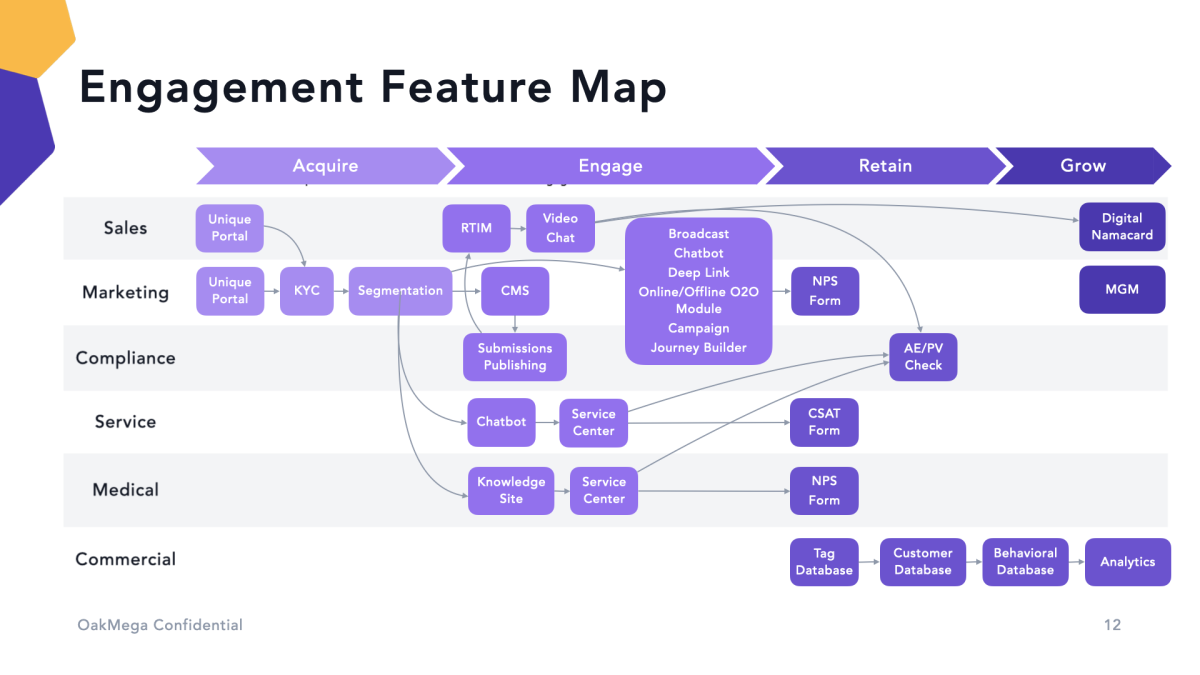
Samuel closed by noting that biopharma spans many segments, each with very different pain points and viable responses. All of them, however, need a customer relationship management mindset: use customer behavior at each stage of the customer journey map as the foundation and digitized HCP engagement as the means. Only then can sales teams truly improve their sales process.
To read the full white paper, "The Complete Guide to CRM for Biopharma," download it via the link above, or fill out this contact form and a specialist will get in touch.
PART 2|Strategies for building a funnel-based, integrated communication channel for HCPs
About 28% of HCPs prefer pharma companies that offer digital and remote services. - McKinsey, Dec. 2020
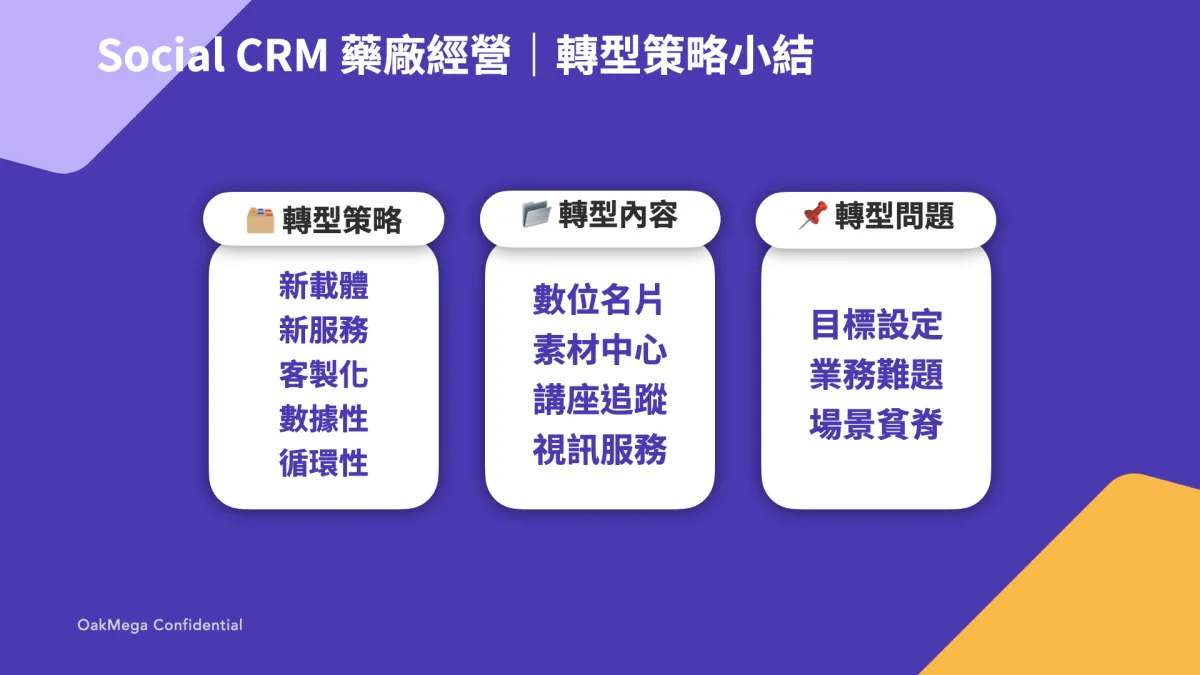
Yu-Cheng Chung, head of OakMega's Customer Success team, followed with a customer relationship management perspective. Opening with McKinsey's post-pandemic biopharma industry report, he explained that HCP engagement has taken on an entirely new shape since the pandemic, and presented five success factors as benchmarks for the industry's digital transformation:
Five success factors for pharma digital channel strategy
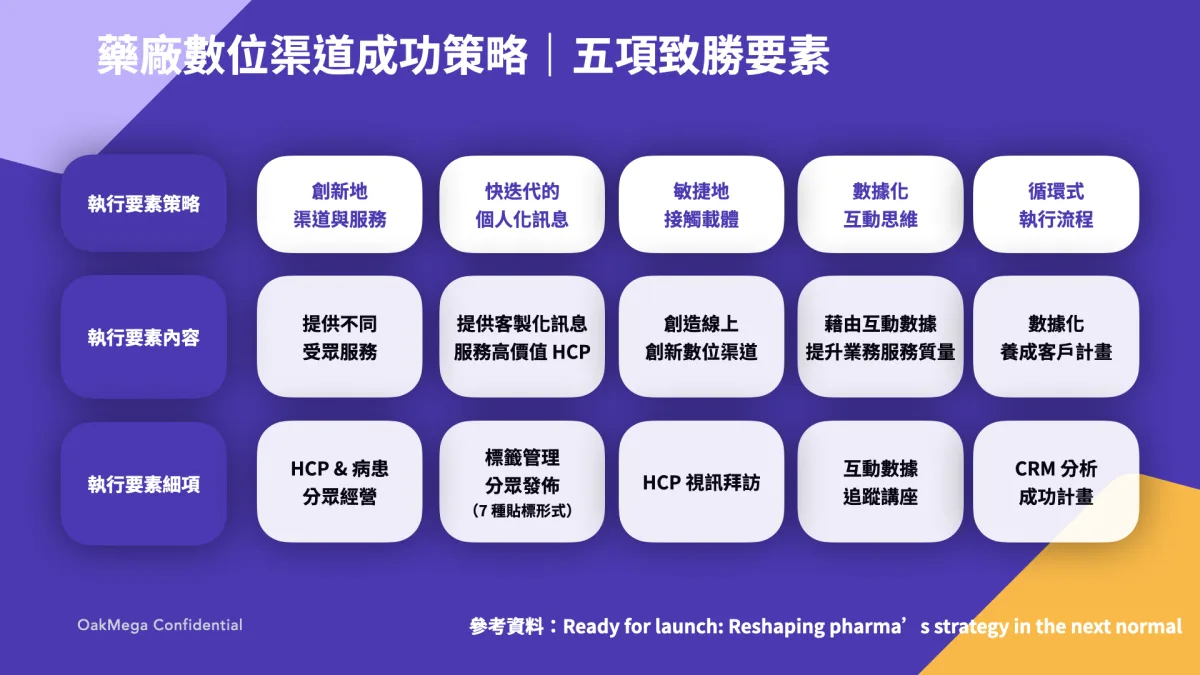
1. Innovative channels and services
As customers, HCPs also show fragmented behavior. With fewer in-person contacts and more online interactions today, a key to maintaining HCP relationships is using new channels like HIPAA-compliant messaging to integrate customer data from every touchpoint and piece together as complete a behavioral profile as possible.
2. Rapidly iterated, tailored messages
As the first factor notes, HCPs behave in fragmented ways just like customers in other industries. Combined with the industry's unique nature, sales teams should think about how to make the most of the scattered moments they have to talk with HCPs, and deliver relevant content that interests HCPs at different hospitals, clinics, and specialties.
3. Agile engagement formats
Within regulatory limits, use new technologies such as video visits to lower the cost of communicating with HCPs.
4. Data-driven engagement mindset
Data-driven strategic thinking is just as important for delivering tailored drug information. Paired with HIPAA-compliant channels, it improves the accuracy of retargeting data and gives sales reps the data they need for visits.
5. A cyclical execution process
Adopt a CRM mindset for customer relationship management. Monthly and quarterly CRM data analysis plans help sales teams adjust their strategy in real time and avoid sinking too much cost.
Building a new sales process with Social CRM
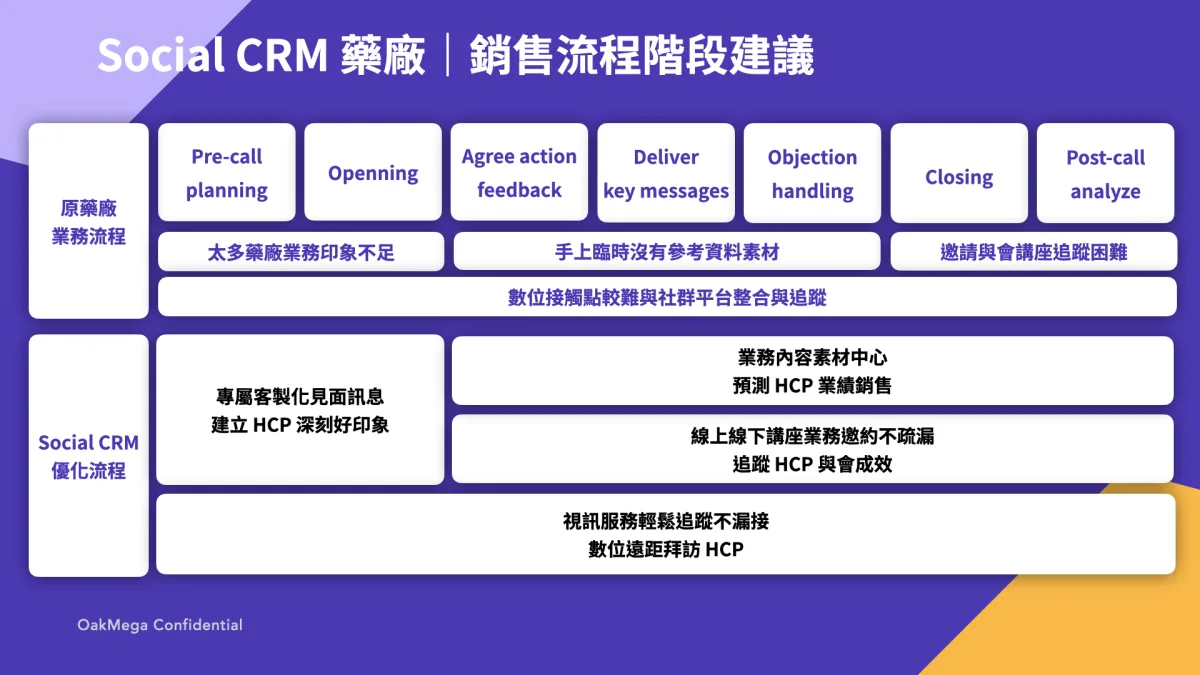
Yu-Cheng also shared concrete strategies for building a dedicated HCP communication channel, grounded in real industry sales processes. "The goal has always been clear: provide accurate information, raise customer satisfaction with digital communication tools, and find prospective HCPs to convert."
Social CRM supports sales teams across the entire sales process. In Pre-call Planning and Opening, a welcome message highlights key drug information so HCPs can associate the drug with their sales rep. In the Deliver Key Messages visit stage, reps can work with MSLs and product teams to share the drug information HCPs want to see through the platform in real time, while behavior tracking shows what they click. Finally, in the Closing stage, data analysis surfaces high-potential HCPs. Digital visits under the new HIPAA model break down physical barriers and help reach the set business goals.
Common challenges
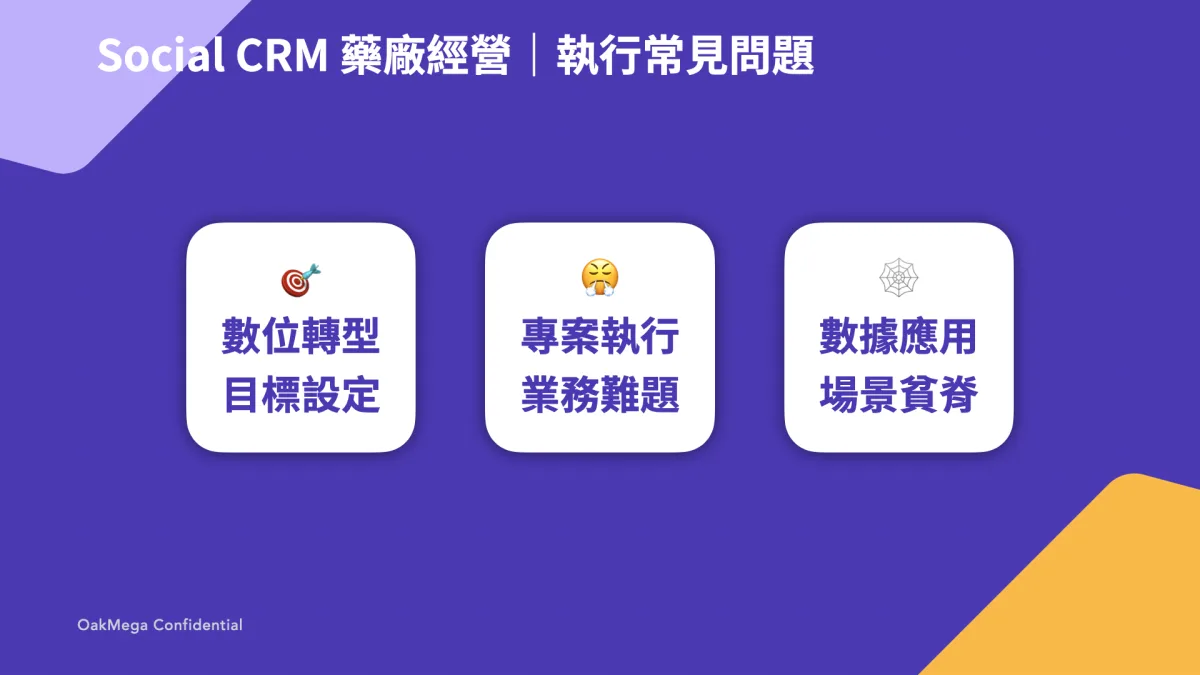
For biopharma, digital transformation is a long-term, all-encompassing change, and every company moves at a different pace. Sales teams will benefit from the new tools in the foreseeable future, but early on the tools may not noticeably help the sales process, and existing visits still have to be completed, which squeezes time. This creates plenty of friction, and most of it falls into three common challenges:
Setting digital transformation goals
- How do you set KPIs to track the impact of digital transformation? How do you execute new sales strategies based on those KPIs? How complete your goal setting is largely determines how successfully a company adopts digital transformation.
Project execution challenges for sales
- Build the digital transformation strategy together with the frontline sales team that uses the tools. Start with sales interview plans, identify where the tools can optimize the sales process within HCP engagement scenarios, and jointly set KPIs that can be reviewed, tracked, and rewarded, such as the number of HCPs who join and the number of interactions, to make sure HCP engagement truly improves through digitization.
- Once goals are set together, roll out training plans for sales reps step by step, with hands-on guidance on using the tools, and run regular feedback plans to review the KPIs.
Limited data use cases
- Data collected from KPI-driven sales strategies can be activated through campaigns planned for each HCP touchpoint, such as sending the latest drug symposium information to HCPs who are active on LINE.
- KPIs can also be built into quarterly CRM data analysis plans and reviewed alongside the company's quarterly reports, which may reveal viable plans for future growth.
Key Takeaways
Yu-Cheng concluded that all of these challenges should be considered alongside McKinsey's five success factors. Beyond using new channels for tailored engagement, the strategy must include a data-driven mindset and regular CRM analysis plans, and it must be carried out across departments together with the frontline sales team.
PART 3|AI empowerment: the next mile in pharma digital transformation
For PART 3, delivered with IBM, we invited Faco Fang, a UX design consultant in IBM's innovation engineering team, to share how AI can be applied in biopharma.
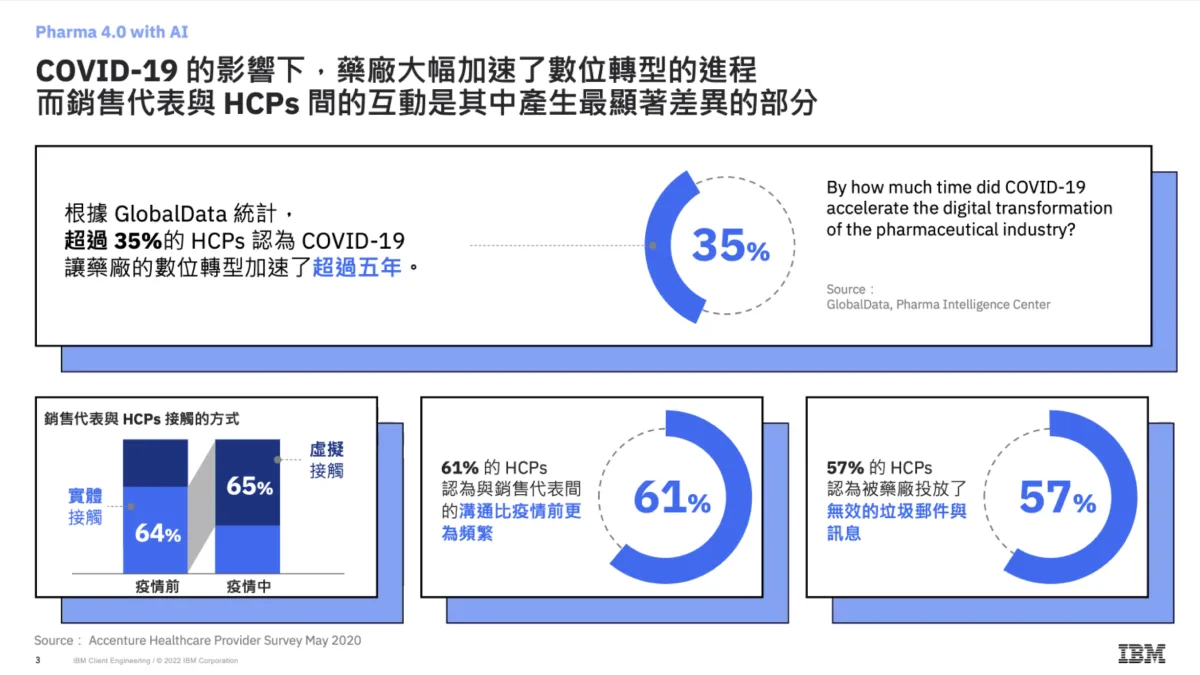
"61% of HCPs say the blurring line between online and offline has made communication with sales reps more frequent than before the pandemic, but 57% also say that more communication has brought a lot of irrelevant information." Faco cited this interesting survey finding, which shows that the pandemic and changing customer behavior have accelerated pharma digital transformation by more than five years. How to seize this window to make messages more tailored and predictions more accurate are the two big challenges pharma companies must overcome when using digital tools to communicate with HCPs.
New digital sales metrics for biopharma
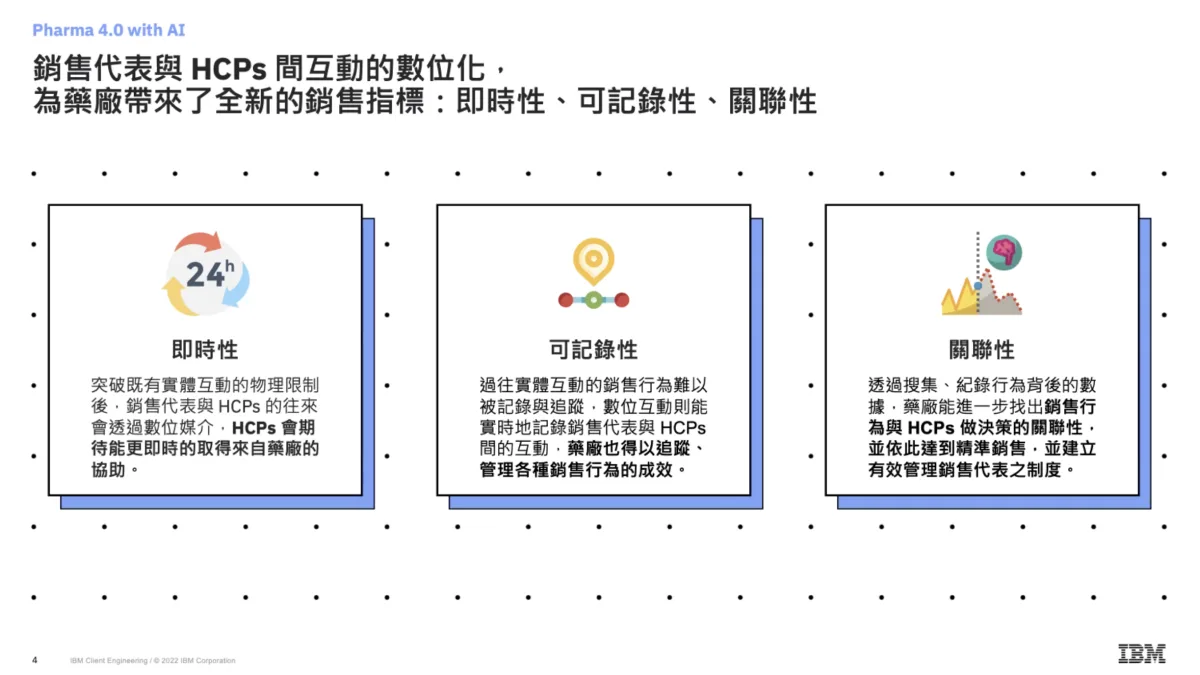
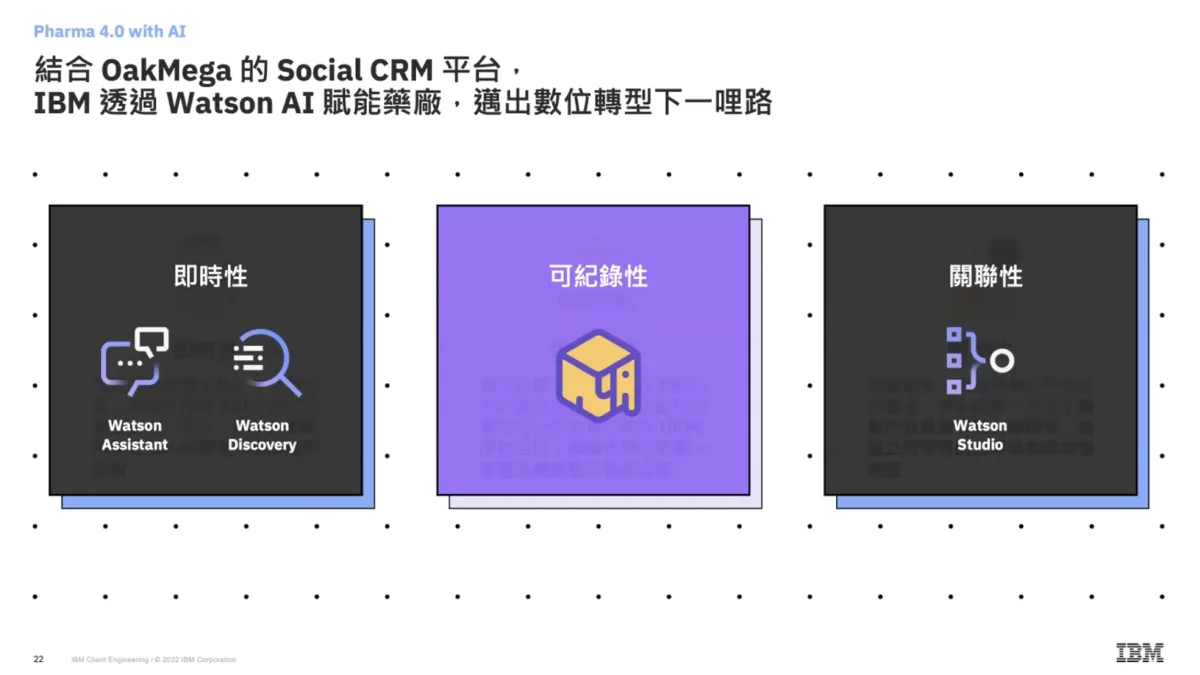
Three new sales metrics can guide sales teams through digital transformation:
- Immediacy: HCPs expect faster support from pharma companies.
- Recordability: Pharma companies can track and manage the effectiveness of every sales activity.
- Relevance: Data analysis reveals how sales activities relate to HCPs' decisions, enabling precision selling and an effective system for managing sales reps.
Building a real-time predictive system
Drawing on real interview scenarios and pain points from IBM's recent customer relationship management work with pharma companies, and combining IBM's AI tools, Faco outlined several solutions built on top of OakMega Social CRM. They aim to support digital transformation in "immediacy" and "relevance" now that new ways of engaging HCPs have taken shape.
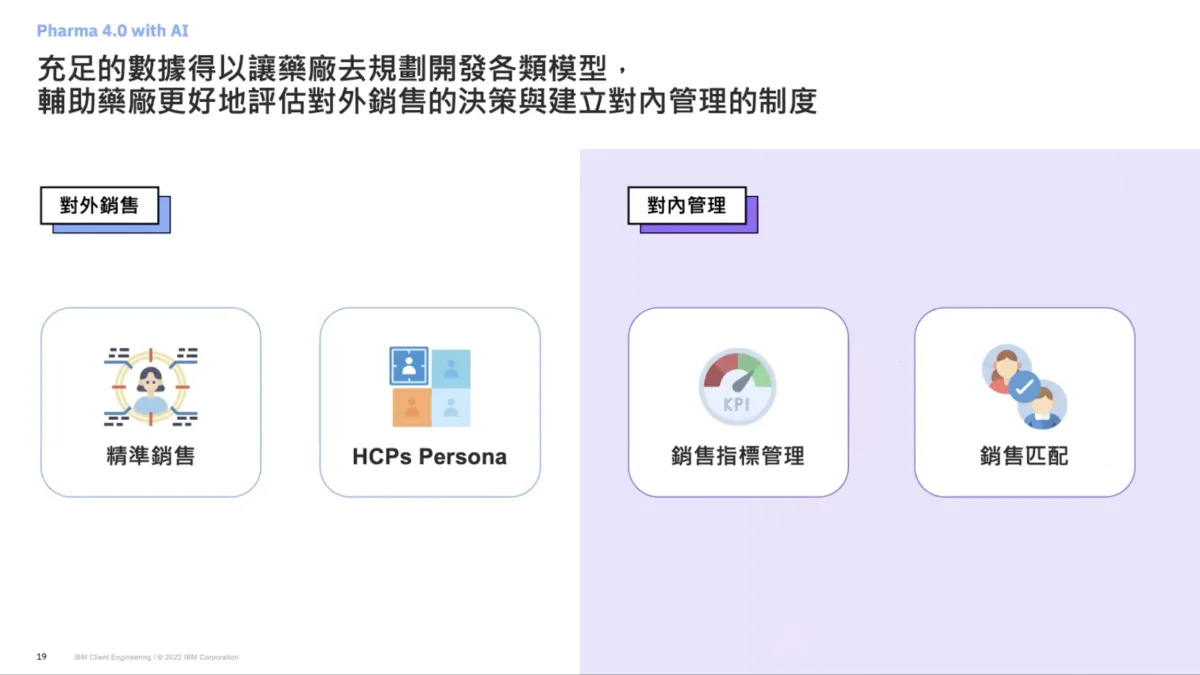
External sales
- Pharma companies can set up a Virtual MSL on LINE. With AI analysis, it can automatically interpret an HCP's search intent and return the right results and references through a LINE chatbot.
- HCP PV (pharmacovigilance) reporting can also go fully digital. HCPs can report drug issues through the pharma company's LINE Official Account as easily as sending a message, and AI tools can assess the text in real time and complete the follow-up process.
Internal management
- Customer behavior data accumulated from each sales rep's interactions with different HCPs can power a sales performance management process: tags show where each rep stands, and AI tools identify the right contacts to approach, enabling automatic lead assignment.
Key Takeaways
Faco closed by noting that all of the AI transformation solutions IBM shared must be built on OakMega Social CRM's customer relationship management services. They become feasible only after existing databases are connected, automated identity verification is set up, and sales reps are familiar with the process. IBM also offers free consulting for biopharma digital transformation, starting with scenario interviews and working step by step toward the right solution.
Conclusion
To learn more about the IBM x OakMega biopharma digital transformation solutions from this seminar, or about our Social CRM services, fill out the inquiry form and a specialist will be in touch.