




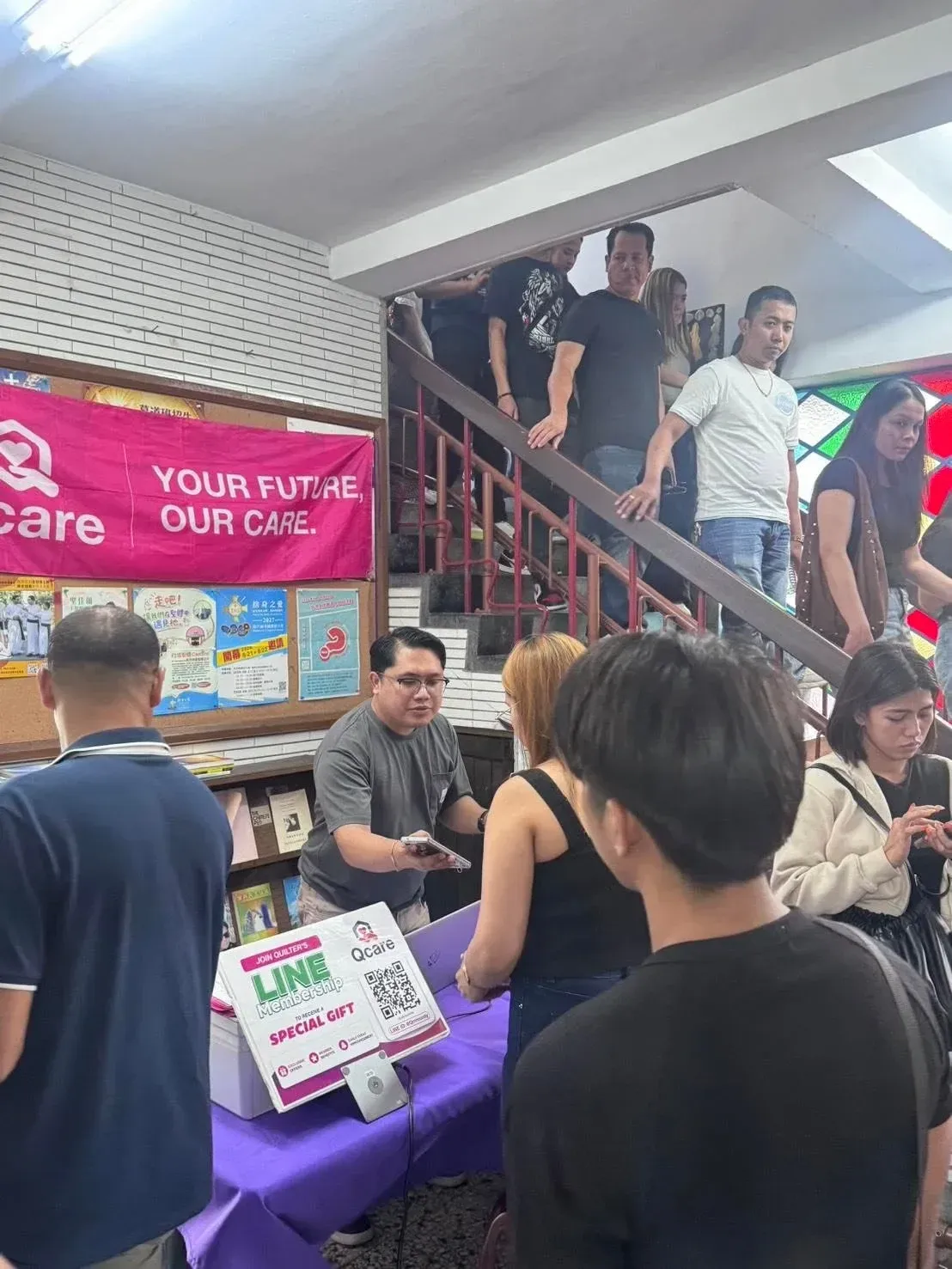
Every weekend, the plazas where Taiwan’s migrant workers gather come alive. Indonesian, Vietnamese, Filipino, and Thai faces fill the space, conversations flow in a mix of native languages, lines form at the booths, and flyers get taken and set down again.
Quilter’s sales partners stand at one of those booths, handing out small gifts, pointing people to a QR code, and explaining the services with a smile. The warmth in that moment is real.
The question is: what happens after the event ends?
Quilter’s goal: to be the go-to financial and lifestyle brand for migrant workers in Taiwan
Quilter International serves Taiwan’s migrant worker community. According to the Workforce Development Agency under Taiwan’s Ministry of Labor, Taiwan currently employs about 895,000 migrant workers. More than 185,000 of them are from the Philippines, mostly in industrial jobs. They generally speak English and have stable incomes, which makes them Quilter’s core customers.
Quilter’s three service lines cover the most frequent, essential needs of daily life in Taiwan:
- Qcare: insurance services (including PhilHealth, FOREX, and more)
- Qbox Delivery: parcel shipping (both domestic and international)
- Stores and retail: physical locations and everyday shopping
The brand’s long-term goal is clear: whenever migrant workers need cross-border remittances, parcel shipping, or insurance, Quilter should be the first name that comes to mind. In Tagalog, Kabayan means “fellow countryman.” Quilter named its LINE friend community QBayan, treating every migrant worker who joins as one of its own. It isn’t just a marketing tactic; it’s a statement of brand culture.
Booths draw crowds, but the crowds don’t stick
Migrant workers live in close-knit circles. When one person joins, word spreads, and a single event can bring in hundreds of new faces. Quilter actively takes part in migrant worker events such as MECO’s roadshows across northern, central, and southern Taiwan, and the energy on site has never been the problem.
But face-to-face contact has a ceiling: when the event ends, the relationship resets.
Without a systematic tool, Quilter struggled to answer basic questions: How many potential customers did this event bring in? Where is the person who added us in Taichung yesterday today, and which service are they interested in? With three product lines but no idea of each person’s preferences, Quilter could only broadcast to everyone. Open rates were low, and eventually the team held back on broadcasts altogether for fear of being blocked.
The three problems fed each other: no member data meant no basis for segmentation; no segmentation meant mass broadcasts; and poor broadcast results made it even harder to justify further investment.
Migrant worker communities need a way for relationships to land somewhere
When Quilter came to OakMega, the core question was: how do you turn every offline touchpoint into an online relationship you can keep nurturing?
The answer isn’t complicated, but it takes design. A single “add friend” action should identify the person, tag their needs, and attribute the channel at the same time. And every broadcast after that should reach only the right people.
Migrant worker communities have another distinctive trait: the main operators and users are native English speakers, not Chinese speakers. That means both the LINE interface and the back-office system have to work outside a Chinese-language environment.
From the event booth to the segmentation dashboard: a closed OMO loop
Every event and every store gets its own bot QR code
Using OakMega’s bot segmentation settings, Quilter set up a dedicated scan-in entry point for each event and each store. The moment a migrant worker scans and adds the account, the system records which event and which location they came from. That lets Quilter pin down the ROI of every investment, down to “how many Filipino workers did this Taichung event bring in as friends.”
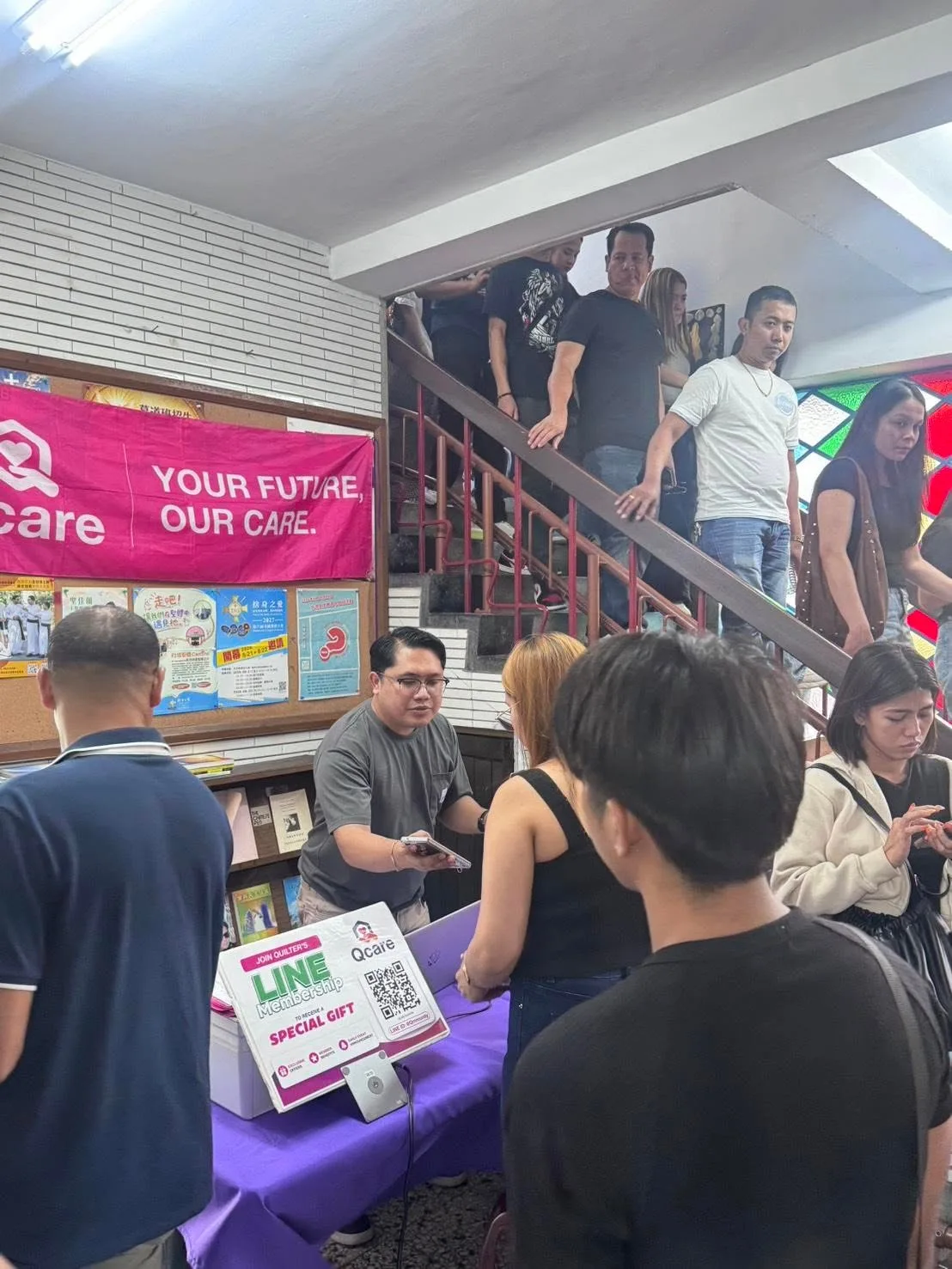 Quilter brings the add-friend step straight to crowded events, so scanning and sign-up happen face to face at the booth.
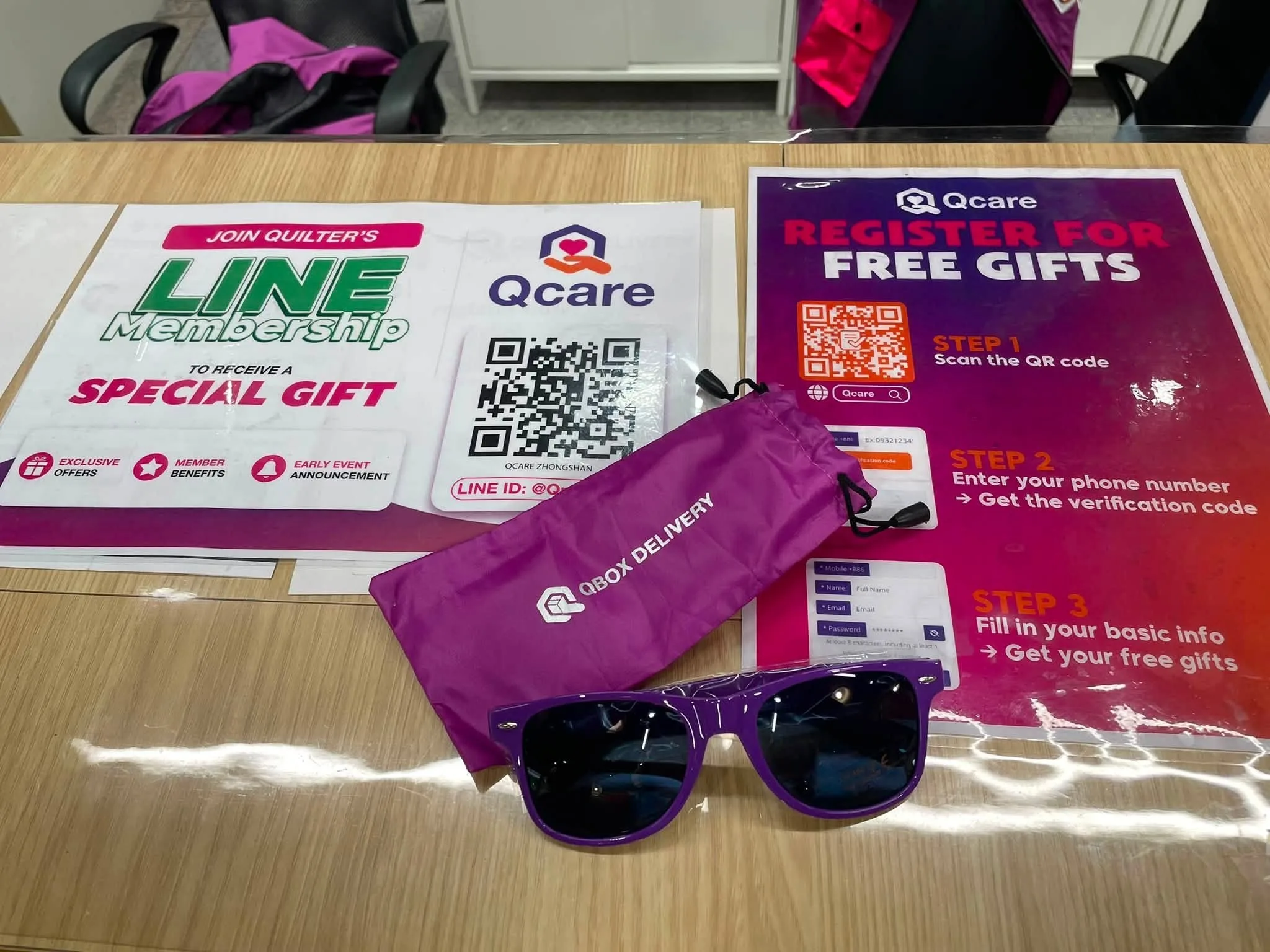 A small physical gift with the brand logo is the most effective icebreaker at the moment someone adds the account.
Beyond the event booths, Quilter’s rich menu includes a “FIND US HERE” button that opens Google Maps, so workers can look up the nearest Quilter location right inside LINE. This completes the O2O loop, and the data shows it’s the most-clicked button on the entire menu.
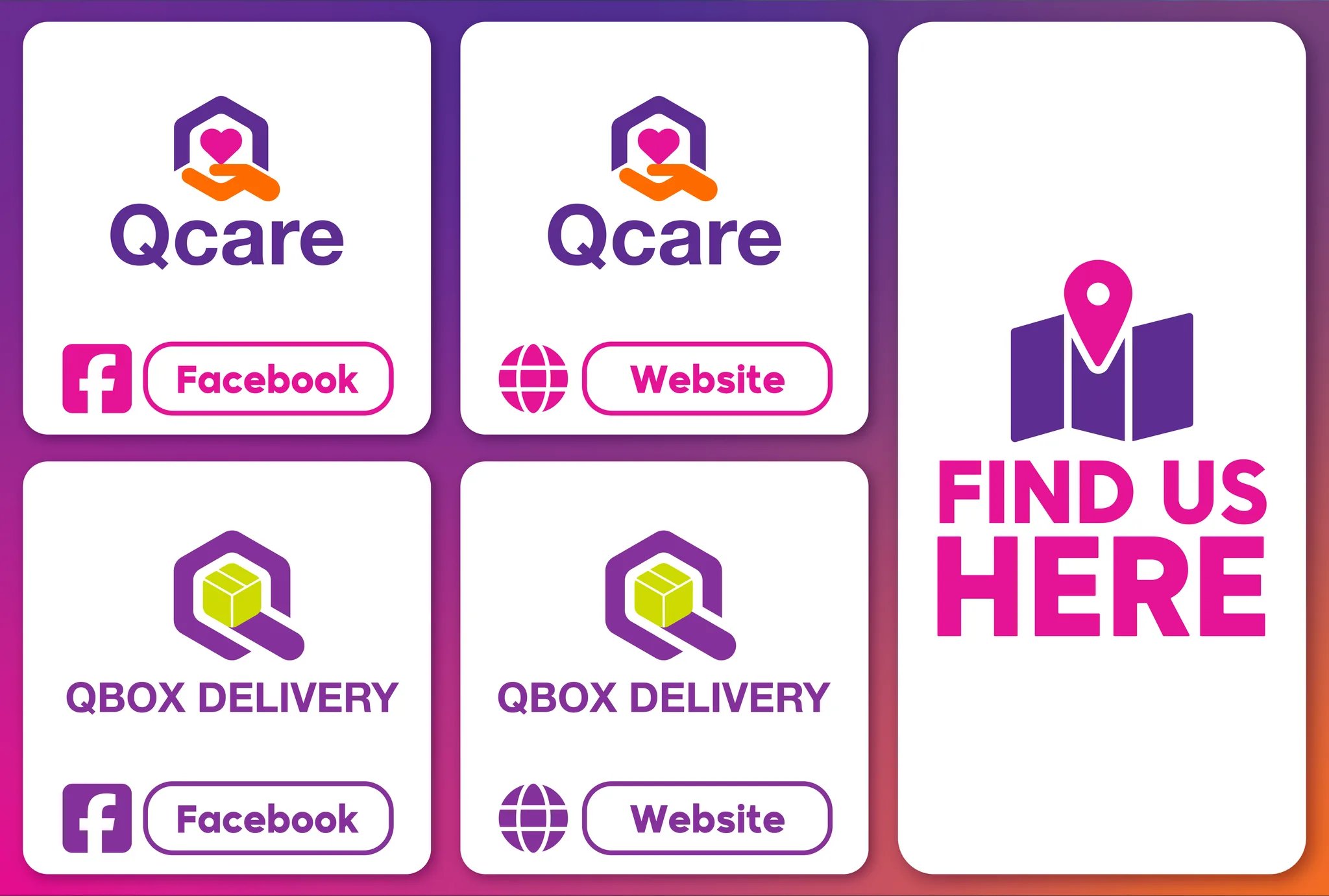
An English interface that non-Chinese-speaking operators can pick up easily
The Quilter team member who runs the back office is Filipino, and English is their working language. OakMega supports an English back-office interface, and the surveys and menus friends see are fully in English, too. It looks like a minor language setting, but it’s what made the entire workflow possible.
| Languages supported by OakMega | Use case |
|---|---|
| Traditional Chinese | Local users in Taiwan |
| English | Filipino operators and friends |
| Japanese | Expansion into Japanese-speaking markets |
| Thai | Thai migrant worker friends |
Warm up with rich messages, collect data with a form, then lock in completion with a scratch card
Migrant workers prefer colorful, visual messages. If the first thing they see after scanning is a standard survey, their willingness to respond drops noticeably. Quilter’s design logic: use rich messages to set the scene, and use the momentum of “one last step” to drive completion.
Here’s how the flow works:
- Scan and add the account → a series of rich messages begins (choose your nationality, confirm migrant worker status, pick the services you’re interested in)
- Halfway through the survey, a “YOU'RE SO CLOSE!” screen appears, giving workers who have already answered a few questions a reason to finish the last few steps
- Once the survey is done, the system automatically applies profile tags (nationality, needs, status, place of residence, event, and channel source) and unlocks the scratch card
- Only friends who completed the survey and received the dedicated tag can access the scratch card, which prevents skipped questions and duplicate redemptions
This flow accomplishes two things at once: it collects complete baseline data, and it turns filling out a survey, normally a high-friction task, into a game with a prize at the end.
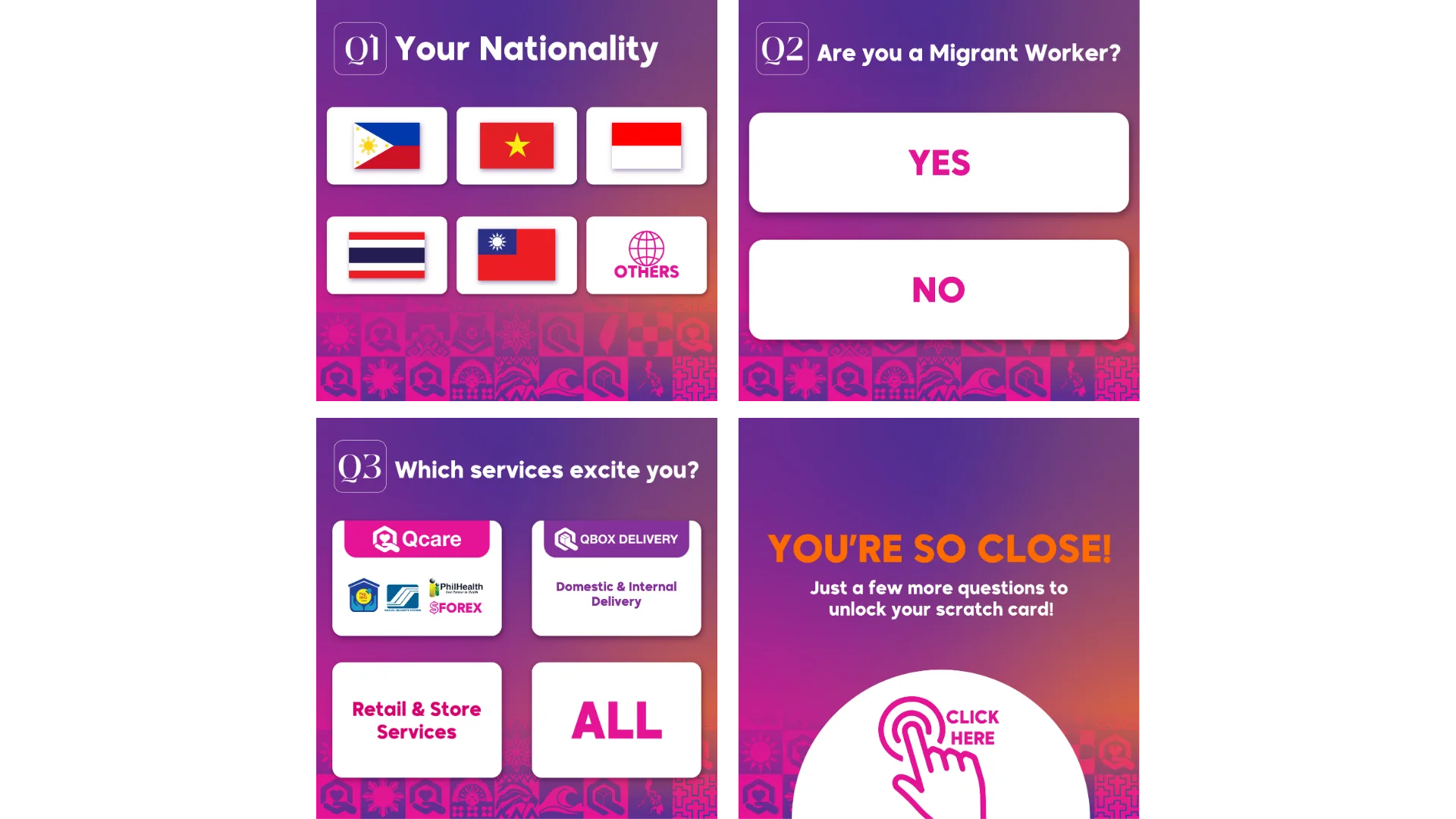
With tags in place, every broadcast reaches the right people
Friends who completed the survey left clear preferences across all three service lines:
| Service line | Interested friends |
|---|---|
| Qcare insurance | 4,400+ |
| Stores and retail | 3,700+ |
| Qbox parcel shipping | 3,700+ |
The heavy overlap in tags means each friend is interested in two or more product lines on average. Quilter isn’t remembered for “one service”; it’s remembered for “a full set of everyday support.”
Broadcasts are now sent by segment instead of to everyone, and open rates hold steady at 60–80%. On the day of the Taichung event, a targeted broadcast sent to friends who had scanned in on site that day reached an open rate of 81.2%.
90 days, 5,000 migrant worker friends: the numbers behind the results
The account officially launched on June 5, 2026, and passed 5,000 friends on September 6.
| Metric | Result | What it means |
|---|---|---|
| Total friends (90 days) | 5,000+ | The OMO booth strategy keeps bringing in new friends |
| Surveys completed (incl. scratch card) | 4,255 (80%+) | Flow design significantly boosted completion |
| Share of Filipino friends | 84.6% | Precise reach into the core audience |
| Tagged as migrant workers | 79.6% | A clear profile of the target audience |
| Segmented broadcast open rate | 60–80% (steady) | Precise tags make messages personally relevant |
| Peak open rate for a targeted event broadcast | 81.2% (Taichung event) | Real-time relevance drives high open rates |
| Three-month engagement coverage | 96.2% of friends engaged | Loyalty goes beyond a one-time add |
| Messages exchanged | 26,059 | The community keeps a two-way conversation going |
| Clicks | 31,427 | Rich menus and broadcasts drive ongoing action |
The most telling number here isn’t the friend count. It’s the 96.2% engagement coverage. It shows that the vast majority of migrant workers who joined the QBayan community aren’t names that add the account and forget it; they keep leaving a trail of activity on it. That is where building real mindshare begins.
If you face the same challenge
Quilter’s story offers three lessons that any brand building its customer base through offline contact can borrow directly.
First: every event should have its own tracking entry point.
A generic QR code can only tell you that someone joined, not which event brought in which people. Quilter assigns a dedicated bot to each event and each store, giving budget allocation and channel evaluation a foundation of real data.
Second: survey completion depends on flow design, not on the number of questions.
Quilter’s completion rate topped 80%, not because it asked fewer questions, but because it used rich messages to reduce first-impression friction, used “YOU'RE SO CLOSE!” to build momentum, and used a scratch card for an instant reward. This logic applies to any scenario where you need to collect member data.
Third: language support is an underrated part of the user experience.
For Quilter, an English interface wasn’t a nice-to-have; it was the prerequisite for the whole workflow. If your target audience speaks many languages, localizing both the operating interface and your messaging deserves to be a top design priority.