



LINE CRM vs. Traditional CRM: 5 Key Differences and Real-World Use Cases
A comparison of real-world use cases for Social CRM and traditional CRM. Social CRM systems support a wider range of scenarios, giving you a clearer view of customer needs and behavior while boosting loyalty and competitiveness. Choosing the right CRM tool helps businesses manage customer relationships better and grow both their competitive edge and market share.
 Wayne ChungCustomer Success Specialist
Social CRM Brings Customer Relationship Management to Social Channels
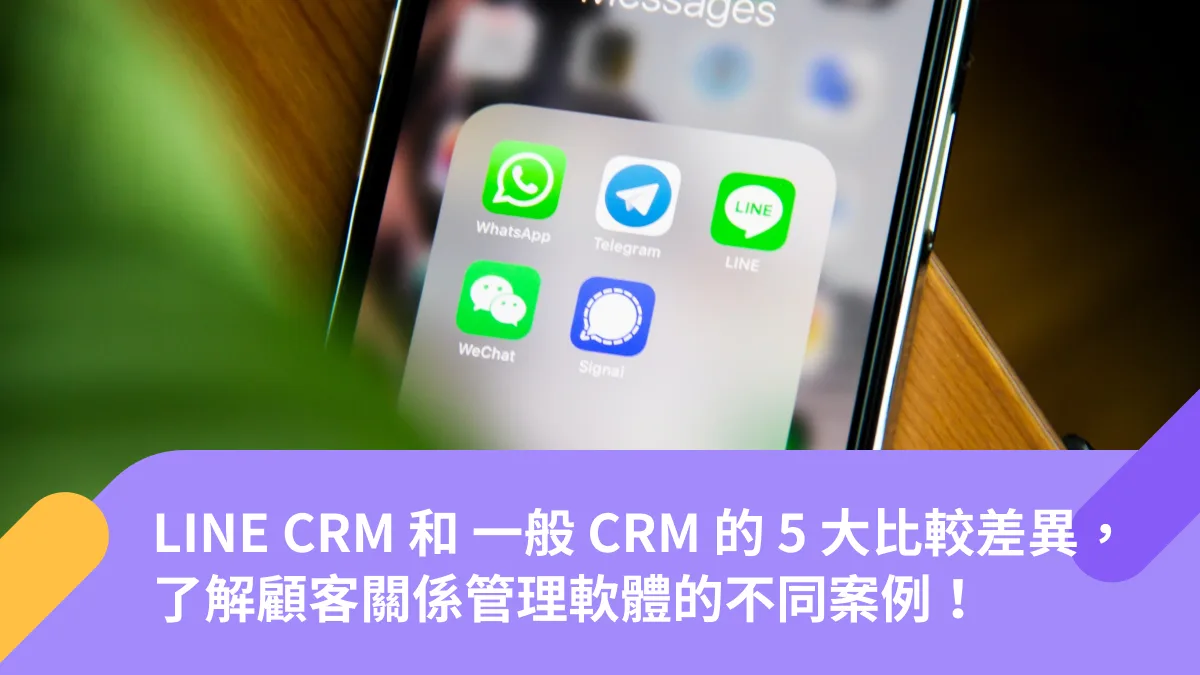
Customer relationship management (CRM) is one of the key drivers of business success today. Yet traditional CRM systems mainly help companies analyze and organize their data more comprehensively. On the application side, if you need to integrate services across different social platforms, only a LINE CRM built around Social CRM can power the full range of scenarios on a LINE Official Account. LINE brings distinct advantages over a traditional CRM, and this article takes a closer look at how Social CRM and traditional CRM differ.
Short on time? Use this outline to jump to what you need:
5 Key Differences Between LINE CRM and Traditional CRM
- Real-time communication that resolves issues faster
- Complete customer data that creates sales opportunities
- Precise segmentation for standout experiences
- Modules that drive deep engagement and build relationships
- Flexible scenarios that unlock cross-industry use cases
How to Choose the Right Social CRM for Your Business
- Which platforms do your customers use most for social interaction?
- What key information do you most need from these customers?
- What engagement mechanics do you expect to reach your goals?
How Businesses Achieve Their Goals with Social CRM
- Specific project goals
- Clear use scenarios
- The right team structure
Social CRM vs. Traditional CRM in Practice
- Traditional CRM gives you complete lead management
- Social CRM creates effective engagement and a full record of customer interactions
5 Key Differences Between LINE CRM and Traditional CRM
LINE CRM is a customer relationship management tool that extends what you can do inside LINE. It strengthens interaction between businesses and customers, increases loyalty, and grows sales. Understanding how LINE CRM differs from a traditional CRM helps businesses choose the CRM tool that fits them best and sharpen their competitive edge. Here are the five core differences:
- Communication: LINE CRM enables real-time communication. Customers can reach a business through the LINE app, which speeds up problem resolution and increases loyalty.
- Customer data: LINE CRM collects and analyzes data on how customers use the LINE app, such as chat history and click-through rates. This data reveals customer needs more clearly, so you can offer better products and services.
- Segmentation: LINE CRM offers a distinctive segmentation model that matches each customer list with the right engagement and focuses on personalized content, creating experiences that genuinely surprise users.
- Deep engagement: Traditional CRMs are built around data management and lack modules for engagement. Features such as follower-growth or lucky-draw modules are hard to roll out at scale in a traditional CRM.
- Scenario flexibility: Traditional CRMs are designed around data presentation, which limits how far they can stretch across industry scenarios. For example, an online-to-offline scenario can't be executed in a traditional CRM, even though the customer journey may create sales opportunities through multiple paths. Social CRM provides integrated scenarios that help customers reach their business goals.
If your company already has a traditional CRM, you need Social CRM even more to execute these engagement scenarios, fully record and integrate the customer journey, and gain a competitive edge in sales, customer service, and marketing.
How to Choose the Right Social CRM for Your Business
Businesses should weigh many factors when choosing a Social CRM system. Below are the key questions that typically come up during procurement. Your answers will shape what you can actually do with Social CRM once it's in place.
-
Which platforms do your customers use most for social interaction?
Customers in different industries have very different habits and backgrounds, so the CRM services they need differ just as much. Knowing which social platforms your customers frequent most lets you create touchpoints that deliver real business value.
-
What key information do you most need from these customers?
Every industry needs different key information, whether it's consumer profiles, purchase habits, or content preferences. It takes careful analysis to design an environment that's right for collecting data. For example, what drives a non-owner to buy a car is very different from what makes a healthcare professional willing to stock a product.
-
What engagement mechanics do you expect to reach your goals?
Whether you want to acquire customers through discount offers, follower-growth campaigns, or highly interactive games depends on each platform's limitations and capabilities.
Knowing your customers, the next step for your data, and the key ways you'll engage them are the most important criteria for evaluating a Social CRM.
How Businesses Achieve Their Goals with Social CRM
To measure the return on their investment, business owners inevitably ask during implementation how the system will help them grow across marketing, sales, and customer service. To answer that, businesses should work with a Social CRM consultant to plan three things: “specific project goals,” “clear use scenarios,” and “the right team structure.” This greatly improves the odds of a successful rollout.
-
Specific project goals
Whether the aim is more exposure, lower conversion costs, or lower acquisition costs, a specific goal helps the project team reach consensus with the system consultant faster and focus on next steps.
-
Clear use scenarios
Customers in different industries have different buying habits and patterns. You need to map out a clear customer journey to embed LINE scenarios concretely into the engagement flow.
-
The right team structure
A successful rollout usually needs a senior internal team member with cross-department experience, who can bring resources together, drive the project forward, and create more valuable business opportunities.
Social CRM gives businesses an important tool and platform for reaching their goals. Companies should choose the Social CRM system that best fits their needs and budget to strengthen their competitiveness and market share.
Social CRM vs. Traditional CRM in Practice
Traditional CRM systems only help companies analyze or consolidate their data more comprehensively. On the application side, integrating services across social platforms requires a CRM built around Social CRM to unlock more scenarios. Here's how Social CRM and traditional CRM compare in practice.
-
Traditional CRM gives you complete lead management
Most CRMs rely on sales reps to build and manage lead lists manually, consolidating data across different dealer networks so brand management teams can use it to present a fuller picture for business management and strategy.
-
Social CRM creates effective engagement and a full record of customer interactions
Social CRM opens up the next round of engagement once your lead list is built. Whether through deeper loyalty programs, more attractive offers, or more precise message broadcasts, it makes the customer experience more targeted. For example, car owners and non-owners need different brand information: owners need more maintenance and service content that creates sales opportunities, while non-owners need more on product differences to move them toward a relationship with a sales consultant.
In short, comparing real-world use cases shows that Social CRM systems support a wider range of scenarios, giving you a clearer view of customer needs and behavior while boosting loyalty and competitiveness. Choosing the right CRM tool helps businesses manage customer relationships better and grow both their competitive edge and market share.