






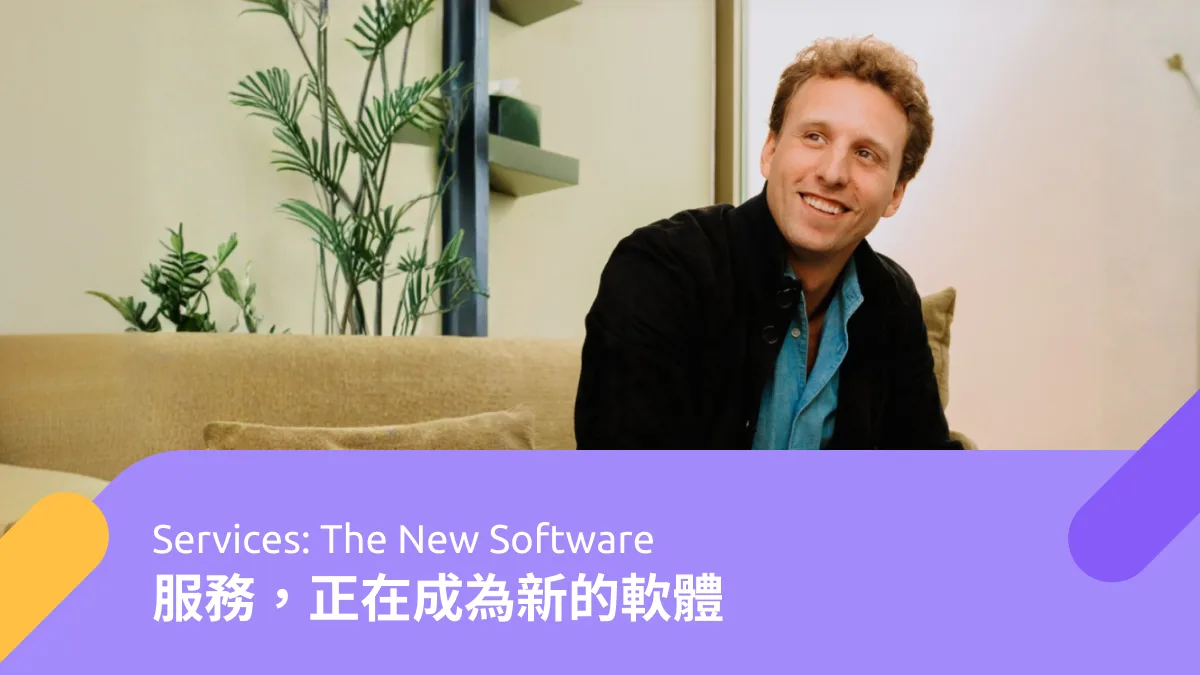
Services: The New Software | CEO Insights
Will your AI product become a built-in feature the moment the next version of Claude ships? Sequoia partner Julien Bek pinpoints the defining strategic split of the AI era: if you sell tools, you are in a constant race against the models; if you sell outcomes, every model upgrade makes you stronger. From insurance and accounting to legal work and managed IT, this piece shows how AI is moving from assisting with work to actually taking it over.
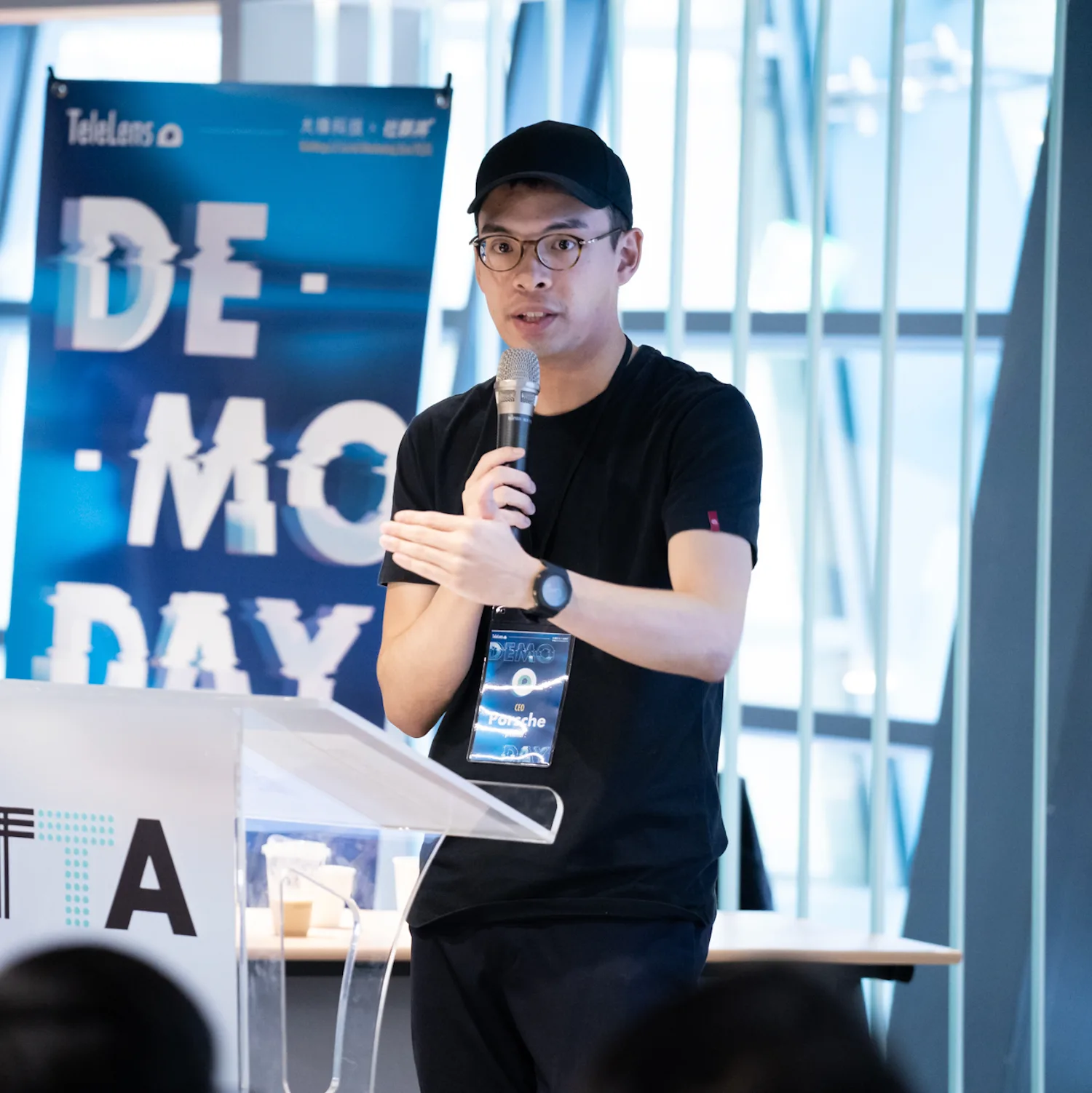 Porsche TsaiCEO
Lately a lot of my friends have been talking about ETFs, and they buy both active and passive funds. At one get-together I casually asked everyone: “Do you know which stocks are actually inside the ETF you own?” Almost nobody did. That doesn't mean they don't care about their money. Quite the opposite — they care a great deal about the outcome; they just don't want to study the tools themselves. Nobody wants to buy an investing bible, master a stack of financial statements, and then pick stocks on their own. What people want is simple: put the money in and watch it grow. Buying an ETF is buying an outcome: “my money will be well managed.”
Whether we're individuals or businesses, what we pay for has always been the outcome, not the tool.
When companies moved from hiring an SI (systems integrator) to build custom systems to subscribing to SaaS, it was essentially like going from placing orders through a stockbroker to trading on an app yourself — same goal, but faster, cheaper, and more transparent. The tools improved and the process got simpler, but what companies were buying was still the same outcome: “keep the business running.” Now we're at the turning point from the SaaS era into the AI era. This shift looks more like going from researching individual stocks to simply buying an ETF. You no longer need to understand how every underlying tool works. You set the goal, think through the strategy, design the right workflow, and let the system execute the rest.
That also means the shape of software companies is changing. The winners of the future will be “software companies dressed as services companies” — software is the engine that makes the whole company run efficiently, and service is the value we actually deliver to customers. Customers don't need to know what the engine looks like. What they want is an outcome that works.
Sequoia partner Julien Bek recently wrote an essay about exactly this. Below is my translation, along with a few points I think are worth paying attention to.
👉 Read Julien Bek's full essay, “Services: The New Software”
Table of Contents
- Introduction
- Intelligence and Execution
- Copilots and Autopilots
- Convergence
- The Autopilot Wedge: Start With Outsourced Work
- The Opportunity Map
The next trillion-dollar company will look like a services company, but it will be powered by software.
Every founder building AI tools is asking the same question: what happens when the next version of Claude turns my product into a built-in feature? The worry is justified.
If you sell the tool, you're in a constant race against the model. But if you sell the work getting done, every improvement in the model makes your service faster, cheaper, and harder for competitors to catch.
A company might spend $10,000 a year on QuickBooks and another $120,000 on an accountant to close the books. The next legendary company won't just sell you bookkeeping software, and it won't just offer accounting services — it will simply close the books for you.
Intelligence and Execution
Writing code mostly depends on intelligence and execution. Knowing what to do next depends on judgment.
Turning specs into code, testing, debugging — the rules are complex, but they're still rules. Judgment is different. It takes experience and taste, the instinct built over years in the trenches: which feature to build first, whether to take on technical debt, when to ship before the product is perfect.
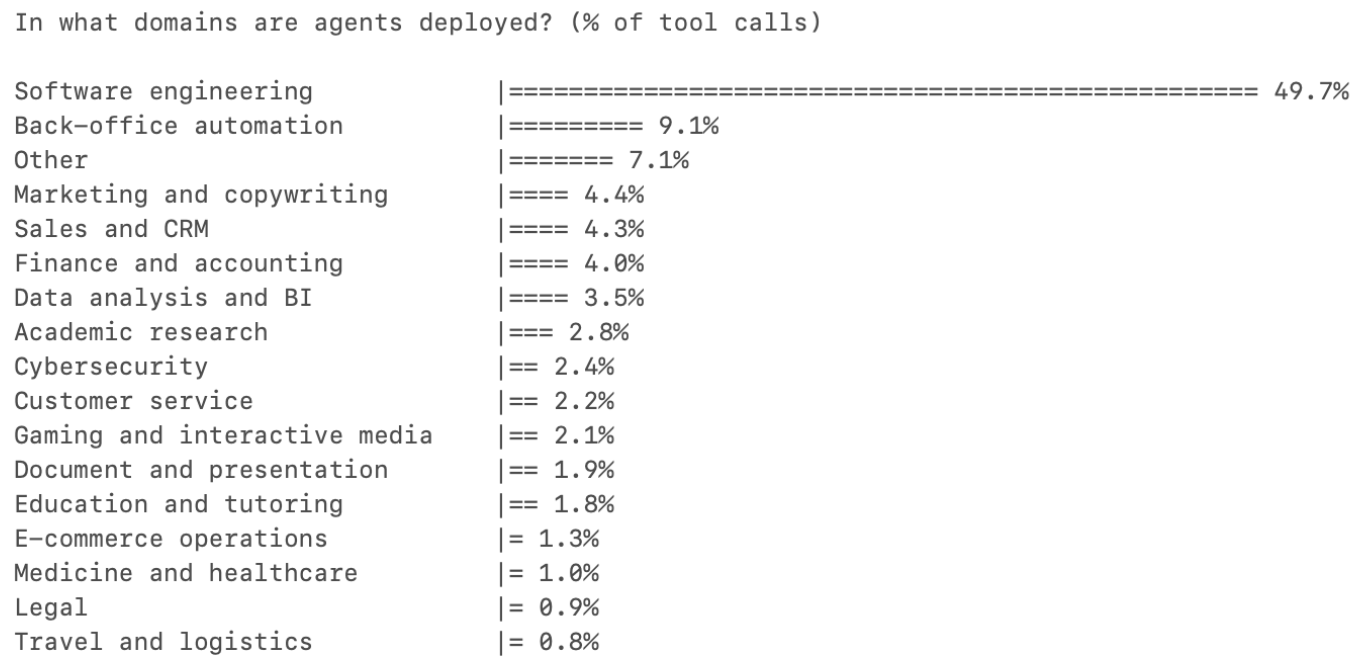
A year ago, most Cursor users treated AI as an autocomplete tool. Today, more tasks are started by AI agents than by humans. Across all professions, software engineering accounts for more than half of AI tool usage; every other category is still in the single digits.
That's because software engineering is, at its core, work that relies heavily on intelligence and execution. AI has crossed that threshold: it can handle most comprehension, translation, and execution tasks on its own, leaving judgment to humans. Software engineering is simply the first field to hit this tipping point. Every other profession is next.
Copilots and Autopilots
A copilot sells the tool. An autopilot sells the work getting done.
Until recently, AI models were still developing their intelligence, execution, and judgment, so it made more sense to build copilots first: put AI in the hands of professionals and let them decide how to use it. Harvey sells to law firms; Rogo sells to investment banks. The professional is the customer, the tool makes them more productive, and they remain accountable for the final output.
Today, models are capable enough in some domains that the best entry point is to go straight to autopilot. Crosby's customers are companies that need NDAs drafted, not outside counsel. WithCoverage's customers are CFOs who need insurance, not insurance brokers. The customer is buying the outcome itself.
In every profession, the budget for getting the work done dwarfs the budget for buying tools. Autopilots go after that work budget from day one.
The larger the share of intelligence-and-execution work in a field, the faster autopilots will win.
Convergence
Work that requires judgment today may become intelligence-and-execution work for AI tomorrow.
As AI systems build up more proprietary data in specific domains and learn what good judgment looks like, the frontier keeps moving forward. Copilots and autopilots will eventually converge.
The shift from copilot to autopilot is already underway in several fields. But where you start matters, because it determines where an autopilot can win customers first and start accumulating data. That data is what will eventually let it go beyond intelligence-and-execution tasks and gradually take on work that requires judgment.
The Autopilot Wedge: Start With Outsourced Work
For every $1 companies spend on software, they spend $6 on services.
For an autopilot, the total addressable market isn't just the tool budget. It's everything a category spends on getting the work done, including in-house staff and outsourced services. But the best place to start is work that's already outsourced.
If a task is already outsourced, that tells you three things. First, the company has already accepted that the work can be done externally. Second, the budget already exists and is easier to redirect. Third, the buyer is already purchasing a finished outcome.
Replacing an incumbent outsourcing vendor with an AI-native provider is essentially just switching suppliers. Replacing in-house staff means reorganizing the company.
So the autopilot wedge should be: start with outsourced tasks that rely heavily on intelligence and execution to open a path to market, then, as AI capabilities and data accumulate, expand into in-house work that depends more on judgment.
Outsourced work is the wedge. In-house work is the long-term market.
Crosby started with NDAs: a well-scoped task that relies mainly on intelligence and execution, and one most companies already hand off to outside counsel. The budget exists, the scope is clear, the ROI shows up fast, and switching costs are relatively low.
The Opportunity Map
Plot service categories on two axes — “intelligence and execution ↔ judgment” and “outsourced ↔ in-house” — and you get a map of priorities. The figure in parentheses is the size of each category's labor and services market.
The list below is illustrative only:
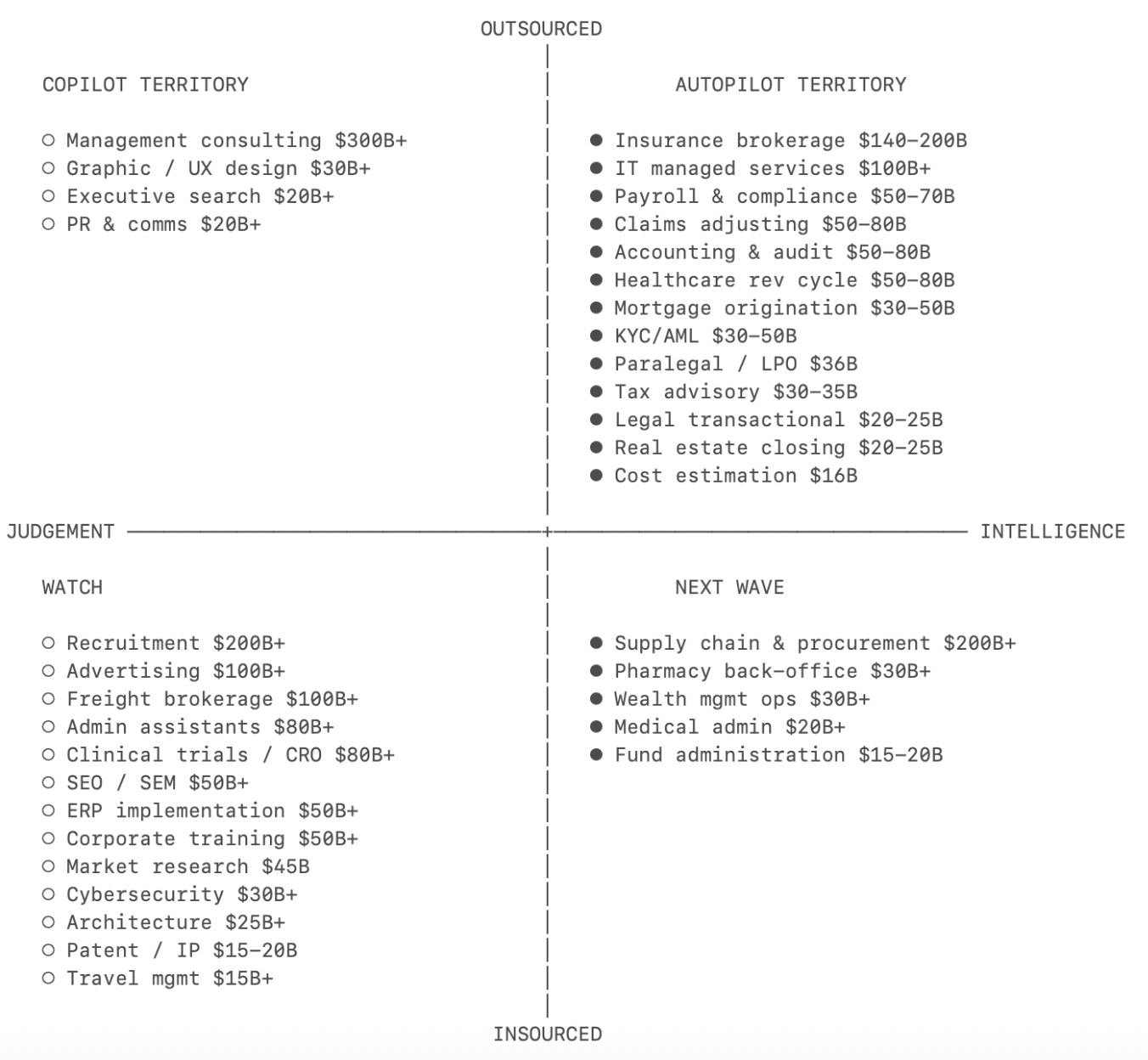
Insurance brokerage ($140–200B).
This is the largest market by dollar value on this list. Standard commercial insurance is highly standardized: a broker's added value is basically comparing prices across carriers and filling out forms — classic intelligence-and-execution work. Distribution and servicing are also extremely fragmented, with tens of thousands of small brokerages running similar processes, so no single incumbent fully owns the customer relationship. WithCoverage and Harper are new entrants worth watching.
Accounting and audit ($50–80B in the US outsourced market alone).
The US has lost roughly 340,000 accountants over the past five years, yet demand keeps growing. 75% of CPAs are nearing retirement age, the path to licensure is long, and starting salaries lag behind tech and finance. This structural talent shortage is pushing accounting to embrace AI faster than almost any other profession. Rillet is building an AI-native ERP that automates the close; Basis started as a copilot for accountants.
Healthcare revenue cycle ($50–80B US outsourced market).
When people hear “healthcare,” they tend to assume the work is heavily judgment-driven. But the billing and revenue layer is almost entirely intelligence-and-execution work. Medical coding is essentially translating clinical notes into roughly 70,000 standardized ICD-10 codes. The rules are complex, but they're still rules. Outsourcing in this space is already mature and is mostly priced on outcomes. An autopilot just has to do the same thing at a lower cost. Anterior is currently furthest ahead.
Claims adjusting (including TPAs, $50–80B).
On the other side of the policy, claims handling is a separate autopilot opportunity. For standard lines, claims work mostly means checking loss schedules against policy terms and setting reserves based on actuarial tables. The adjuster workforce is aging, and there aren't enough new people to replace it. This market is also heavily outsourced to independent adjusting firms and third-party administrators (TPAs) such as Crawford and Sedgwick. Within the same insurance industry, there are at least two distinct autopilot opportunities. Pace is building an autopilot for claims processing, and Strala is building an AI-native TPA.
Tax advisory ($30–35B).
The CPA license creates a regulatory and professional barrier, but 80–90% of the underlying work is still intelligence and execution. Every additional jurisdiction or tax regime a tax autopilot handles deepens its data moat. Multi-jurisdiction complexity is exactly why small and midsize businesses outsource, because few in-house accountants can cover it all. TaxGPT is an early entrant, and in Europe there are Skalar and Ravical.
Transactional legal work ($20–25B).
Contract drafting, NDAs, regulatory filings: this work relies heavily on intelligence and execution and is often outsourced. The output is standardized enough, and quality is relatively easy to verify, so buyers don't need deep legal expertise to judge whether the AI output can be trusted. Harvey is the rising leader and is moving quickly toward autopilot; Crosby and Lawhive are new entrants built around autopilot from the start.
Managed IT services ($100B+).
Nearly every small and midsize business outsources IT. Patching, monitoring, user provisioning, alert triage: this is intelligence-and-execution work repeated across thousands of similar environments. The incumbent software layer, such as ConnectWise and Datto, mainly sells tools to managed service providers. So far, no one has truly sold “your IT just works” directly to businesses as an outcome. Edra is automating IT workflows, and Serval is automating IT support.
Supply chain and procurement ($200B+).
Most companies only negotiate seriously with their top 20% of suppliers. The long tail gets almost no attention because it isn't worth the headcount. Contract leakage typically accounts for 2–5% of total procurement spend. The wedge here is work that's already been abandoned: you don't need to convince a company to create a new budget or replace an existing vendor — you just help it recover money it was already losing. Magentic is building AI for direct procurement, AskLio targets indirect procurement, and Tacto is building both a core system of record and a copilot for midsize companies.
Recruiting and staffing ($200B+).
This is the largest services market on this list. The top of the recruiting funnel — résumé screening, talent matching, outreach — is almost entirely intelligence-and-execution work. But convincing a candidate to accept an offer and judging culture fit rely heavily on judgment built over years of experience. The autopilot wedge will be high-volume, low-judgment roles, where matching is already relatively standardized. Juicebox, Mercor, and Jack & Jill are rising leaders, each attacking the market from a different layer.
Management consulting ($300–400B).
This is a huge market, but most of the work is heavily judgment-driven. The really interesting question is whether AI can split consulting into two layers: intelligence-and-execution tasks, such as data gathering and benchmarking, and judgment tasks, such as strategic recommendations. The former gets automated; the latter stays with humans. Which companies are best positioned to win remains to be seen.
In 2025, the fastest-growing AI companies were copilots. In 2026, many of them will try to become autopilots. They already have products and understand what customers need. But they'll also face the innovator's dilemma: once they start selling the work getting done, they're taking over work their customers used to do themselves.
That is exactly the opportunity for pure-play autopilot startups.
What do you think? Let's talk