LINE Is Building AI Agents Too. Do You Still Need Social CRM? | CEO Insights
LINE plans to launch an AI agent platform for Official Accounts in Q1 2027, letting brands build booking, sales, and customer service AI Agents inside LINE. Will it replace Social CRM? OakMega CEO Porsche looks at LINE’s press release, Meta’s precedent, and real B2B scenarios, and lays out three questions to ask before you switch it on.
 Porsche TsaiCEO
 The conversation is only the tip of the iceberg; the real value lies in customer context
If you work in Social CRM, you’ve probably heard the same question all week: LINE is building its own AI Agents now, so why do you still exist?
My short answer: it won’t replace us, but it will redraw the lines. LINE’s AI agent platform will put AI within reach of merchants that run on a single channel with simple workflows. But once a company has multiple channels, multiple departments, or long B2B sales cycles, its AI Agents still need to connect to a CRM to see the full customer context. In fact, LINE’s own press release lists CRM as one of the systems to integrate.
It’s a good question, and a timely one. I want to unpack the answer, starting somewhere most people probably skimmed past: LINE’s own press release.
LINE is serious about this
Let’s start with the facts. At its LINE CONVERGE 2026 press event on October 13, LINE announced that Official Accounts are entering the AI agent era, with an AI agent platform targeted for Q1 2027. Taiwan already has more than 3.6 million Official Accounts, and 86% of LINE users there have used one.
Put simply, the LINE AI agent platform lets brands build AI Agents from their Official Account dashboard. These agents don’t just answer questions; they complete bookings, purchases, and customer service tasks on the customer’s behalf. At launch, LINE will offer three Agent modules—booking, sales, and customer service—that brands can switch on directly in the dashboard, and brands can also describe the role they want the AI to play in plain conversation. LINE expects to start pilot programs with brands by the end of this year, and later plans to roll out LINE Biz Agent for enterprises: give it a business goal, and it will orchestrate the various Biz Solutions tools.
For the millions of merchants in Taiwan, this is the most important Official Account upgrade in a decade. It used to be “a window that replies to messages.” It may soon become “a store clerk who gets things done.”
But no matter how smart the clerk is, they first have to recognize the customer.
The line in the press release everyone skipped
LINE’s press release walks through only one scenario in full: a nail salon booking. When the customer’s preferred manicurist isn’t available, the AI Agent pulls together member data, the manicurists’ schedules, and the booking system based on the customer’s preferences, finds a suitable time slot, and completes the booking once the customer confirms.
Look at how that’s structured. This is the simplest case LINE could hand-pick, yet to complete a single booking the Agent needs three data sources from outside LINE: member preferences, staff schedules, and the booking system. The press release also states plainly that brands can go further and connect their own POS, CRM, membership, booking, and scheduling systems.
In other words, LINE has already answered the “Do we still need Social CRM?” question in its own press release. The Agent is the engine; data is the fuel. The more powerful the engine, the higher the bar for the fuel.
If a nail appointment takes three data sources, what happens with a more complex business?
Scenario 1: A manufacturer’s dealer. A dealer asks on LINE: “Is last month’s quote still valid? Can we get the same terms as last year?” To answer, the Agent first has to know which dealer this is, how many years you’ve worked together, which sales rep owns the account, what stage the deal is at, whether last year’s terms live in the CRM or the ERP, and whether the sales manager has the authority to approve that price. That’s no longer a job for booking, sales, and customer service modules. It’s the entire B2B sales process.
Scenario 2: A multichannel brand. A customer fills out a quote request on the website, tries the product in a store over the weekend, then goes home and asks on LINE how the warranty works. If the Agent can only see the LINE conversation, this customer is a “first meeting.” But to the brand, this is someone who has already taken three steps and is one step away from buying.
The conversation is just the tip of the iceberg above the waterline. What really determines the quality of an AI’s answers is the customer context underneath.
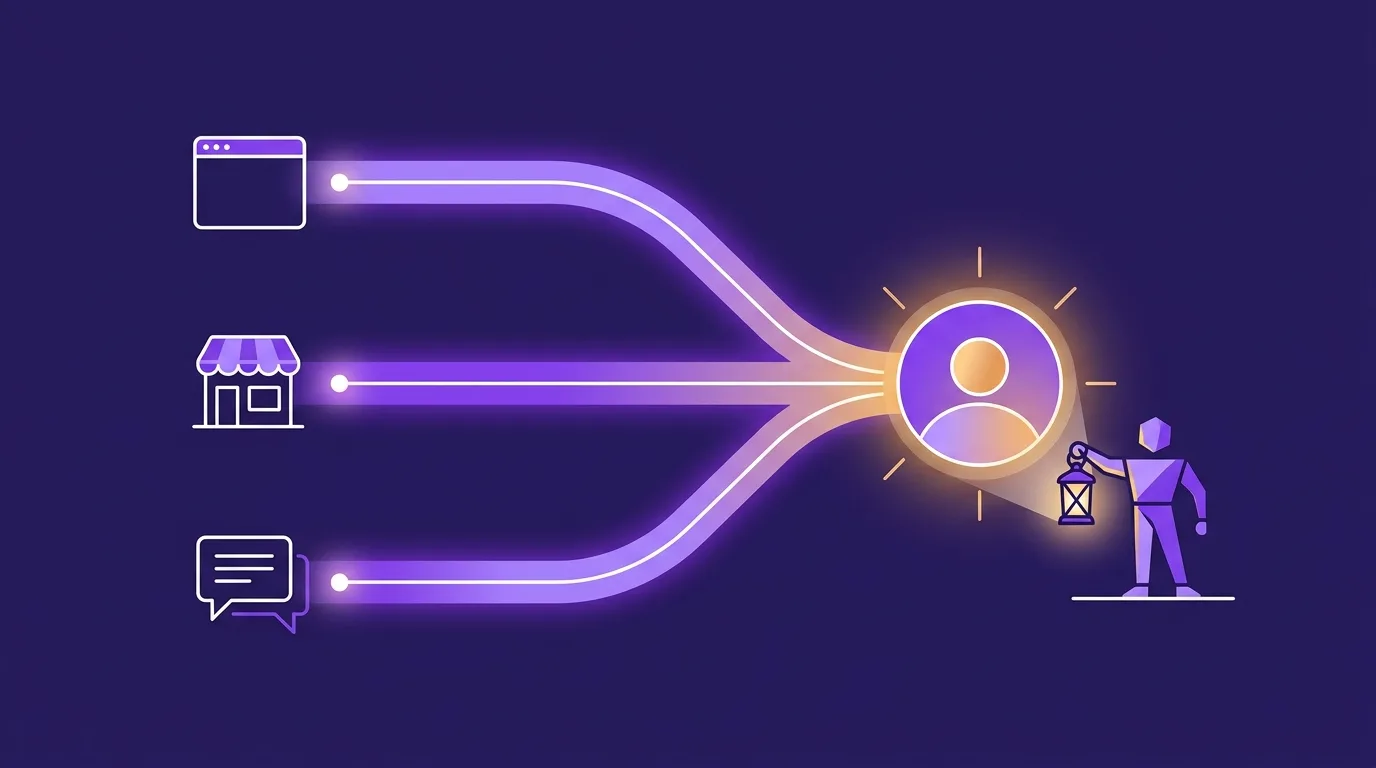 When a customer crosses three channels and the AI sees only one, it misses the mark
Meta has already run this play
If you want to know how LINE’s move might unfold, you don’t have to guess. Meta ran the same play just four months ago.
Meta Business Agent launched globally on June 3, 2026, with a two-tier structure. The free self-serve version learns only from past conversations and the product catalog, and doesn’t connect to external CRMs like Salesforce or HubSpot. The enterprise platform lets brands connect systems such as Shopify, Zendesk, and Shopee so the Agent can take actions on the business’s behalf, and it adds enterprise-grade controls.
Outside observers largely agree. One commentary noted that for Agents to stay aligned with customer records, orders, and service workflows, companies will need deeper CRM and ERP integration—and whether they’re willing to connect those systems to the platform may set the pace of adoption. It’s the same trend we discussed earlier about big platforms and AI reshaping CRM together: the stronger AI gets, the more it needs clean customer data as a foundation.
My takeaway from Meta’s experience: platforms will capture the long tail, and that’s a good thing, because thousands of small merchants can finally afford AI. But once a business grows into multiple channels, departments, and systems, someone has to connect the data and set clear rules. That layer won’t disappear. It will only matter more.
Nor is this a one-off decision by LINE Taiwan. In Japan, LY Corporation has already launched an AI Agent brand called “Agent i” and has plans for a “LINE OA AI Mode” for Official Accounts and an enterprise-facing “Agent i Biz.” This is the direction of the whole group; Taiwan is simply the next stop.
Who needs Social CRM, and who really doesn’t
At this point I have to say something that isn’t great for my own business: not every brand needs Social CRM.
If you run a nail salon or a brunch spot, your customers only reach you on LINE, and your workflow is booking, reminders, and follow-ups, then LINE’s native AI Agent may well be enough—and it will only get better. Forcing a CRM on that business is like getting a truck license to go grocery shopping.
The dividing line is complexity. OakMega has long served enterprise clients in the LINE ecosystem, and the threshold we see most often is this: as soon as any of the following applies, cross-system customer context starts to become valuable.
- Your customers aren’t only on LINE—they’re also on your website, in your stores, on the phone, and in your sales reps’ phones;
- Marketing, sales, and customer service each keep their own list, and the lists don’t match;
- You’re in B2B, where a single deal takes months and involves several contacts;
- AI can do more and more, but you can’t clearly say which data it may touch and which it may not.
That last point, I believe, will be the most underrated issue of the next two years. Once AI Agents can talk, the next question isn’t whether they’re smart. It’s whether they follow the rules.
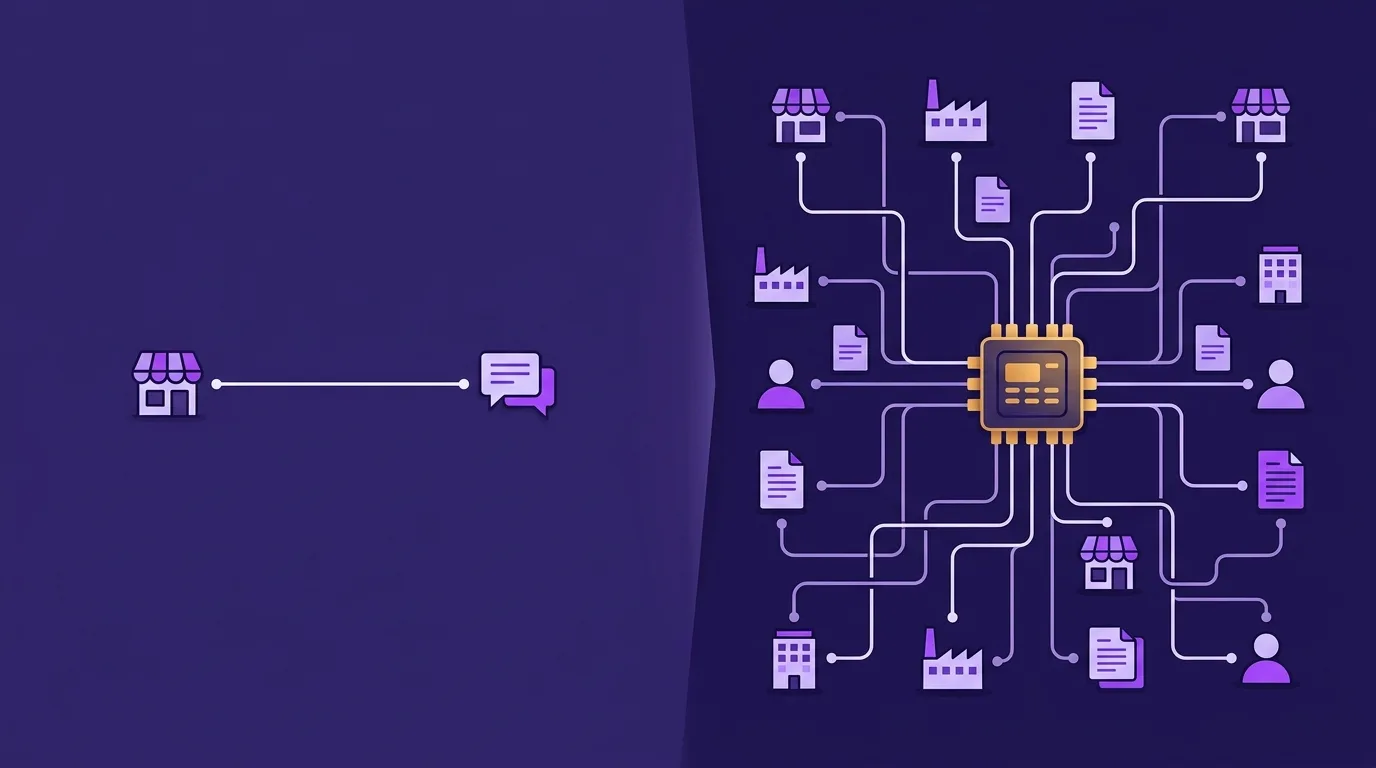 The more complex the business, the more cross-system customer context is worth
Who owns the conversation?
One more thing deserves a second thought. LINE’s press release notes that as AI Agents come on board, every conversation can build up more demand insights and data assets.
That’s entirely true, and I welcome it. But as someone running a brand, I’d ask three more questions: Where are these insights stored? Can I take them with me? Can I view them alongside my website, store, and sales data?
This isn’t about distrusting any platform. It’s basic business hygiene. You can decorate a rented storefront beautifully, but your customer ledger belongs in your own safe at home.
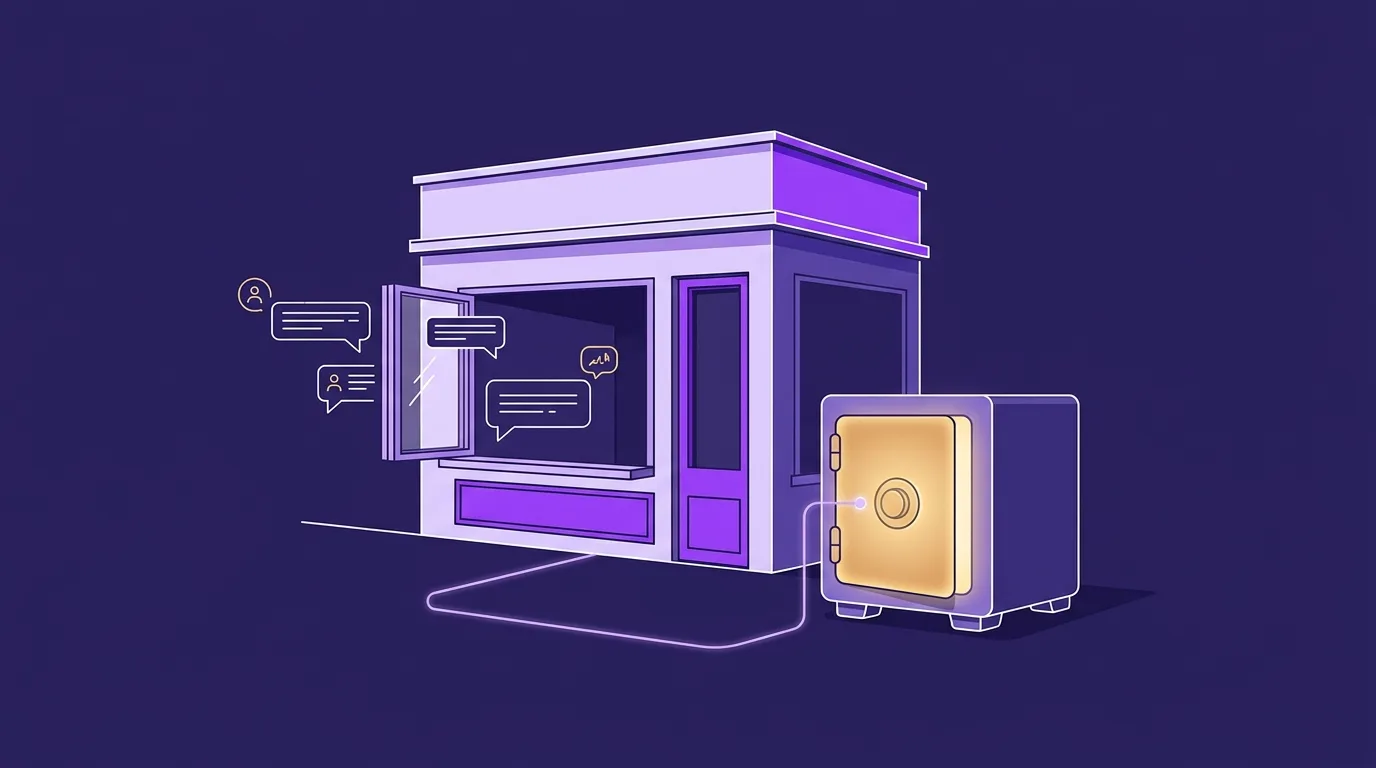
Three questions to ask yourself before turning on LINE AI Agents
When the platform launches in Q1 next year, I expect many brands will try it right away, and I encourage you to. But before you hit “Enable,” answer three questions first:
- Where does my customer context live? If the answer is “scattered across five systems and three people’s heads,” even the smartest Agent will only see one piece of it.
- How far do I want the AI to go? Answering FAQs and moving a deal forward for your sales team require entirely different depths of data.
- Who governs the AI’s permissions? What data it can see, what terms it can promise, and when it must hand off to a human—write these rules down first.
My position is simple: AI Agents don’t necessarily have to live inside a CRM, but they need a CRM to truly know your customers. Channels will keep getting smarter, and that’s good news. But each channel only sees itself. What OakMega is working on next is making sure that whichever channel an AI works in, it gets complete, accurate, and governed customer context.
AI can work anywhere. Your customer relationships can’t be scattered everywhere.
FAQ
Q1: When will the AI agent platform for LINE Official Accounts launch?
LINE expects to begin pilots with brands at the end of 2026, with an official launch targeted for Q1 2027.
Q2: What can LINE AI Agents do?
At launch there will be three modules—booking, sales, and customer service. Brands can enable them in the Official Account dashboard and use plain conversation to set the Agent’s role and tasks.
Q3: Will LINE AI Agents cost money?
The platform is still in development, and pricing hasn’t been announced. Keep an eye on LINE’s official announcements around the Q1 2027 launch.
Q4: What is LINE Biz Agent?
It’s an enterprise-facing Agent LINE is planning. A business sets a goal, and it helps orchestrate capabilities across LINE’s Biz Solutions. It’s still on the product roadmap and not yet available.
Q5: Can LINE AI Agents connect to a company’s CRM?
Yes. LINE says brands can go further and connect their own POS, CRM, membership, booking, and scheduling systems and common tools, and that it will work with technology partners across industries to expand integrations.
Q6: With LINE AI Agents, do you still need Social CRM?
It depends on how complex your operations are. For small merchants with a single channel and simple workflows, the native features may be enough. Companies with multiple channels, multiple departments, or long B2B sales cycles still need cross-system customer data integration and permission governance for AI Agents to make the right calls.
Q7: What should a company prepare before adopting LINE AI Agents?
First, map out which systems your customer data is spread across. Then decide how far you want the AI to go. Finally, define what data the AI can access and when it should hand off to a human.
Q8: Do other messaging platforms offer similar AI Agents?
Yes. In 2026 Meta launched Meta Business Agent, covering WhatsApp, Messenger, and Instagram, along with a separate enterprise platform for connecting systems like Shopify and Zendesk.
References
- LINE Taiwan Newsroom, “LINE Official Accounts Enter the AI Agent Era: From Responding to Needs to Completing Services, Letting Conversations Drive Business” (in Chinese), 2026-10-13. https://www.linecorp.com/tw/pr/news/2026/1013-2/
- Business Next (bnext), “LINE Official Accounts Get AI Too! Merchants Can Build Booking, Sales, and Customer Service AI Agents Just by Talking” (in Chinese), 2026-10. https://www.bnext.com.tw/article/92615/line-converge-2026-agentic-ai
- China Times, “LINE to Launch AI Agent Platform Next Q1, Helping Brands Build Their Own AI Agents” (in Chinese), 2026-10-14. https://www.chinatimes.com/realtimenews/20261014001123-260410
- PYMNTS, “Meta Targets Business AI Market With Agents That Close Sales,” 2026-06. https://www.pymnts.com/meta/2026/meta-targets-business-ai-market-with-agents-that-close-sales/
- Wati, “Meta Business Agent.” https://wati.io/en/blog/meta-business-agent
- iStart, “Meta wants your CRM – via Messenger.” https://istart.com.au/news-items/meta-wants-your-crm-via-messenger/
- smhn.info, “LY Corporation’s AI Agent ‘Agent i’” (in Japanese), 2026-04. https://smhn.info/202604-line-ai-agent-i