How Social CRM Helps Brands Build Engagement Strategies for Every Stage of the Customer Lifecycle
Social CRM has become a key way for brands to engage customers. Across their messaging apps, brands can use CRM to manage data and conversations in one place. And when they view customers of different types and stages through the customer lifecycle, they can combine data-driven thinking with their overall brand strategy to segment more effectively and craft more precise marketing and sales strategies.
 Howard HuangMarketing Specialist
Social CRM has become a key way for brands to engage customers. Across their messaging apps, brands can use CRM to manage data and conversations in one place. And when they view customers of different types and stages through the customer lifecycle, they can combine data-driven thinking with their overall brand strategy to segment more effectively and craft more precise marketing and sales strategies.
How Social CRM helps brands improve engagement across the customer lifecycle
Think of Social CRM as building a CRM (customer relationship management) system inside messaging apps, or connecting one to your existing CRM. With CRM data, you can address customer needs faster and more precisely, and the behavioral profile data you collect helps refine your brand strategy and product roadmap.
To use Social CRM thinking to meet customer needs more efficiently, a good approach is to segment customers by their traits and stage. Taking a different strategy for customers at each lifecycle stage lets you deliver more precise, personalized service and allocate brand resources more effectively. For example, to improve results in the "Acquire" stage, make sure every touchpoint has a call to action (CTA) so potential customers can start interacting with your brand, form a first impression of your products or services within those limited interactions, and give you behavioral profile data along the way.
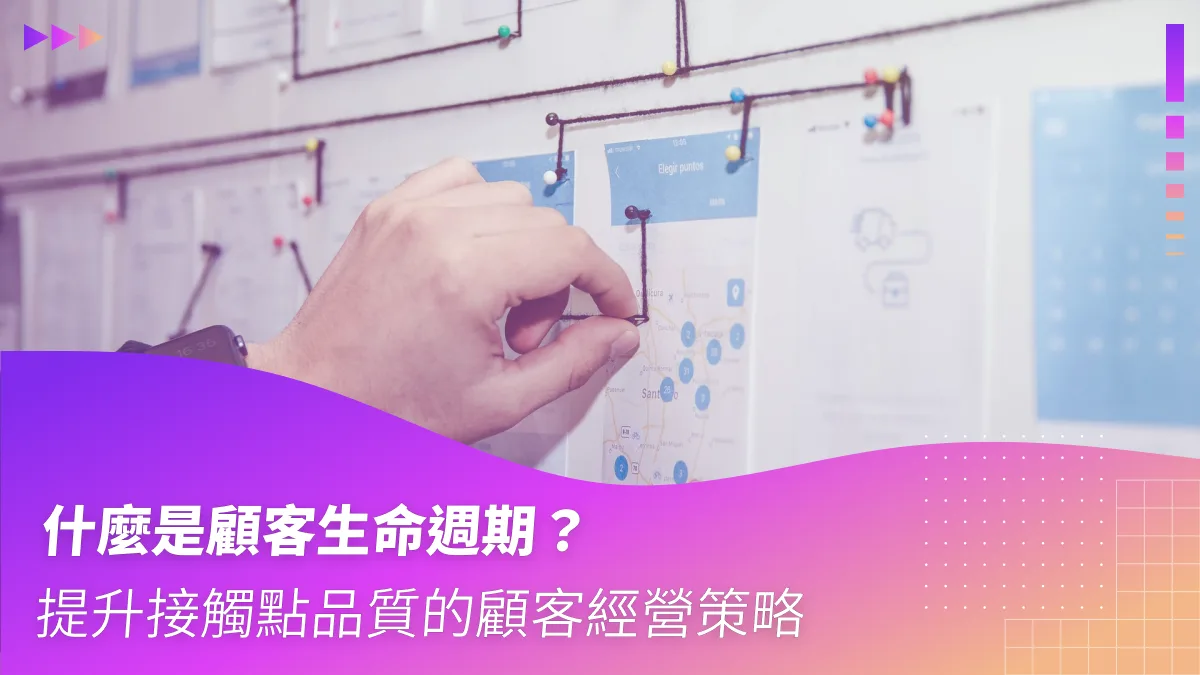
What is the customer lifecycle? How do you create touchpoints with customers at every stage?Whatever your industry, winning repeat customers and building loyalty is a key business strategy. According to a 2015 survey by the marketing firm Invesp, acquiring a new customer costs five times as much as keeping an existing one, so brands need to maintain relationships with loyal customers while growing their customer base. This is even more true in software as a service (SaaS): without one-time license revenue, companies must focus on serving customers better, raising average order value, and reducing every possible churn. If you can deliver exactly what customers need as early as the Acquire stage, you can steadily grow ARR (Annual Recurring Revenue) and LTV (Lifetime Value), turning customers into loyal fans who go on to advocate for you to other prospects. This process of interacting with customers is called the customer lifecycle, and it has four main stages: Acquire, Engage, Retain, and Expand.https://oakmega.com/blog/what-is-customer-lifecycle
Build lifecycle strategies with an inbound marketing mindset
Customers today have more choices than ever. Relying solely on outbound marketing such as digital ads and SMS blasts to acquire customers won't build steady organic traffic, and it drives up marketing costs. Inbound marketing, which means publishing content customers genuinely need online and keeping it updated, has become the new approach. Over time, customers will find your website through search engines, social media, other websites, and many other channels.
In the internet era, customer behavior is increasingly fragmented, and customers expect brands to deliver exactly the content they need, precisely and efficiently. Salesforce's 2021 customer service report, based on a survey of more than 15,000 consumers worldwide, found that over 66% of consumers expect brands to better understand their needs and expectations, and as many as 76% of B2B buyers expect brands to effectively resolve the questions they run into while evaluating and using a product.
How do you do inbound marketing on LINE? These brands drive strong conversions with LINE Official AccountsAs the user growth dividend fades, limited-time tactics like giving away free stickers for adding a LINE friend no longer work. LINE's official business blog has started urging brands to adopt a long-term approach tied to their brand strategy to build awareness and attract new friends. So how should you improve your current LINE strategy? Try an inbound marketing mindset: enrich your LINE Official Account content, use LINE's many built-in features and its place in customers' daily lives, and send segmented broadcasts to the friends who need them. Over time, this creates a positive cycle. Below, we briefly explain how to do inbound marketing on LINE and share real LINE inbound marketing cases from well-known international brands.https://oakmega.com/blog/line-inbound-marketing
Put data to work and build your brand's first-party database
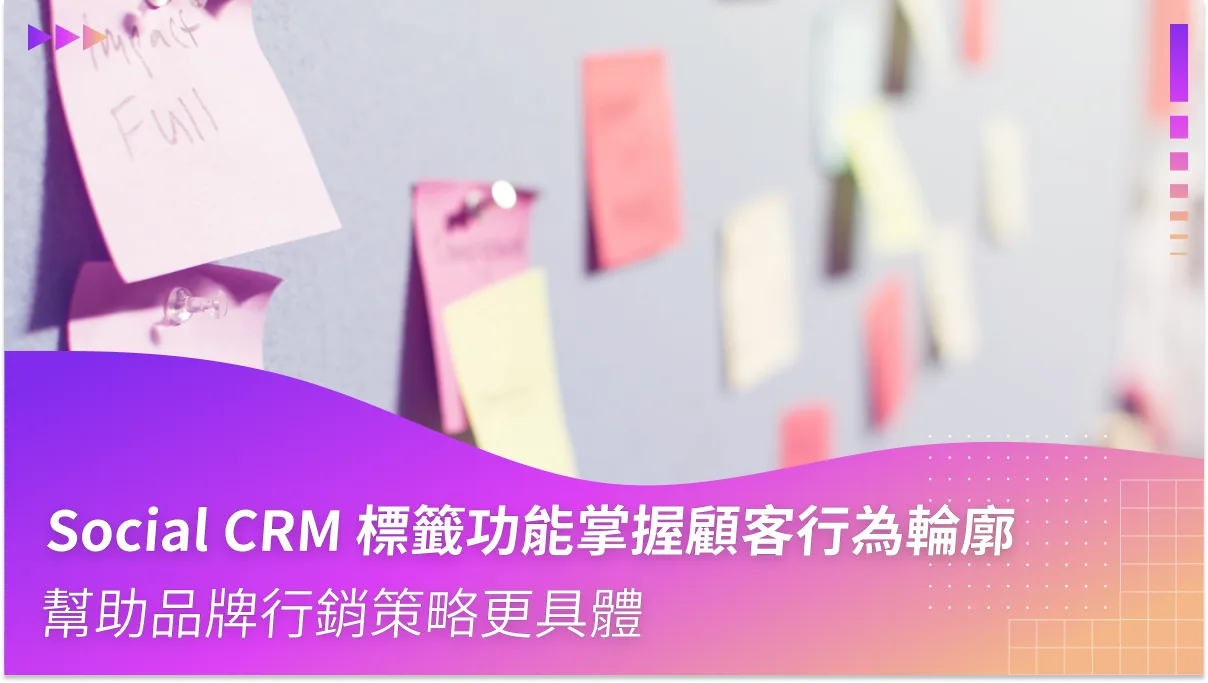
Social CRM extends the power of data to every social touchpoint where you interact with customers on the front line. Social channels are no longer just one-way marketing platforms. With a data-driven mindset, every interaction with a friend becomes data you can act on in real time. For example, friends who scanned a QR code to join a seminar, added your LINE Official Account, and carry an "offline event" tag can instantly receive a retargeting message inviting them to fill out a survey in exchange for a free product trial.
A new relationship with customers: five benefits Social CRM brings to businessesSince 2020, the pandemic has swept the globe. It changed our daily lives dramatically and brought huge changes to businesses, from commuting to the office every day to working from home becoming the norm in many countries. Unable to reach customers the way they used to, many businesses began looking for solutions. Third-party cookies are being phased out and Apple now asks users whether they want to be tracked; these changes have made acquiring new customers seven times more expensive, so maintaining customer relationships has become a critical issue. Social CRM is more than a typical customer relationship system. What difference does adding “Social” make compared with a traditional CRM?https://oakmega.com/blog/what-are-benefit-to-use-social-crm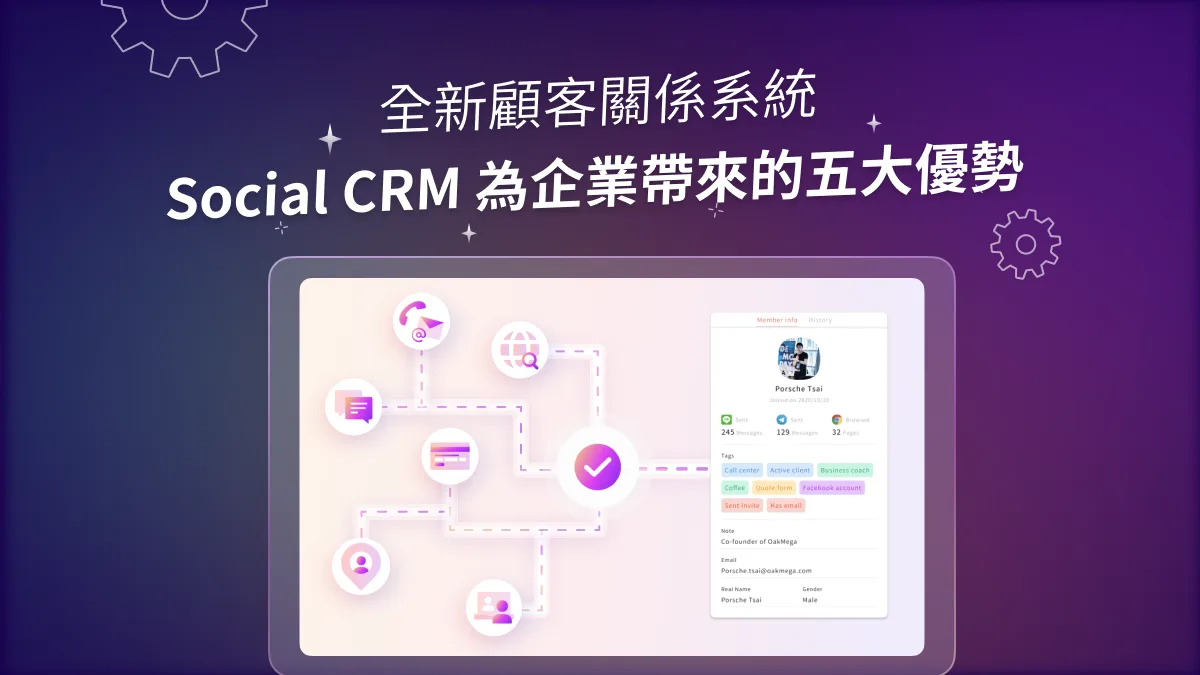
Conclusion
More and more brands are looking for Social CRM solutions. OakMega Social CRM lets brands build a CRM system inside messaging apps, helping them apply Social CRM thinking to engage different audiences effectively, build first-party data, and develop long-term VIP relationships.