



What Is the Customer Lifecycle? A Strategy for Better Customer Touchpoints
Whatever your industry, winning repeat customers is a key business strategy. A 2015 study by the marketing firm Invesp found that acquiring a new customer costs five times as much as retaining an existing one, which means brands need to actively nurture relationships with loyal customers. If you deliver exactly what customers need from the Acquire stage of the customer lifecycle, you can turn them into superfans who go on to advocate for your brand to other prospects.
 Howard HuangMarketing Specialist
Whatever your industry, winning repeat customers and building loyalty is a key business strategy. According to a 2015 study by the marketing firm Invesp, acquiring a new customer costs five times as much as retaining an existing one. In other words, brands need to keep nurturing relationships with loyal customers even as they grow their customer base.
That's even more true in software as a service (SaaS). Without one-time license revenue, SaaS companies have to focus as much as possible on serving customers better, raising average order value, and preventing every possible churn.
If you deliver exactly what customers need from the very first stage, Acquire, you can steadily grow ARR (Annual Recurring Revenue) and LTV (Lifetime Value), turning customers into superfans who then act as advocates and recommend you to other prospects. This journey of interactions with a customer is called the customer lifecycle, and it breaks down into four main stages: Acquire, Engage, Retain, and Grow.
What is the customer lifecycle, and why are brands paying attention to it?
The customer lifecycle matters because it lets brands segment customers by lifecycle stage, build different marketing, sales, and service strategies for each, and effectively nurture customers to the next stage until they become superfans.
Mastering the customer lifecycle means you can give every customer the right service, raise Customer Lifetime Value (CLV), and lower customer acquisition costs at the same time.
The four stages of the customer lifecycle
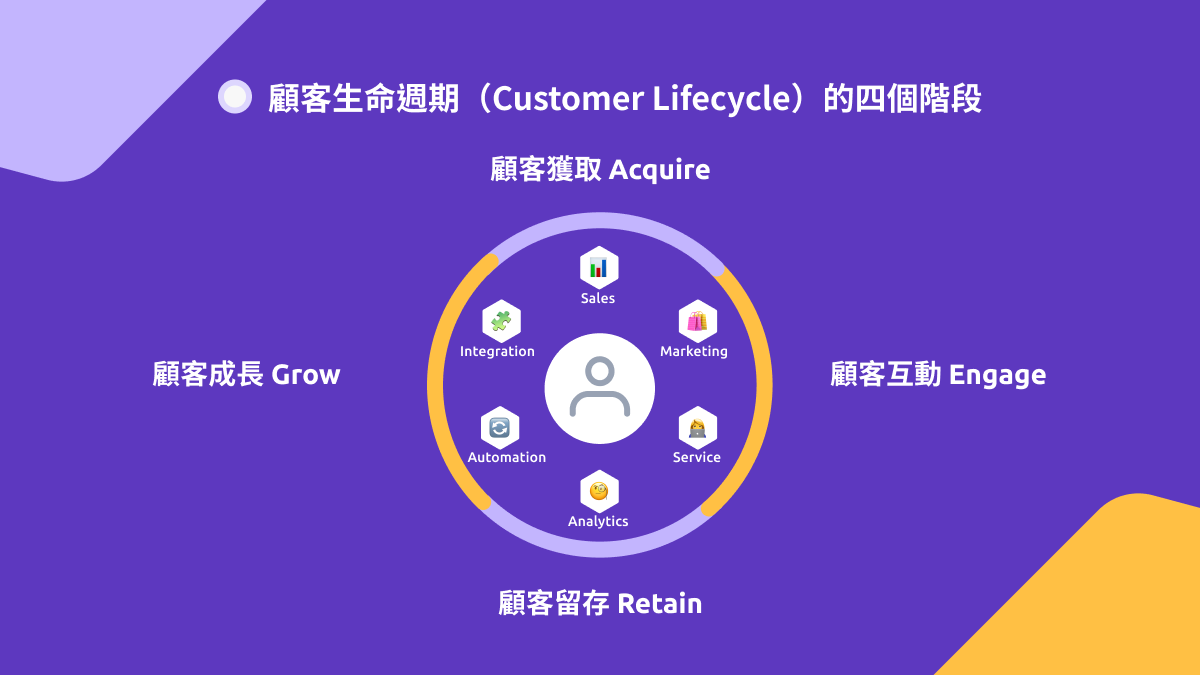
Acquire
In the Acquire stage, brands make first contact with potential customers through different channels, such as social media, the website, online and offline events, or sales outreach. Here, marketing and sales teams work within the brand's market positioning and overall strategy to open up every possible touchpoint and get customers to start experiencing the product or service.
Engage
The Engage stage is a transition for both the brand and the customer. The brand's challenge is to use the most effective ways to deliver valuable information and raise customer value. When customers land on your website from a search keyword or a Facebook ad, you need to give them enough information to keep reading and even fill out your “Contact us” form. Otherwise, you'll only drive up bounce rates and drag down conversions.
One multi-modal transportation brand in Taiwan made the most of the native back end of LINE, the messaging app. It positioned LINE as the place to book rides and earn member points, and used LINE's various message formats to create a game-like conversational experience with its LINE friends, ending with a ride voucher to encourage redemption. It's an effective way to boost customer engagement.
Take a Personality Quiz on LINE TAXI? Get an Exclusive Photo Frame with Illustrator Someone's Daily Life and a Friend DiscountMany people already know LINE TAXI. When Uber first entered Taiwan, TaxiGo had already established itself in the market. In 2019, LINE became its largest shareholder and renamed it LINE TAXI. Beyond a membership program that levels up with ride mileage, LINE TAXI keeps users highly engaged with a daily ride-credit feature.https://oakmega.com/blog/line-taxi-fortune-test-campaign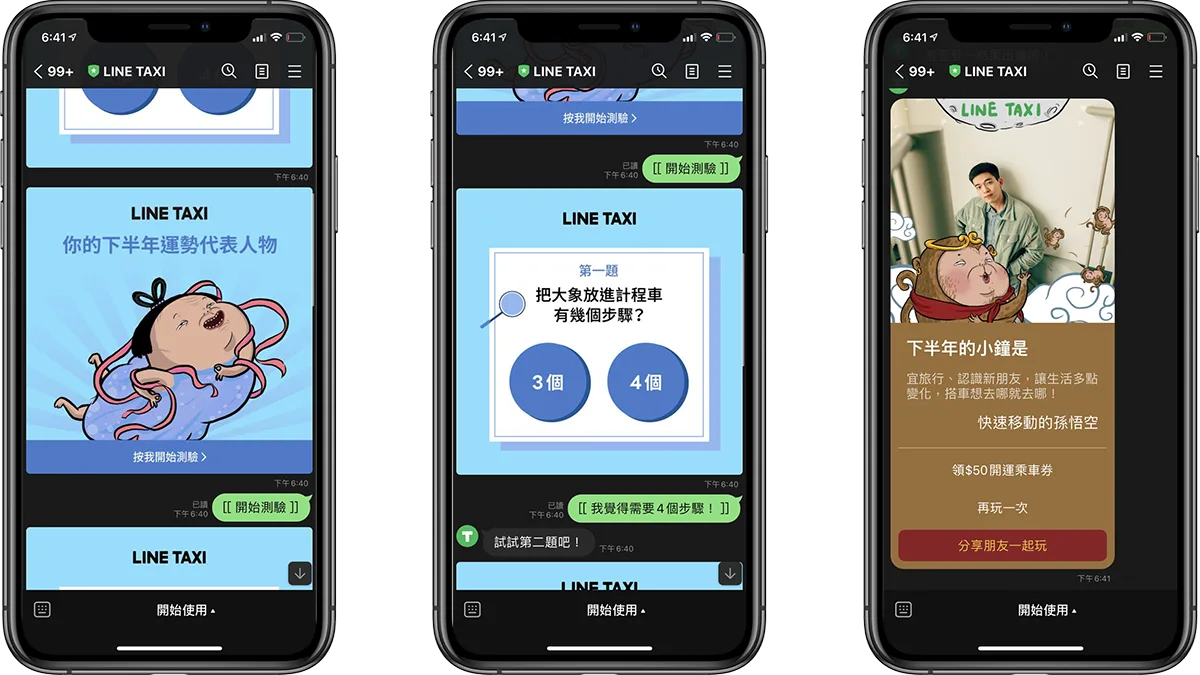
Retain
By the Retain stage, customers are using your product or service more frequently and regularly. Now the brand needs to think about ongoing strategies that keep customers coming back.
Take a well-known electric vehicle brand that manages its relationships with owners through a LINE Official Account. By switching verified owners to a dedicated rich menu, it offers a range of value-added services: with a few taps, owners can book maintenance, reserve test drives ahead of everyone else, and reach a live agent, all of which raises their customer value.
Automaker Success Story: Delivering End-to-End Car Sales Service with LINE Official Account as a Mini AppThe car sales process breaks down into pre-sale test-drive bookings and sales follow-up, vehicle delivery, and post-sale maintenance and repair. Automakers mainly aim to get as many customers as possible to book test drives, collect a large pool of leads, and hand them to sales reps. But because they can't accurately track each customer's status, follow-up rates after test drives stay low, and after delivery they can only rely on sales reps reaching out passively. That not only hurts service efficiency but also keeps them from fully extending each owner's customer lifetime value.https://oakmega.com/blog/automobile-industry-case-study
Grow
By the Grow stage, your brand has a group of VIP superfans. These customers want more interaction with the brand and may even want to contribute to it, so try building a more active, proactive marketing strategy just for them.
Whether it's hosting service workshops in your own stores the way Apple regularly does, or inviting superfans to join product testing, these are effective ways to engage customers at this stage. They may become more willing to recommend your product to friends and family, who could then come in and become customers themselves. Or they may suggest product improvements your team never thought of but genuinely needs to make.
A practical tool for managing the customer lifecycle more efficiently: OakMega Social CRM
OakMega Social CRM helps brands interact on LINE with customers at every stage of the lifecycle, running marketing, sales, and customer service strategies all in one place. Tags capture first-hand data such as customer preferences, and real-time conversations with LINE friends help you pinpoint customer needs from the Acquire stage onward, move the relationship forward at every touchpoint, and grow your own VIP superfans.