A New Relationship with Customers: 5 Ways Social CRM Benefits Your Business
Since 2020, the pandemic has swept the globe, transforming not only our daily lives but also how businesses operate. Going to the office every day gave way to WFH, which has become the norm in many countries. Unable to reach customers the way they used to, many companies began looking for solutions. With third-party cookies being phased out and Apple asking users whether they want to be tracked, the cost of acquiring new customers has risen sevenfold, making customer retention a critical priority.
 ILING WuProduct Marketing Manager
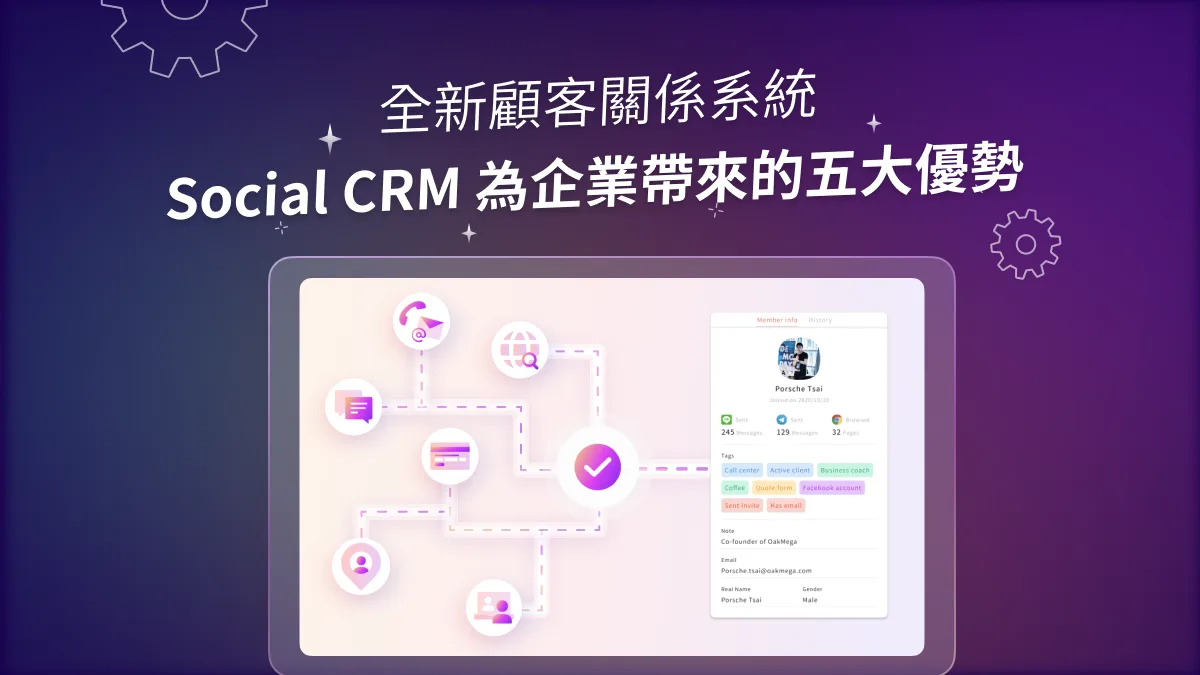
Since 2020, the pandemic has swept the globe. Beyond transforming our daily lives, it has brought huge changes to businesses: commuting to the office every day gave way to WFH, which has become the norm in many countries.
Unable to reach customers the way they used to, many companies started looking for solutions. Third-party cookies are being phased out, and Apple now asks users whether they're willing to be tracked. These shifts have made acquiring new customers seven times more expensive, so retaining existing customers has become a critical priority.
Social CRM is more than a typical customer relationship system. So what difference does adding “social” to traditional CRM actually make?
Why combine social and CRM data?
Merging social media data with CRM data centralizes your information and increases the value of your customer data. You can see how customers interact with your brand across every channel and gain a deeper understanding of who they are.
The information flows both ways. Businesses can use it to communicate with customers more precisely, learn what they like, and spark interest with the right topics.
Today's customers expect brands to know every touchpoint they've had with them, including their purchase journey and past conversations. If they click content they like on LINE and then contact your support team through your website, they expect you to already know all of it, without having to walk your agents through the history again.
Social CRM lets any team in your organization quickly understand the customer journey and strengthen the relationship between customers and your brand. Used together with CRM to track users' activity across the web, it helps you better understand customers' latent needs and find ways to reach them.
What are the benefits of a Social CRM platform?
Let's look at how to put Social CRM data to work. Here are five practical applications:
1. Build stronger relationships with every customer
Do you know each customer's average spend, their buying patterns, their conversation history in messaging apps, and which products they're most likely to buy?
By combining Social CRM with chat and social data, you can build customer profiles, understand what users are talking about, and respond proactively at the right moment. Understanding customers' social behavior shows you their interests and interactions, as well as the other brands and influencers they follow.
2. Tailor your social content
Social CRM gives you an overview of topics, hashtags, and user groups within your audience segments. Use that data to deliver timely, relevant content and drive customer engagement.
Combine data analysis with your audience to keep refining your social content strategy. Attract customers with personalized messages based on their interests, and make sure your messaging resonates with your key audience from the start.
3. Strengthen customer service on social channels
Today, 80% of companies claim to provide customer service on social media, but only 8% of customers agree. Clearly, many brands need to step up their customer service on conversational and social channels.
With Social CRM, brands can deliver customer service that brings together each customer's interaction history across social channels. By syncing this data directly into your CRM, anyone in your organization can see the same information.
Wherever your customers are talking, you can reply quickly on the channel they choose, capture every mention of your brand, and provide complete customer service based on their experience.
4. Develop your social ads
Social CRM helps you map out your target audience. You can create custom and lookalike audiences and pull them straight into Facebook Ads Manager. It also identifies customers' buying habits so you can tailor social ads to their purchase behavior with customized offers.
With ads made just for them, your brand's superfans and influencers get new-product news first. Or use segments and tags to remind customers to restock items they've bought before. Social CRM helps brands improve ad performance: first-party data collected through Social CRM has lifted ad performance by 54%.
5. Recommend related products
When your database is connected to social media, it's easier to track customers' purchase behavior and predict what they're most likely to buy next. You can build customized ad messages around those related products and guide customers to them.
Build audiences for specific products and run targeted ads based on purchase data and user behavior analytics. Social CRM makes purchase recommendations more accurate and personalized, increasing the likelihood of future purchases.
Conclusion
With third-party cookies disappearing and Apple asking users whether they agree to be tracked, brands and businesses alike are losing sight of who their consumers are, and everyone is looking for a complete solution. Social CRM records every customer's data in your database and refreshes that data far more frequently than traditional CRM.
First-party data collected through Social CRM can be put to more effective use. Analyze interests and preferences to send more precise messages, and package audience data to find more similar groups through lookalike audiences. That expands who your brand can reach and delivers maximum results for both retaining existing customers and acquiring new ones.