






Inside OakMega | When Every Candidate Uses AI on the Take-Home, How Does OakMega Tell Who Really Knows Their Stuff?
OakMega’s interview assignments assume you’ll use AI. What matters isn’t whether you can use it, but whether you understand what you’re using. The real interview starts after you submit: we ask you to walk us through how you solved it, and we look for three things — can you explain your decisions, do you question AI’s output, and did you truly step into the business scenario.
 Irene ChaoExecutive Assistant

What we care about isn’t whether you can use AI. It’s whether you know what you’re using.
When that take-home assignment landed in our inbox, we went quiet for a moment.
It was polished, well structured, and every detail was handled with care — well above the level we expected. My colleague and I exchanged a look. Neither of us said a word, but we both knew what it meant: how much of this did the candidate actually do?
That question made us realize something. If an interview assignment still leaves us without an answer after we’ve read the submission, the problem lies with the assignment itself. A good assignment isn’t designed to stop you from using AI. It’s designed so you can’t just hand in an output — you have to hand in your thinking along with it.
Since then, we’ve rethought what our interview process should look like.
Contents
- Our interview assignments assume you’ll use AI
- The real interview starts after you submit
- The kind of people we’re looking for
- FAQ
Our interview assignments assume you’ll use AI
When OakMega designs interview assignments, we’ve never once asked, “How do we stop candidates from using AI?”
That’s the wrong question to begin with. AI tools are now standard equipment at work, just like Google and Excel. We use them every day, and our clients are learning to use them too. If you didn’t touch AI at all on your assignment, we’d actually be curious — why not?
So our assignments aren’t built to block AI. Instead: we treat AI as a given, and on that premise, we look at how you think and how you make judgment calls.
Here are two types of assignments we’ve given in the past:
Analytical: We hand you a messy, real-world business scenario. The data contains both legitimate fluctuations and genuine errors. Your job is to find the root cause, write the correcting entries, and turn it into a one-page memo for a manager. AI can absolutely help here — organizing numbers, structuring the logic, even drafting the document. But once you submit, what we want to hear is how you broke the problem down, how you worked with AI, and why you suspected this entry rather than that one. That line of reasoning is yours, not the AI’s.
Hands-on: We ask you to build a working product with AI tools. Deliverables include a functioning demo, a development spec, and an impact assessment. Having AI write the code or generate the documents is completely fine. What we want to see is how you defined success for the product, what prompts you wrote, what problems you hit along the way, and how you adjusted. That decision-making process is where the interview truly begins — not the moment you submit, but the moment you sit down with us and say, “Here’s what I was thinking.”
The real interview starts after you submit
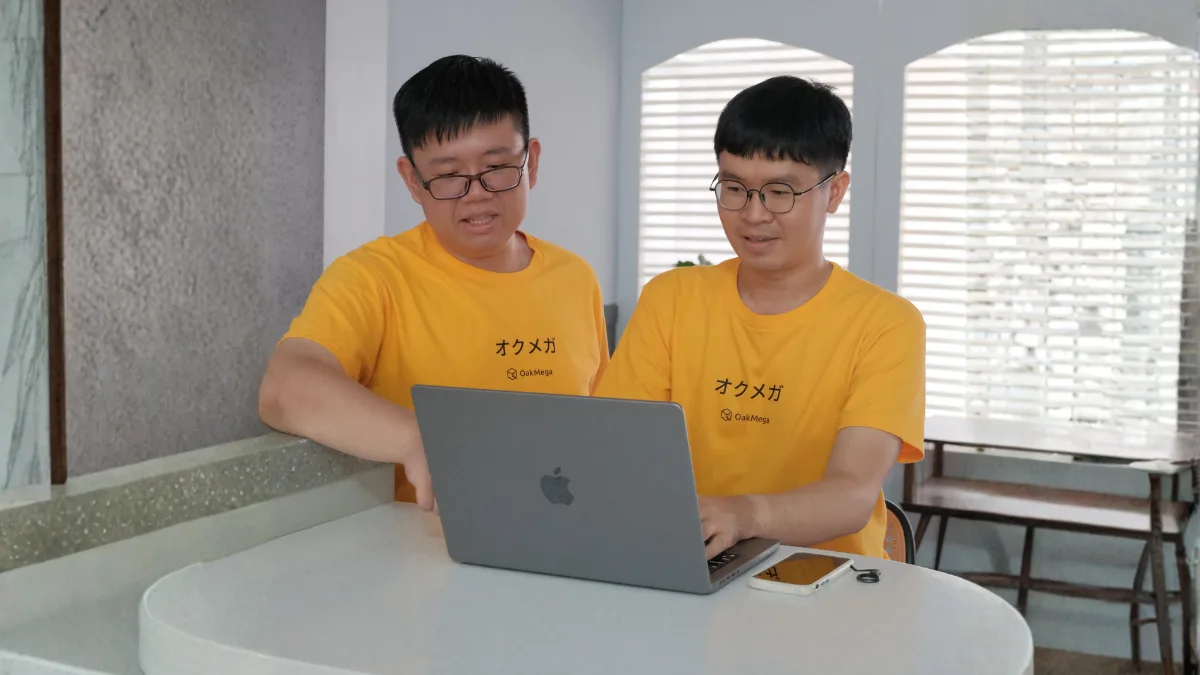
After you submit your assignment, we schedule a second interview. It isn’t to test you again — it’s to have you walk us through how you solved the problem.
How you read the prompt, where you decided to start, where you got stuck, how you worked with AI, and why you submitted what you did in the end. None of these questions have a right answer. We’re not after the result; we want to hear how you got there, step by step.
Throughout that conversation, we’re really looking at three things.
First: can you clearly explain your decisions?
Whether your answer is right comes second. We care more about why you did what you did. How you read the assignment, what you based your judgments on, whether you considered other directions and why you ruled them out — these traces of your thinking are what we really want to hear. If you can explain them, it shows you actually went through the process. If you can’t, we’ll keep asking. But if we never get there, the assignment is just a document to us, not a person.
Second: do you question what AI gives you?
AI makes mistakes — and when it’s wrong, it sounds every bit as confident as when it’s right. We want to know whether you ran into strange output from AI along the way, how you noticed, and how you dealt with it. People with good judgment know at which points to go back and verify. People without it wrap the errors into their assignment, submit it, and can’t say what went wrong.
Third: did you truly step into the scenario?
Every assignment we give has a business context. They aren’t pure technical or number-crunching exercises. A strong answer shows you genuinely understand what the scenario is about — in the finance assignment, you know what this anomaly means for the company; in the hands-on assignment, you know what this feature means to its users. A weak answer treats the assignment like a puzzle: solve it and you’re done, with no sense of where it sits in the broader business context. The gap is obvious when we read it, and just as obvious when we hear it.
The kind of people we’re looking for
Not “people who don’t use AI” — that’s unrealistic, and it isn’t what we want.
Not “people who hand everything to AI” — they hit a wall fast in real work.
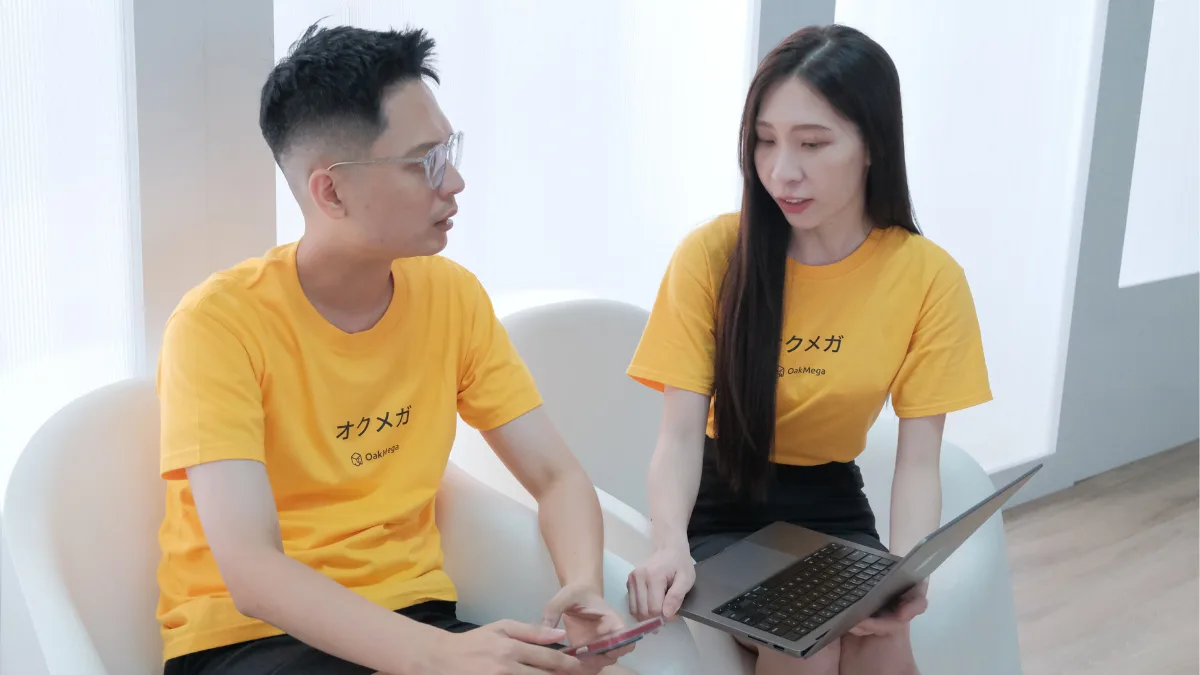
We’re looking for people who can work with AI without letting it replace their judgment. Knowing when to trust it, when to question it, and when to make the call yourself — as AI tools become more widespread, that ability is only becoming more valuable.
If that sounds like you, let’s talk.
FAQ
Can I use AI tools in an OakMega interview?
Yes. Our interview assignments assume you’ll use AI, and we don’t try to block it. What we care about is how you work with AI and how you evaluate its output.
What does OakMega’s interview process look like?
First you complete an interview assignment. After you submit it, we schedule a second interview where you walk us through how you solved it. It isn’t another test — we want to hear how you think.
What types of assignments are in the interview?
Two types. Analytical (a messy, real-world business scenario where you find the root cause and write a memo) and hands-on (using AI to build a working product demo plus a development spec).
What does OakMega value most in interviews?
Three things — whether you can clearly explain your decisions, whether you question what AI gives you, and whether you truly step into the business scenario behind the assignment.
Who is a good fit for OakMega?
People who can work with AI without letting it replace their judgment. People who know when to trust it, when to question it, and when to make the call themselves.
Curious about how we work at OakMega? 👉 See our open positions