Did COVID and MRT Construction Really Close ATT Dazhi?
Did you catch the news that ATT in Dazhi is closing? Or, like most people, did you not even know Dazhi had an ATT?
 Will LinSenior Account Executive

Did you catch the news that ATT in Dazhi is closing? Or, like most people, did you not even know Dazhi had an ATT?
Three factors sink operations: ATT e Life to exit Dazhi in MayAnother department store is about to go dark. ATT has announced that its Dazhi location will operate until May 7 this year before leaving the district. According to the statement, three factors drove the decision: three years of pandemic impact, shifting consumer habits in Taiwan, and above-ground excavation on Jingye 3rd Road for the northern section of the MRT Circular Line (the tail track past Jiannan Road Station), scheduled to be tendered and start in 2024. To keep losses from mounting, the Dazhi store will close after May 7.https://udn.com/news/story/7266/6983490
Holding myself to the standards of someone who has worked in department store expansion (?), I visited ATT Dazhi two or three times after it opened. Honestly, I was never bullish on it, even from opening day (I know, saying so only now that it's closing sounds like hindsight).
In my view, COVID and the MRT construction were just the last straw for ATT Dazhi, not the root cause. Here are the reasons I think it struggled:
1. Location
Foot traffic in the Jiannan Road shopping district basically runs northwest to southeast, from the MRT station exit to Carrefour. ATT Dazhi sits in the southwest corner of the district, off that main pedestrian route.
Even for shoppers heading south from Jiannan Road Station, ATT Dazhi is at the very end of the district, so fewer people make it there in the first place.
There's also no continuous retail frontage nearby. You walk past a golf driving range and construction sites, so there's no sense of strolling and browsing. The mall isn't big either, so it needs to be a strong destination in its own right. And while it borders a residential area, the surrounding neighborhood is small, so the local customer base is questionable too.
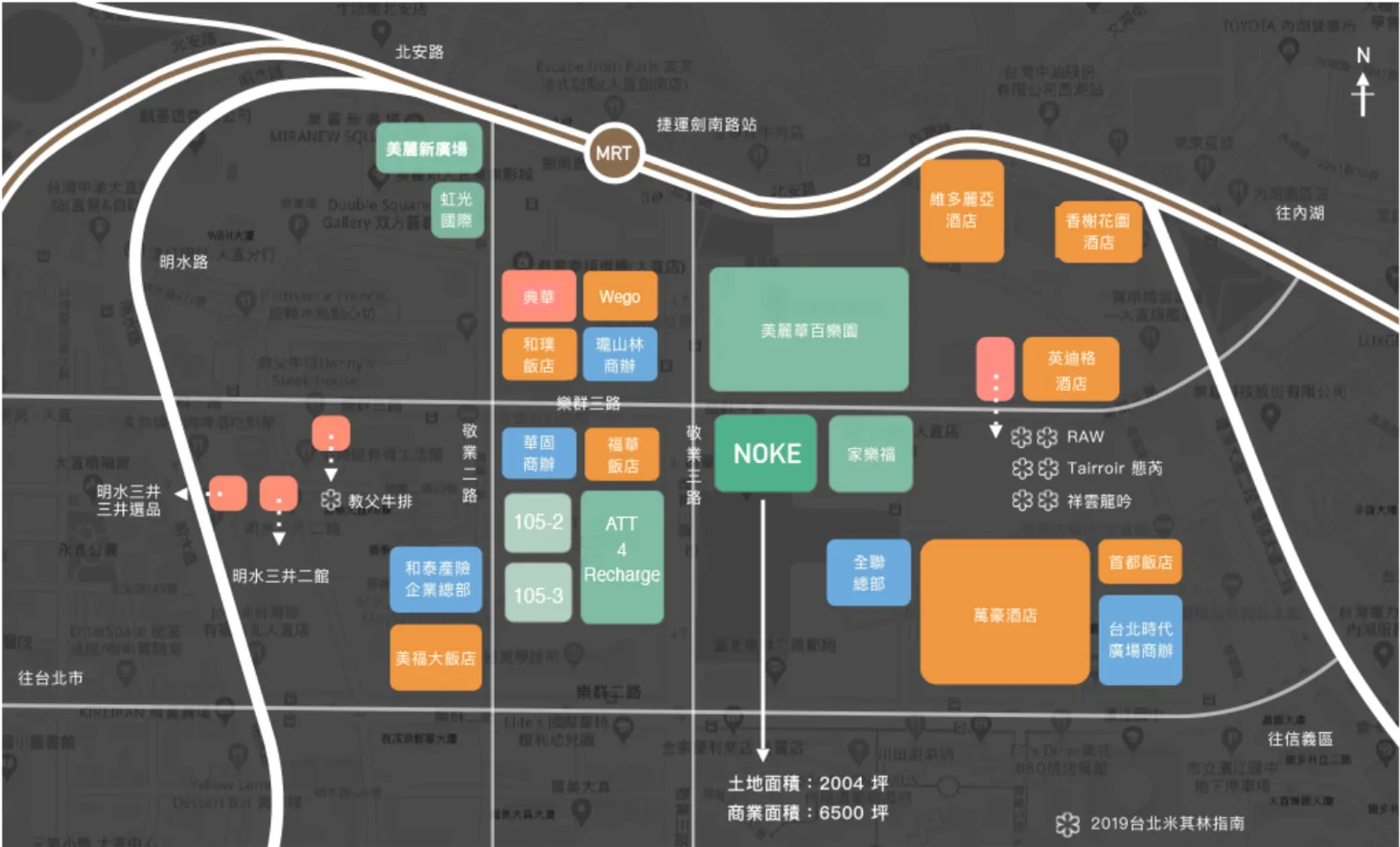 Image source: JUT Retail
2. Floor Layout
ATT Dazhi's floor plan has two defining features: (1) open atriums with escalators, and (2) upper floors combined with parking. Let's start with the second.
On the upper floors, escalators split each level in half: one side is retail, the other is parking. In principle that's not a bad setup, since parking brings steady traffic into the mall. The problem is that the escalators on these floors sit on only one side of the retail area, so there's no chance, or atmosphere, for people to wander through. That limits the upper half to high-intent categories like restaurants, cinemas, and themed attractions.
Meanwhile, the atriums and escalator placement chop the circulation into fragments. Once you've browsed the left side, you can't get to the right, and vice versa. Combined with the limited floor size, each level leaves you feeling like you saw something and nothing at the same time. Individual units are sized like a large mall's, but the brand mix is nowhere near as rich.
High-intent upper floors and not enough to browse on the lower floors: I think that's another reason it couldn't draw visitors in, and why it couldn't sustain operations over time.
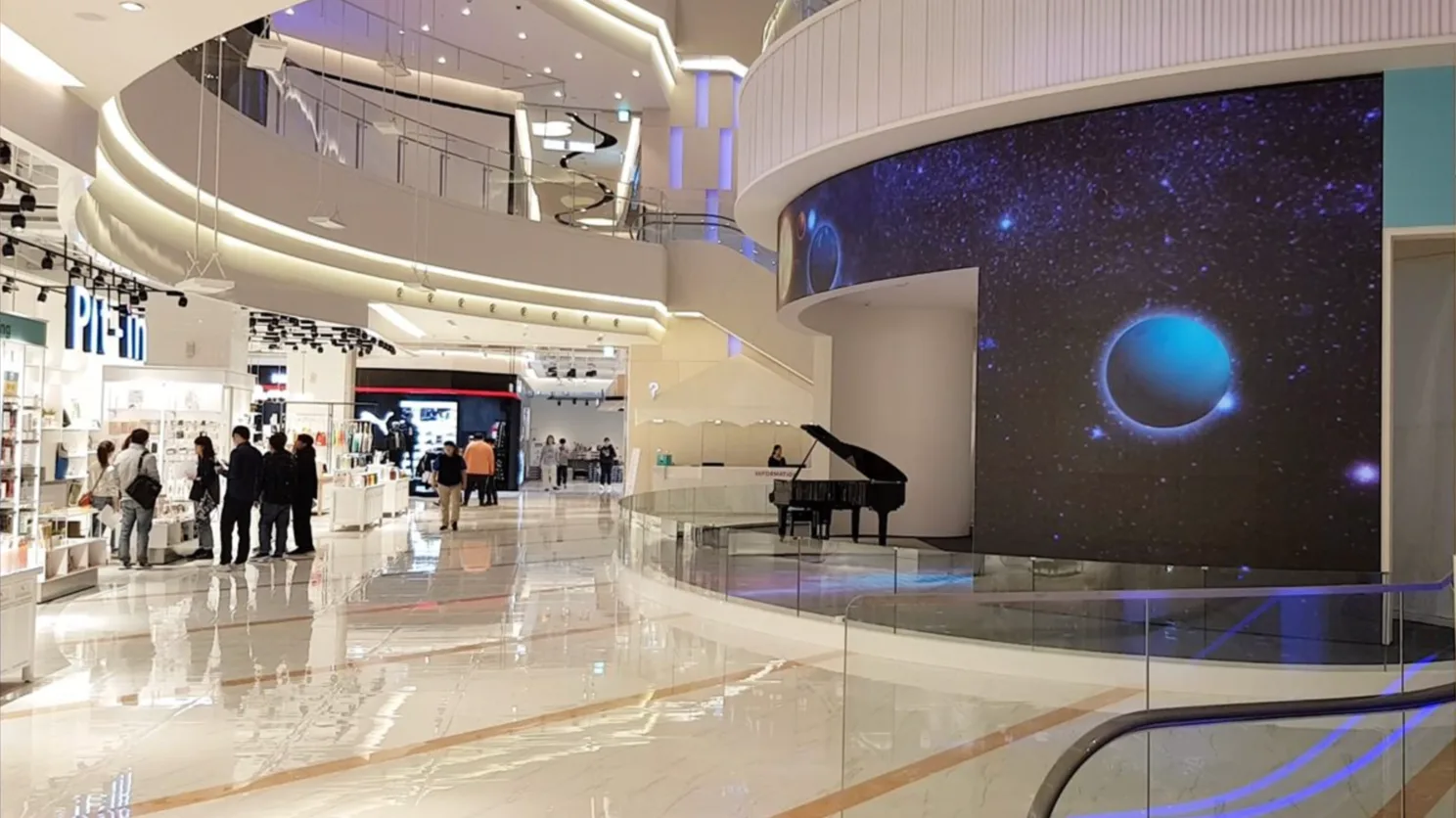 Image source: Supertaste
3. Tenant Mix
This is the one I found strangest. I visited ATT Dazhi shortly after it opened, and the tenant mix was genuinely odd: Mingrenfang placed right next to CACO. A restaurant with an average check above 3,000 paired with an apparel brand at around 500 per purchase. A really strange pairing.
A department store's tenant mix comes down to matching on three things: price, customer segment, and style. Mingrenfang next to CACO matches on none of them. This usually happens when the restaurant brand is locked in, but the leasing team can't find a suitable brand for the neighboring unit. I believe the ATT Dazhi team is professional; it's just that before opening, retail brands weren't confident enough in this location for ATT Dazhi to land the tenant mix it wanted. Still, a layout like this is bound to leave shoppers with a negative impression, and drag down the whole mall's performance.
On its own, any one of these issues probably wouldn't be fatal. But as the Swiss cheese model suggests, when this many problems line up in the same mall, that may well be the real reason ATT Dazhi couldn't keep going. The MRT excavation was just salt in the wound.
(When they first evaluated the site, the new MRT line was probably counted as a major advantage. Times changed, and the MRT turned into one more blow.)
Want to dig deeper after reading this?
If you'd like more insights or have questions, follow me on LinkedIn and share your thoughts with me!