







How to Build an AI-Native Services Company | CEO Insights
An AI-native services company delivers outcomes directly to customers: AI does most of the work, and humans stay in only the few steps that need real judgment. It sells results, not tools. This piece walks through Y Combinator's hands-on playbook: how to pick the right market, why variance kills this business faster than anything else, and the P&L math that changes the business model entirely.
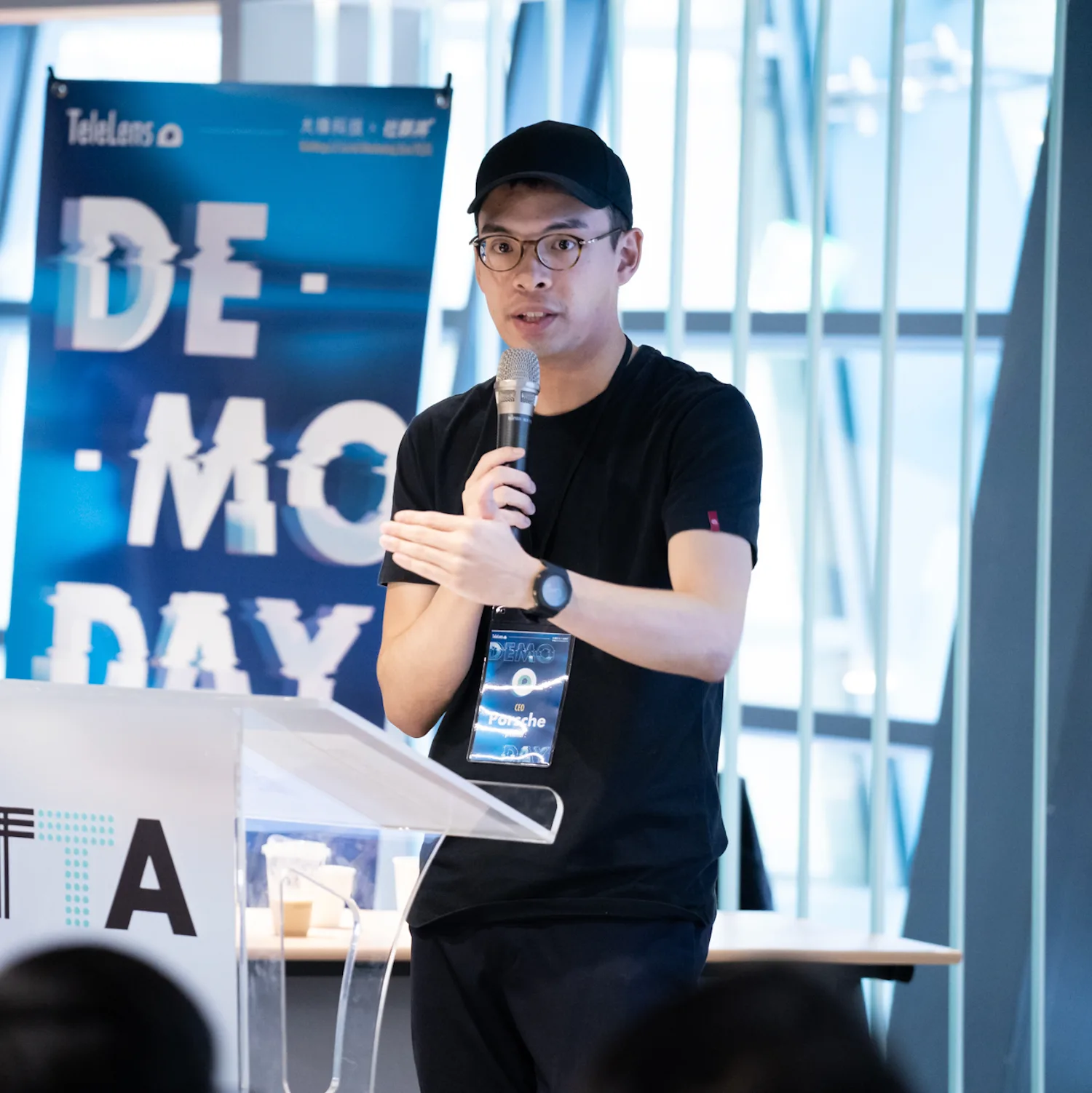 Porsche TsaiCEO

Key takeaways
- The biggest companies of the next decade will be AI-native services companies: software-driven businesses dressed up as services.
- When picking a market, look for four traits: low trust, low judgment at the task level, a high intelligence threshold, and regulation that works as a moat.
- A truly great product doesn't just save people time. It lets one person do what used to take several.
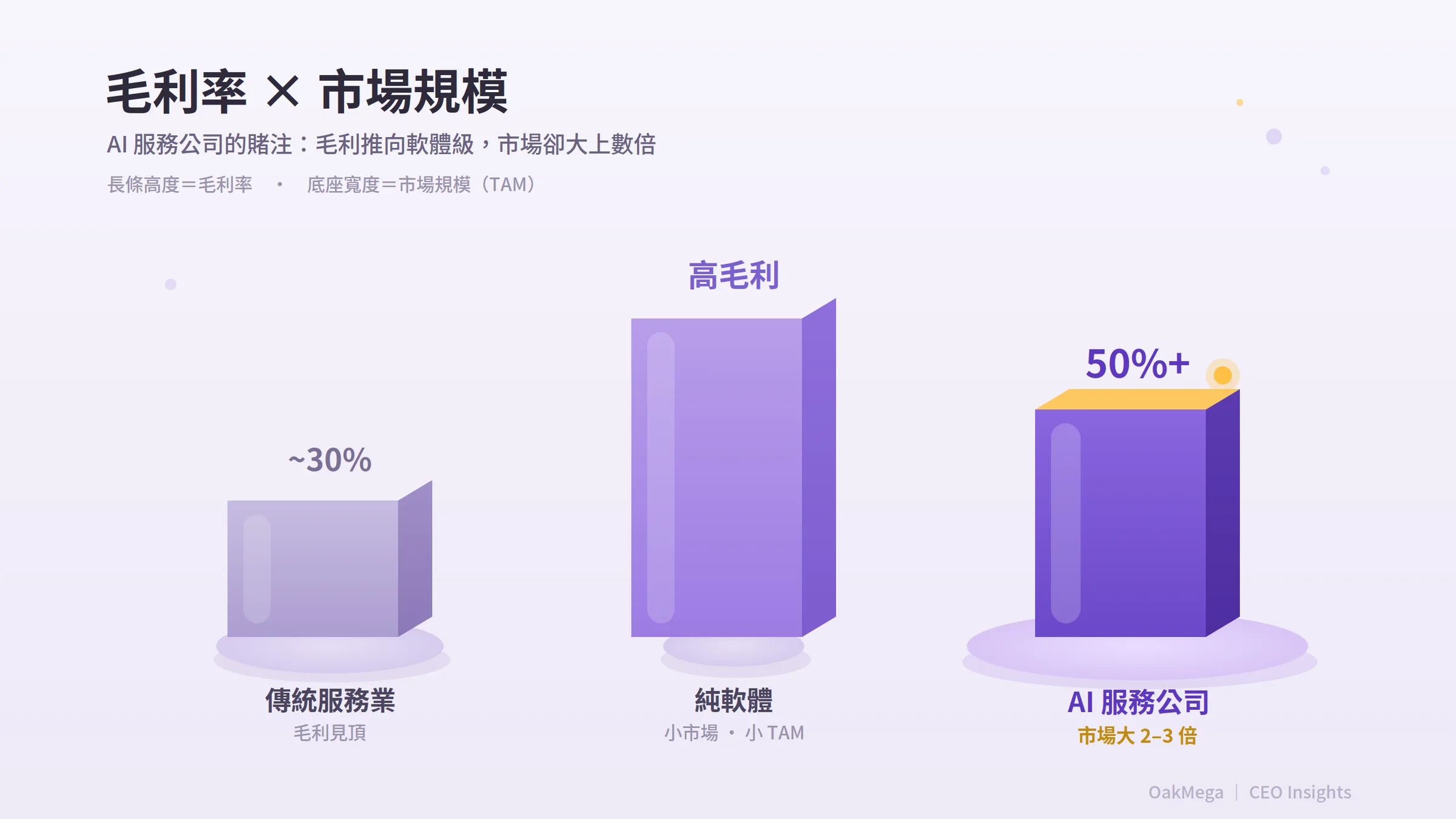
- The core bet: use AI operating leverage to push gross margins from the ~30% typical of services toward software-grade 50%+, while going after a market 2–3x larger.
In my last piece, “Services Are Becoming the New Software,” I covered the “why”: why the next wave of giants will be companies that look like services on the outside but run on software at the core. This piece picks up with the “how.”
Y Combinator recently released a Startup School episode with YC Visiting Partner Charlie Warren titled “How to Build an AI-Native Services Company.” It's a very practical playbook: how to pick a market, why variance will sink this kind of business faster than anything else, and the P&L math that will completely change your business model.
Below is my full write-up of the talk. I've stayed faithful to each of his arguments and added our own perspective.
👉 Original source: Y Combinator, “How to Build an AI-Native Services Company,” presented by Charlie Warren
Contents
- Which markets should an AI-native services company pick? Four counterintuitive traits
- The right founding team: three must-have fluencies
- Building the product: people are the interface, variance is the line between life and death
- Sales: beware the “early demand trap”
- Pricing and the P&L: the bet on AI operating leverage
- Don't try to buy your way to a shortcut
- My take
- FAQ
The biggest companies of the next decade may not be software companies at all. They may be insurers, law firms, and tax practices: service businesses rebuilt from scratch, with most of the work handed to AI. Charlie Warren calls them “AI-native services companies.”
These are multi-trillion-dollar markets: tax, audit, insurance, legal, parts of healthcare, parts of logistics. Two years ago this opportunity didn't exist. The leap in model capabilities opened up a new kind of business: delivering the outcome directly to the customer, instead of building a copilot for the customer's own team to use. That's why these companies feel and look different from most startups today.
The playbook below is written for people thinking about whether to start a company, not for those already running one.
1. Which markets should an AI-native services company pick? Four counterintuitive traits
The usual rule for choosing a market still applies: pick a space you're willing to commit to for ten years or more. If you don't genuinely care about the customer, the market, or the technical problem, you won't last. But Charlie argues that the best markets for AI services share four additional traits that are unique and counterintuitive.

1. Low trust.
The work is already outsourced, and the customer cares about the final result, not how you produce it. You're replacing an existing vendor, not asking the customer to change their behavior. You simply show up where the budget already exists and take over the work. This matters enormously, because you don't have to educate the market.
2. Low judgment at the task level.
If every step of the job, once broken down, requires a person to make a real judgment call, you can't scale. The ideal: most steps can be automated, and judgment is concentrated in the few places where a human still needs to stay in the loop.
3. High intelligence threshold.
This sounds like it contradicts the previous point, but it doesn't. The job as a whole has to be hard enough that only “model plus human” can deliver a result customers will pay for. Work that's too easy won't give you a moat.
4. Regulation is actually a good thing.
Heavily regulated industries expect higher quality and carry legal liability, which raises the bar and builds a moat for founders. Charlie points to Panacea, a YC company that provides FDA regulatory services to biotech and medical device companies. It hires senior FDA consultants and pairs them with an AI platform, making FDA approvals faster and higher quality.
So which markets have already been proven? He names tax, audit, insurance, mortgages, parts of healthcare, and parts of logistics. But he also points out that there are plenty of markets nobody has touched yet. Don't limit yourself to the obvious ones, or the ones everyone keeps talking about on X.
There are two more checks when picking a market. The first is what he calls the “Sam Altman test”: as models get stronger, does your service get stronger with them, or does the model itself commoditize it? You want to be on the first side. The second: be careful with any business that involves equipment and field labor. Once you have to own and operate physical assets, the software margin math breaks down and real leverage becomes hard to create. (They can still be good businesses, but leave those to the robotics founders.)
Finally, an honest self-check: are you using people because the work truly requires judgment, or because you're using human labor to cover for gaps in your product? Be honest enough with yourself that you don't end up patching product holes with people. Great companies that genuinely need humans in the loop still exist; just don't confuse the two.
2. The right founding team: three must-have fluencies
As with any startup, build your team with people you already know and have worked with. If you're going solo, think of the best people you've ever worked with and ask them to join. More of them may say yes than you'd expect.
In AI services, Charlie sees three “fluencies” in the best founders.
1. Domain fluency
Firsthand experience is best, but learned expertise works too. You're facing skeptical, often regulated buyers, so you need to radiate credibility. Where that credibility comes from matters less.
2. Model fluency.
You need to know what today's frontier models can do, and design your product to ride the curve up as models improve. There's no shortcut here. Nothing replaces strong technical ability, and a lot of people underestimate this.
3. Operational rigor
Variance, capacity, cycle time, SOPs: these words aren't sexy to most founders, but at its core you're running an operation. You have to learn this skill set and enjoy it, or at the very least respect it, because in this business the product is the operation. He cites General Legal Team, an AI-native law firm YC recently backed. The founders combine real law firm experience (Cooley, Fenwick) with a technical background from CaseText. More importantly, they think hard about capacity and staffing. They brought shift-based scheduling into their service process to shorten cycle times while attracting the best lawyers, a win-win for scaling.
3. Building the product: people are the interface, variance is the line between life and death
In AI services, product design runs opposite to most software: the person is the customer-facing interface, not the product. The product's job is to amplify that person's work nonlinearly. That premise changes almost everything about how you build.

First, think like an operator: find the bottleneck and build around it. Capacity and cycle time are now your product metrics. Watch them the way you'd watch daily active users (DAU).
Variance is the line between life and death in this business.
Variance means your service output is inconsistent. Customers will fire you over variance faster than they will for being a bit slower or a bit more expensive. They need to trust your output. Inconsistency destroys trust, and once trust collapses, customers churn.
One more thing: the people in the loop must scale nonlinearly. If your revenue grows linearly with headcount, you have a big problem. These people are also users of your software, so it has to work well for them. Doing things that don't scale is fine at first, but eventually you have to scale. Automating the process is the product.
4. Sales: beware the “early demand trap”
The biggest challenge founders face in sales and customer success is what Charlie calls the “early demand trap.”
When you're just starting out with nothing in hand, it's easy to sign a wave of pilot customers all at once. But that quickly overwhelms your delivery capacity and forces you to brute-force it with people, so the product never gets to the point where it can scale. It's a trap in every sense of the word.
His advice: keep your first pilots to a very small handful, and resist the urge to sign too many, too fast. Pre-sales and post-sales also look different from software. You're selling outcomes, not seats or tokens, and the pilot itself is the product. Don't standardize too early with these first customers. Use the pilots to learn: find where AI gives you unique leverage, and where it's merely automating the obvious. Once you see it clearly, build the product accordingly, and build it fast.
5. Pricing and the P&L: the bet on AI operating leverage
Pricing: you're competing with the cost of labor
Pricing is harder than in traditional software, because you're not competing with other software vendors. You're competing with the cost of labor itself, whether that's the customer's in-house staff or outsourced labor.
There are a few ways to price. Per-unit pricing (per tax return, per claim, per loan) is the cleanest and easiest to explain. Outcome-based pricing aligns incentives beautifully, but makes your own revenue harder to forecast. Panacea, mentioned earlier, charges per completed advisory study rather than by the hour, as is standard in the industry.
Avoid two pricing strategies. Cost-plus permanently caps your margins, and racing to the bottom on price makes your service look cheap and can even raise doubts about quality. Price against value.
The P&L: the bet on AI operating leverage
Next is the P&L, where these companies truly live or die. The basic structure: revenue minus cost of goods sold (COGS) gives you gross profit, and gross profit minus operating expenses (OPEX) gives you operating income.
Revenue is the relatively easy part. You'll land contracts, but whether you can deliver repeatably depends on your product and process. Over the long run you want smooth, predictable growth, but month-to-month swings are normal early on.
COGS needs close attention from day one. It has three main components: model costs, hosting costs, and the people in the loop. Each needs a number, a trend line, and an owner. Be very wary of pilots with zero or even negative gross margins. They're fine for learning, but getting hooked on them is dangerous.
And here is the core bet of this business: the more complete your product, the lower your COGS and the better your gross margin. Charlie calls this “AI operating leverage.” Operating expenses cover R&D (building the product), sales, and general and administrative costs (finance, legal, executive pay), all standard line items. Operating income is revenue minus COGS minus OPEX, and in this kind of business you'll be judged on operating income sooner than you think. Net income (operating income minus taxes and interest) matters less in the medium term.
Here's the real P&L opportunity. Traditional services businesses top out at around 30% gross margin. Pure software and pure agent companies have higher margins, but usually a smaller market (TAM). The bet of an AI services company is to use AI operating leverage to push gross margins close to software levels (say, 50% or more) while going after a market two to three times larger than software's. You don't need to get there on day one, but the trajectory has to be believable.
6. Don't try to buy your way to a shortcut
One last point: don't try to shortcut your way there through acquisition. Charlie sees a common temptation, especially among founders with an operations background, to buy an existing services company, layer AI on top, and skip the journey from zero to revenue.
That's usually a trap. The only reasonably defensible reason is if you need to secure a regulatory moat quickly (an insurance license, for example). Otherwise, it rarely works, because you can't buy product-market fit. Legacy services firms are legacy for a reason: their expectations around metrics, hiring, and performance are different, and layering AI on top won't change those realities overnight. Building from scratch almost always beats buying.
In short, AI-native services companies are a huge opportunity for today's founders, but they are a fundamentally different kind of startup. Avoid these traps, treat “the process as the product and the product as the process,” and you have a shot at building a generational company.
My take
My first reaction after reading Charlie's playbook: he isn't describing some distant Silicon Valley experiment. He's describing what we do at OakMega every day. Every item on his list—choose a low-trust market where the work is already outsourced, concentrate judgment in a few steps, use regulation as a moat, sell outcomes rather than tools, guard relentlessly against variance, price per unit or per outcome—is practically the design brief behind our OakMega FDE (Forward-Deployed Engineering) service.
I'll add three observations that resonate especially in B2B markets in Taiwan and across Asia:
“People are the interface, not the product” rings especially true for us, since we build on the LINE ecosystem.
In Taiwan's manufacturing and B2B settings, customer relationships often live inside a salesperson's personal account. The real product is a system that amplifies that person nonlinearly, not one that replaces them. We see the same thing again and again in real projects: the key to a successful rollout has never been “replace the person.” It's “amplify the person.”
“Variance is the line between life and death” is badly underestimated in service delivery.
Customers will forgive you for being a bit slow. They won't forgive you for doing great work this time and poor work the next. Standardizing delivery and holding quality steady is the prerequisite for scale.
“Don't try to buy your way to a shortcut” is also a reminder for buyers.
Simply layering off-the-shelf software onto an old process won't magically produce results. Real value comes from getting one design decision right: where judgment should stay, and what to hand to the system. That's why we'd rather use FDE to build out each use case solidly, one at a time, than sell you a tool and leave you to figure it out.
The next wave of trillion-dollar companies will look like they're providing services but run on software at their core. This isn't just happening in the US. It's happening right now in the industries all around us.
What's your take? Let's talk 👉 Contact us
FAQ
Q1: What is an “AI-native services company”? How is it different from SaaS?
An AI-native services company delivers outcomes directly to the customer (a completed tax return, a processed claim), with AI doing most of the work and humans staying in only the few steps that require judgment. Traditional SaaS sells a tool for the customer to use in-house. The former sells results; the latter sells tools.
Q2: Which markets are best suited to AI services?
Charlie Warren names proven markets including tax, audit, insurance, mortgages, and parts of healthcare and logistics. What they share: the work is already outsourced (low trust), most steps can be automated (low judgment at the task level), the work as a whole is hard enough (high intelligence threshold), and the industry is regulated (barriers become a moat).
Q3: What is the “Sam Altman test”?
A question for evaluating a market: as models get stronger, does your service get stronger with them, or does the model commoditize it? Pick the former—a space where model progress strengthens you instead of replacing you.
Q4: Why is variance the line between life and death in this business?
Variance means inconsistent service output. Customers churn over unstable output faster than over you being a bit slower or more expensive. Inconsistency destroys trust, and trust is the foundation of any services business.
Q5: Why isn't acquiring an existing services company a recommended way in?
Because you can't buy product-market fit. Legacy services firms are built differently when it comes to metrics, hiring, and performance, and layering AI on top won't change those realities. The only reasonable exception is when you need a regulatory license quickly (such as an insurance license). Building from scratch is usually better than buying.
Q6: How high can gross margins get for an AI services company?
Traditional services businesses top out at around 30% gross margin. The bet for an AI services company is to use “AI operating leverage” (the more complete the product, the lower the COGS) to push gross margins toward software-like levels of 50% or more, while going after a market two to three times larger than software's. You don't have to hit that from the start, but the growth trajectory must be credible.