A Hit Mobile Game Collab: How Conversational Marketing Drove a Million Interactions in Two Weeks
Most people have several mobile games on their phones, and game marketing takes many forms. This time, the popular mobile game Knives Out ran a pre-launch campaign on LINE that built buzz while offering Japan-related prizes to boost engagement. The campaign followed the anime’s storyline, wrapping the story in simple conversational interactions with images and text, made smart use of easy-to-read visuals, and guided players step by step, which was essential.
 ILING WuProduct Marketing Manager
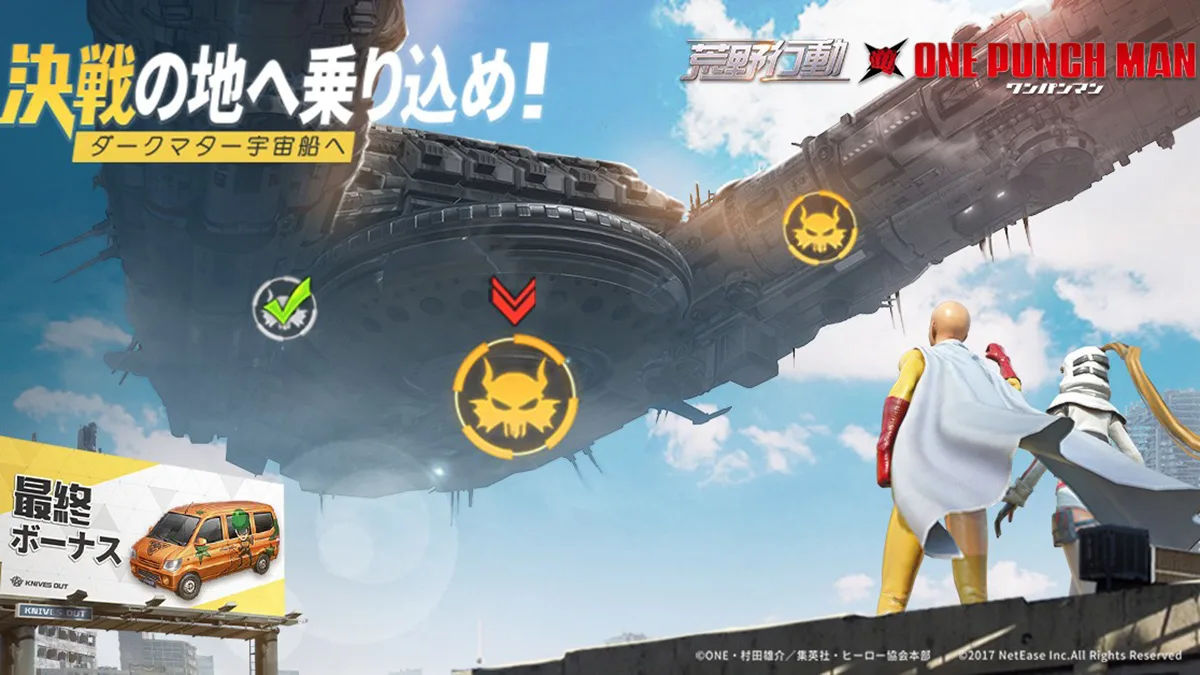
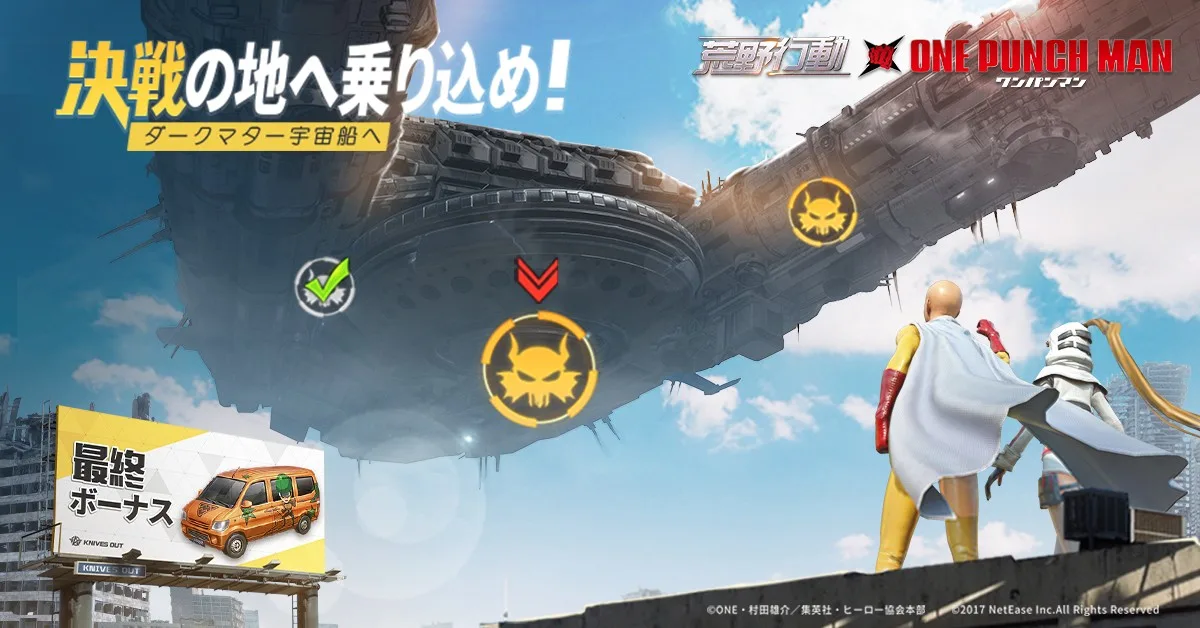
Most people have several mobile games on their phones, and game marketing takes many forms, but few campaigns run through conversational channels. This pre-launch campaign on LINE built buzz while offering Japan-related prizes to boost engagement, and along the way it revealed more about what fans love in anime collaborations.
The campaign followed the anime’s storyline, wrapping the story in simple conversational interactions with images and text. It made smart use of easy-to-read visuals, and guiding players step by step was essential.
A few things to keep in mind for conversational games:
1. Keep message templates as simple as possible
2. Aim for 3–4 template levels
3. Playing must always come with a reward
Keep these points in mind, and you’ve already got the knack of running conversational games on LINE.
Knives Out’s Japanese crossover: One-Punch Man
Knives Out is a third-person shooter. Players take on the role of a soldier in a military exercise where 100 players parachute from helicopters onto an island, gather gear and weapons to arm themselves, and defeat the other players.
Its two most recent collaborations were with One-Punch Man and Nogizaka46, and both drew a strong response on its Japanese LINE account.
The One-Punch Man collaboration featured a series of “Missions” and “Actions.”
The “Missions” included:
- Daily missions: clicking campaign news, linked content, launching the game, playing the PV, and sharing on social media
- Advanced missions: sending back screenshots of Timeline shares and in-game screenshots
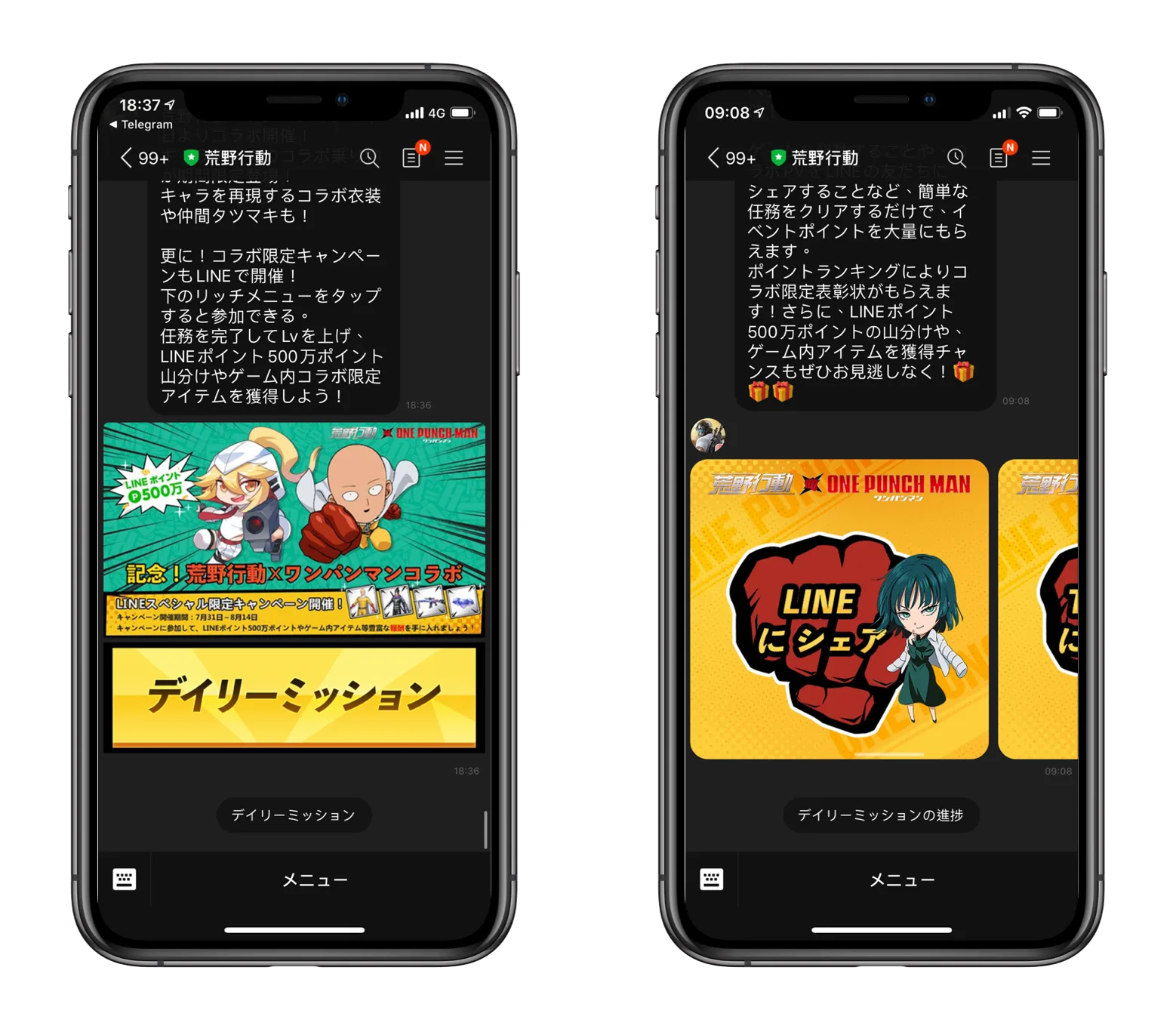
The “Actions” were:
- Number of friends invited
- Number of PV views by friends
Playing must always come with a reward:
Every mission earned points, and players were ranked by points to receive virtual items (character and weapon skins) and LINE Points.
Each completed daily mission gets a checkmark in the player’s personal message, and players can check their current rank on the leaderboard.
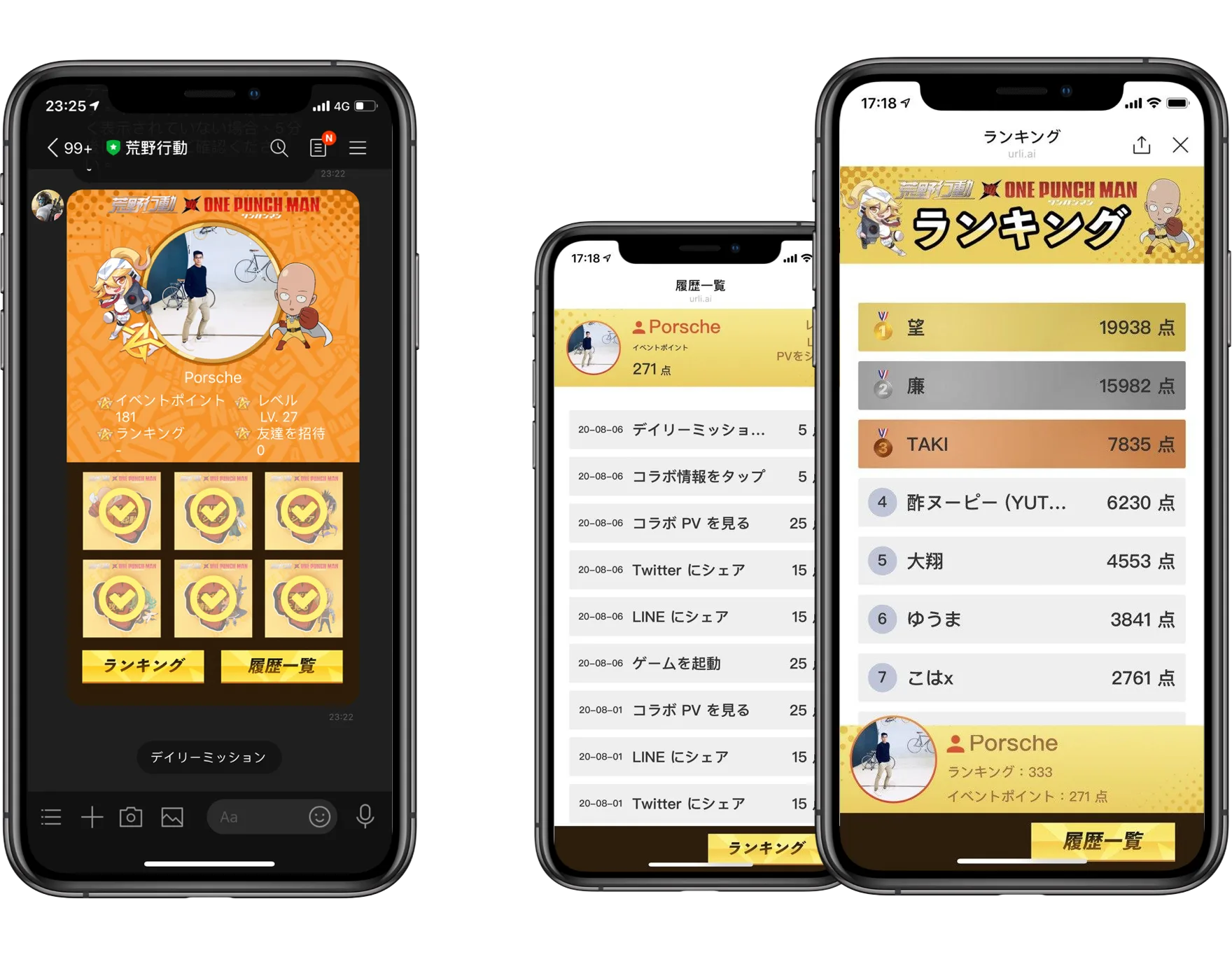
The most interesting part of this campaign was “friends invited” and “PV views by friends.” Neither had a point cap, so once players finished their daily missions, the real battleground was the “Actions.”
It reminded me of the Netflix series High Score, which explores why games like Space Invaders and Pac-Man were so captivating back in the day. It brings up the idea of a flow state.
Flow, also known as being in the zone, and sometimes described as a state of rapture or immersion, was first proposed by Hungarian-American psychologist Mihaly Csikszentmihalyi. It is defined as the feeling of putting your full mental energy into an activity; when flow happens, it brings positive emotions such as intense excitement and fulfillment.
The leaderboard reinforced the sense of fulfillment that flow creates. When someone overtook them, players wanted to invite more friends or rack up more PV views by friends to earn points.
Projected vs. actual player distribution
Before the campaign launched, we projected that players would fall into five types:
- Dormant players: only joined at the start
- Beginner players: only complete missions after a broadcast, and share little
- Casual players: complete half of the daily missions
- Lone-wolf players: complete daily and advanced missions but don’t share
- Advanced players: complete most daily missions; small KOLs
- Hardcore players: complete every mission; mid-to-large KOLs
Because we expected a pyramid-shaped distribution, we placed LINE Points prizes at levels 40 and 60 to encourage casual players to keep climbing.
However, the actual results differed somewhat from the projected distribution. I’ll explain one possible reason in the conclusion.
Conclusion
Over two weeks, the campaign racked up nearly 2.5 million interactions, reached 250,000 unique participants, and generated more than 15,000 LINE shares and nearly 10,000 Twitter shares.
As for the gap I mentioned, we found one key issue: when users first entered the LINE account, the steps were fairly complicated, and some clicks even required two redirects. Many people likely gave up because it was too complex.
After the team quickly made adjustments so that many missions could be completed with clicks on the first page, customer retention rose by more than 50%. Technology always comes back to human nature: the simpler the experience, the higher the participation. Enjoyable gameplay makes an account stickier, so LINE becomes more than a place to push ads. With Social CRM, data collected through games helps keep users coming back.

OakMega: the Social CRM built for marketers
👏 Your applause keeps me going. Press and hold to clap again and again!
Official website / Facebook page