Build a Pool of Loyal Brand Fans: Social CRM Tags Shares to Drive Reach
In 2022, marketers’ biggest problems are “cookieless” and “tragic reach.” Spreading brand messages keeps getting harder, a nightmare for many social media managers. Yet even as the social media gold rush fades, many brands still enjoy strong attention and buzz, all thanks to fans’ affection for and trust in the brand.
 ILING WuProduct Marketing Manager

In 2022, marketers’ biggest problems are “cookieless” and “tragic reach.” Spreading brand messages keeps getting harder, and it’s a nightmare for many social media managers. Yet even as the social media gold rush fades, many brands still enjoy strong attention and buzz, all thanks to fans’ affection for and trust in the brand.
After the pandemic hit in 2021, many brands realized how important it is to nurture their fans. They began looking for multichannel solutions like CDP, CRM, and even Social CRM to bring member data back into their own databases. It sounds simple, but information has become so fragmented that recovering member data is now harder than ever.
Social CRM sets out to unify member data across channels and build a single communication platform that brings scattered information back together. Along the way, brands tend to hit two big problems:
- Inefficient member data integration
- Low data utilization
Inefficient member data integration
The arrival of the “cookieless” era means advertisers and brands can no longer use third-party cookies to track users’ online footprints and act on them. Everyone needs to find alternatives.
Data integration is a massive project that typically takes several months to a year. Once member data flows back into Social CRM, the second problem appears.
Low data utilization
The second problem once member data lands back in the database is that it rarely gets updated. Most CRMs store data like clutter gathering dust: member information isn’t refreshed, so it may become inaccurate as preferences change.
Social CRM puts member data to work
Social CRM turns your LINE friends’ interests into tags and attaches them to each user. You can bundle segment interest tags into audience packages and push them to ad platforms such as Facebook, Google, and LAP for lookalike audience targeting.
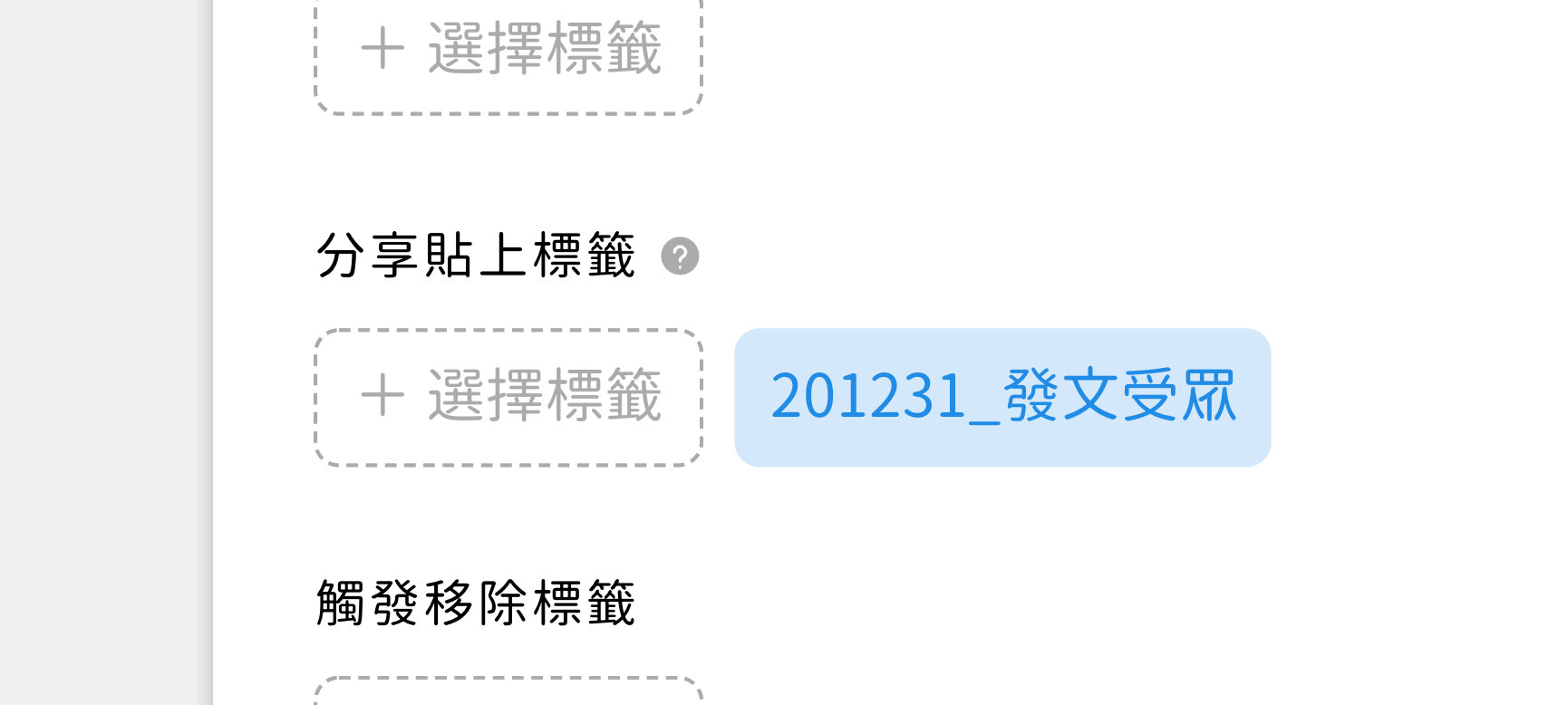
OakMega Social CRM takes tagging even further. On top of seven tagging methods, including click, engagement, and manual tagging, it now adds share-based tagging.
Tag shared links and quickly identify who shares
Social media is, at its core, “spreadable media.” The media flows and new participatory spaces it creates make it easier than ever for audiences to treat the virtual world as the real one.
OakMega pioneered LINE message sharing, solving a long-standing problem: LINE Official Accounts couldn’t spread messages beyond their own followers. Messages can now be shared quickly with friends, and this time the sharing feature has received a full upgrade.
Share-based tagging offers several advantages:
- Quickly identify who shares on social media
- Lower marketing costs as content spreads socially
- Build your own list of prospects
- Create a true VIP traffic pool
Many brands work constantly to win over loyal fans. NFT projects are the best example: when a project launches, it sets up its own Discord server to gather the audiences who love it and build its own metaverse. Their business models, marketing, and community management all move fast and are well worth watching.
This also covers ongoing operations and keeping the buzz alive so the traffic pool keeps attracting new friends. Spreading through friends is the most direct and effective channel, and social sharers help build brand awareness far more effectively.
The core value of Social CRM: tags are interests

Turning every click and action into a tag is the core value of Social CRM. Bringing all your data into one platform helps marketers spot upcoming marketing trends faster.
To achieve omnichannel integration, more and more companies want to build their own “data platform”: a centrally managed platform that supports all kinds of internal business applications, avoids duplicate builds, and keeps information flowing smoothly across the company.
More companies see their revenue and customers’ purchase channels shifting, so they need a data platform to stay on top of this data. In the future, they may even exchange it with others.
Conclusion
Third-party cookies are on their way out. Many brands realize that if even Google is quitting the game, they can no longer rely on these tech giants, which makes them far more aware of the importance of owning their data. That’s why data readiness matters: every business needs to build its own first-party data pool.
Google, Facebook, and others have proposed solutions, but in the end businesses need to bring customer data back into their own databases and find a way to keep it continuously updated. Social CRM consolidates that data as completely as possible, and the first-party data revolution is about to begin inside your company!