





Grow Member Value with Marketing Automation: Personalized Member Experiences on LINE
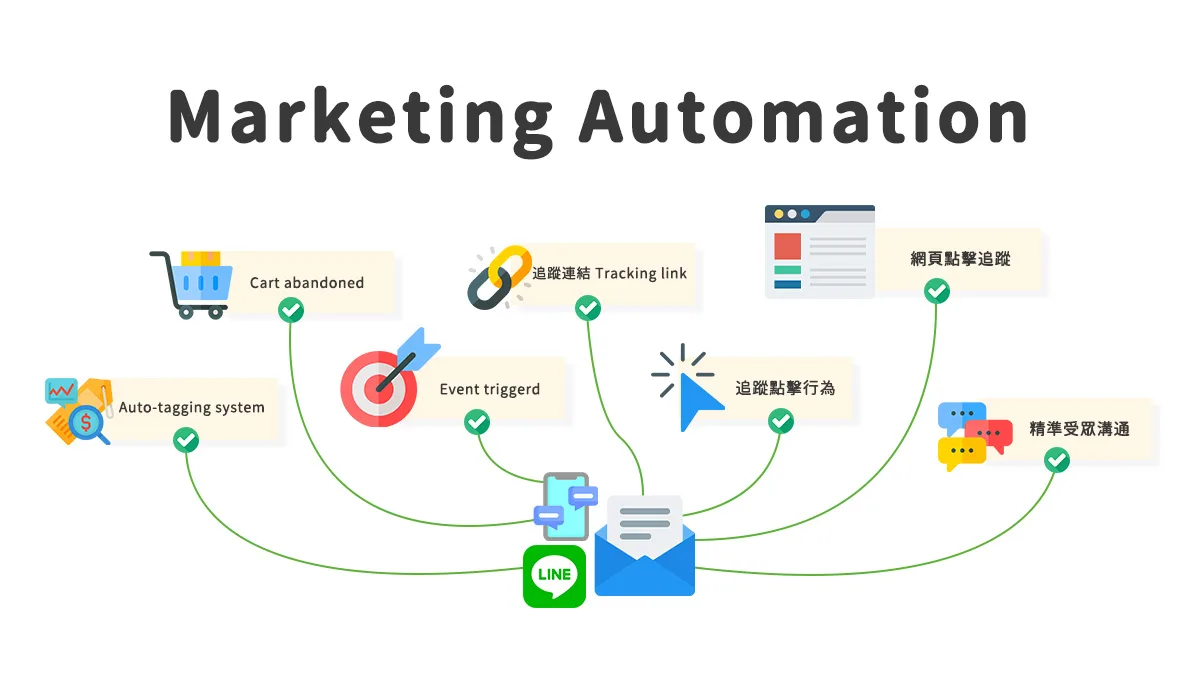
Marketing automation helps brands manage members by using data to read the status and journey of each customer segment. The goal is to shorten every customer journey with precisely targeted messages and raise the value of existing customers, so they get real value from your products or services, fall in love with your brand, and even become VIP superfans who keep buying and recommend you to friends on social media.
 ILING WuProduct Marketing Manager

Digital marketing channels and tools keep changing, but the importance of member management to a brand does not. With third-party cookies on their way out, brands that build first-party data and take back control of their data gain a real advantage: a data-driven mindset and first-party data make member strategies far more precise.
Marketing automation helps brands manage members by using data to read the status and journey of each existing customer segment. The goal is to shorten every customer journey with precisely targeted messages and raise the value of existing customers. When customers get real value from your products or services, they fall in love with your brand and may even become VIP superfans who keep buying and speak up for you on social media, recommending you to their friends.
How brands used to manage members
Member strategies used to be scattered across channels. They mostly targeted first-time buyers and relied on collecting basic personal details, typically in one of three ways:
- Physical cards (stamp cards, membership cards)
- Online website membership
- App-only membership
Because these channels were siloed, there was no unified customer database. Online and offline memberships couldn't be linked, and physical cards got lost. Brands struggled to understand individual interests from customer behavior or send segmented broadcasts. In retail channels, customer data stayed in the hands of the retailer and brands couldn't get it back, which undermined their member programs.
Social CRM segments audiences fast
To overcome the fragmentation that makes member management so hard, brands need a unified database. Social CRM brings all customer behavior data into a single platform. Unlike the old model, where customer information was lost once a member signed up, data from LINE, Messenger, email, and other channels keeps updating. That data helps you segment customers, and it frees your customer data from being held hostage by retail channels.
Build First-Party Data with Social CRM to Meet the New Digital Marketing Challenges of 2022The cookieless shift has made marketers’ jobs even harder, and 2022 is the year to find a way forward. Everyone is watching what Google and Facebook will offer. Google dropped FLoC for the Topics API, which is still in testing, and how it performs in practice remains to be seen. As the advantages of third-party cookies disappear, many brands are realizing that all their data sits in someone else’s hands: user data for FMCG and household goods belongs to retailers, advertising that long relied on cookies is becoming less and less accurate, and consumers are growing more aware of their privacy.https://oakmega.com/blog/social-crm-create-1st-party-data-solution
Member journeys free up 60% of your marketing team’s time
Member management involves many small, repetitive tasks, such as sending regular member emails, reminders to link membership, and alerts about member-only events. These take up at least 60% of a brand marketer’s time. Marketing automation uses martech to segment audiences and send messages automatically, freeing up your team.
Take an automotive brand that uses marketing automation for owner verification and follow-up:
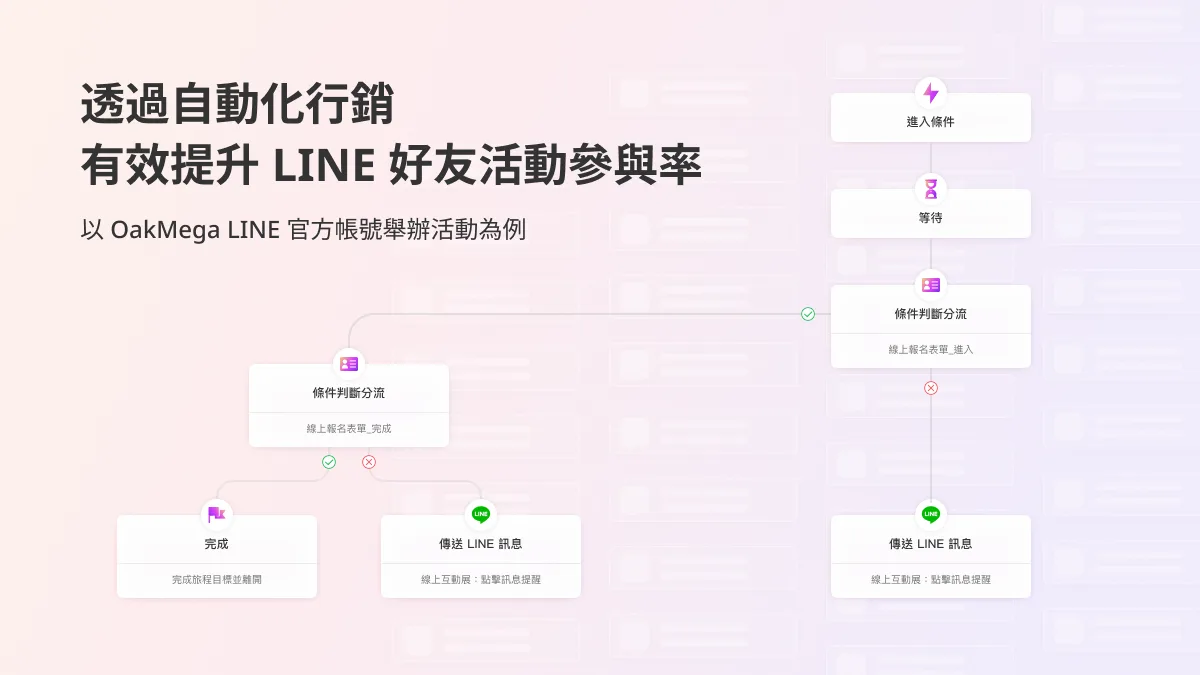
After a car is delivered, the brand wants the owner to complete verification through a LINE form so it can offer services the general public doesn’t get, such as maintenance reminders and exclusive test drives of new models. If an owner forgets to verify for whatever reason, an automated flow can remind them on the brand’s schedule to complete linking and enjoy those exclusive services.
What’s more, the marketing team no longer has to manually filter out unverified owners. Once the automation is set up, the system checks after a set period whether each owner has verified and sends a reminder to those who haven’t. With a large owner base, this dramatically cuts manual review time and the risk of missing anyone. The team only needs to check periodically that the automation is running according to the member strategy and refresh the message content.
Great member journeys create personalized member experiences
To segment and manage members effectively, you need to understand the journey each type of customer is on, design a strategy that fits each one, and refine it regularly based on the data.
1. New members:
Customers who have just joined don’t yet know the brand well or feel much loyalty. At this stage, share your brand story to make a stronger impression, and use a variety of interactions to collect behavioral data from new members across channels. Then you can offer incentives (coupons, repurchase vouchers for new customers, and so on) that keep them coming back.
2. Active members:
Based on each active member’s journey with different products, compare purchase history and buying frequency to send relevant updates on a regular schedule. You can also use repurchase frequency and spend to identify your highest-value active members and proactively offer them premium services or products for a VIP experience. At this point, automated marketing to active members shifts from “annoying ads” to “thoughtful reminders.”
3. Dormant members:
Members who haven’t engaged with the brand for more than six months are generally classified as dormant. Member journeys can automatically add dormant members to a broadcast audience and try to win them back with new product news and offers that match their interests, turning them into active members again.
4. Lost members:
Members with no engagement for a full year can be considered lost. At this point you may need to apply reverse marketing thinking: ask why your current products or services failed to meet this group’s needs, then revise or even rebuild a dedicated member strategy to find opportunities to meet their future needs.
How Social CRM Helps Brands Engage Customers at Every Lifecycle StageSocial CRM has become a key way for brands to engage customers. Across a brand’s messaging apps, CRM lets you manage both data and conversations at once. When you face customers of different types and stages, the customer lifecycle combined with data-driven thinking and your overall brand strategy lets you segment more effectively and build sharper marketing and sales strategies.https://oakmega.com/blog/how-social-crm-helps-customer-lifecycle
Conclusion
Marketing automation frees up a great deal of your marketing team’s time and effort. With the OakMega Social CRM member journeys, brands can apply automation thinking to execute their member strategies more consistently. Social CRM unifies first-hand customer data from every channel so you understand each customer’s preferences. By staying one step ahead and constantly asking what customers need, you can win their hearts.