What Is Marketing Automation?
The global marketing automation market is projected to reach US$8.4 billion by 2027, growing 9.8% a year. Marketing automation helps businesses grow revenue, about 50% of companies already use it, and at least half of B2B companies plan to adopt marketing and sales automation within the next year to save time.
 ILING WuProduct Marketing Manager
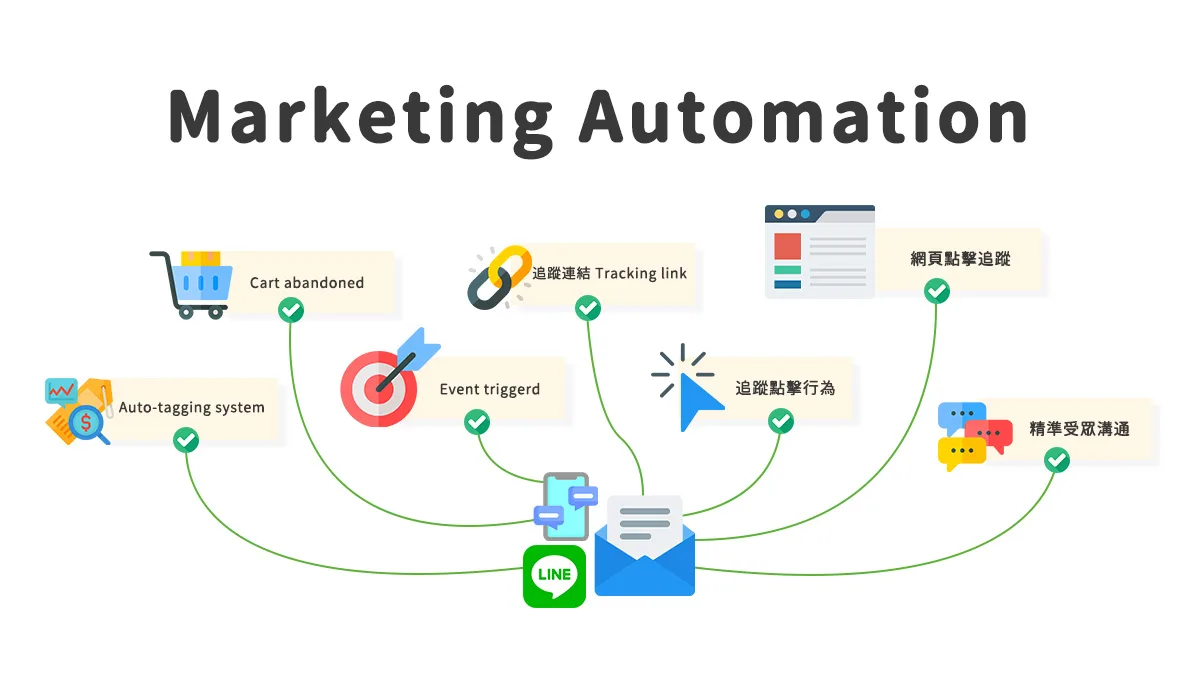
Grand View Research projects that the global marketing automation market will reach US$8.4 billion by 2027, growing 9.8% a year. Marketing automation doesn’t just help businesses grow revenue. It also increases deal size, acquires customers through multiple channels, and keeps them coming back.
Research shows that about 50% of companies already use marketing automation, and at least half of B2B companies plan to adopt marketing and sales automation within the next year to save time.
Analytics and data management dominate the marketing automation market, and Grand View expects that to continue. According to the same report, email remains one of the main marketing channels, covering newsletters, sales support, fundraising, and ad delivery.
What is marketing automation?
Marketing automation uses software to run multiple marketing activities and track their results, achieving the greatest impact with the least manpower. That frees marketing teams to focus on designing campaigns, shaping strategy, planning workflows, and mapping the buyer journey.
Founded in 2006, HubSpot built its core business on providing marketing automation to companies worldwide. In 2015, HubSpot ranked first in the marketing automation market with a 49% share. It combines blogging, social monitoring, contact management, search optimization, email marketing, automated workflows, and user data analytics, among other practical features.
Look closely and it’s clear that marketing automation in mature markets such as Europe and the US is built around email. In China, however, email is clearly not the main way businesses talk to consumers. For consumers there, email open rates may be just a few hundredths of a percent.
In the social media era, open rates on LINE, Facebook, IG, Messenger, and other platforms have passed 50%. So today, the clearest differentiator in marketing automation is the ability to integrate social channels, in other words, Social CRM .
How does Social CRM work with marketing automation?
SCRM and marketing automation complement each other. We can acquire customers through various channels and tag them by social attributes, which helps not only to acquire customers but also to nurture them, and even to lift conversion rates with precise lists.
Marketing for high-ticket products (B2B and B2C) revolves around acquiring leads and converting them. For SCRM marketing automation, that means building a marketing loop around three stages: Engage, Acquire, and Retain.
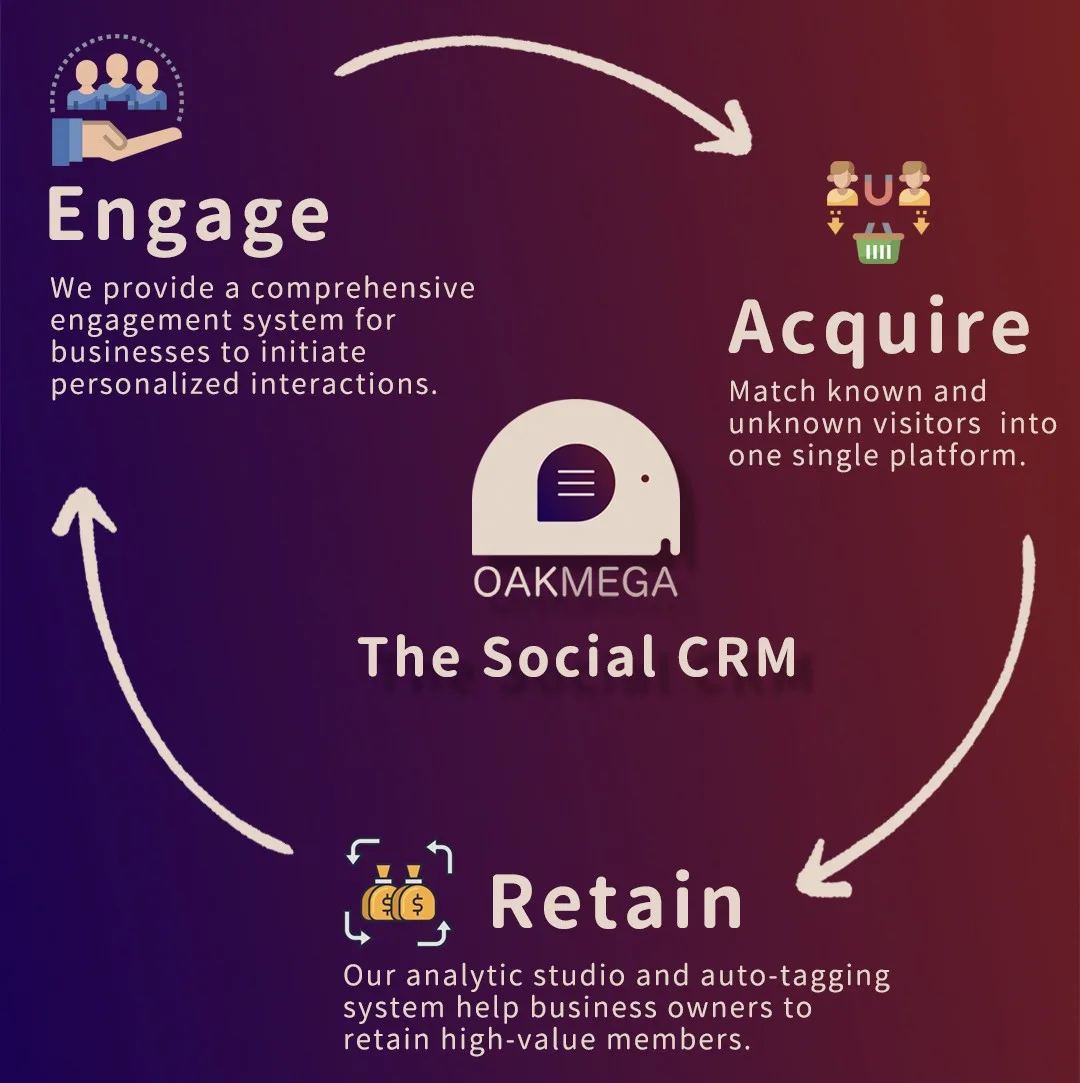
Engage: also known as customer engagement
Use a range of content to spark user interest. The first step is understanding which content formats your target users prefer, then giving them what they like.
Content marketing trends worth watching in 2021:
- Build content communities
- Webinars and online briefings
- Improve the website browsing experience
- Focus on products and services
- Test AI-generated content
- Strengthen search engine optimization (SEO)
- Repurpose content effectively across channels
And the four factors that make buyers willing to engage:
- Understanding the buyer’s business model
- Having domain experts or thought leaders
- Offering valuable advice, value, and tools
- Understanding the company’s products and services
Make the most of existing content and adapt it to fit specific audiences. Through interactive formats, you can quickly and automatically segment users and create tailored content they love.
Acquire: winning customers
Customer acquisition is the top priority for many businesses. It happens through different formats, channels, and content, with digital ads making up the bulk today, including Google Ads, display networks, FB, IG, LinkedIn, LINE, and more.
For example, once a customer signs up on your website, marketing automation kicks in: welcome email > relevant offers > discount code > purchase. Marketing automation can run this flow and set checkpoints at every step.
But with third-party cookies being blocked and Apple’s ATT (App Tracking Transparency) introduced in iOS 14, IDFA compliance means more and more restrictions on the user profiles and usage data you can track.
Social CRM lets you accumulate user engagement data and consolidate multichannel usage habits in one platform, which brings these advantages:
- User data is fully consolidated around each user.
- You’re not limited by changes to third-party cookie policies.
- You can reach users through the most effective channel.
The last step is also the most important.
Retain: keeping customers
This stage has two parts: data analysis, and sales follow-up to drive conversion. Engage and Acquire keep customers involved; the final step is finding potential customers and converting them.
- Data analysis
Look at three dimensions: demographics, company information, and BANT. Demographics covers job title, role, and seniority; company information covers company name, size, earnings, products and services, revenue, and so on; BANT stands for Budget, Authority, Need, and Timing.
Of course, HubSpot has noted that BANT has fallen out of favor because it tends to become a rigid checklist that doesn’t truly listen to customers or try to add product value.
BANT has evolved into deeper conversations:
- Don’t treat budget as a barrier.
- Find out who’s involved.
- Establish how important the problem is.
- Understand how fast their organization changes.
Use this information to build a weighted scoring system. For instance, someone who has visited your website, joined a livestream, and emailed with questions shows clear intent, so they’re judged highly relevant and ranked higher.
- Sales follow-up to drive conversion
Sales follow-up is the key point where marketing and sales work together. Sales can measure whether marketing used effective leads to bring in high-quality lists, and how well those leads convert and get followed up.
Once marketing captures a lead, sales needs to respond and follow up immediately to reduce lead loss and improve conversion. Automated marketing journeys can also help create the best follow-up process.
Conclusion
Whether it’s Social CRM or marketing automation, what matters is understanding how marketing works as a whole. Tools can only cut down on repetitive work. In the next article, we’ll look at the challenges marketing automation faces today.

OakMega: the Social CRM built for marketers
👏 Your applause keeps me going. Press and hold to clap again and again!
Official website / Facebook page