The Data Power Brand Sales Teams Need in 2022: Boost Conversion Rates with Social CRM
Whether you sell for a B2B or B2C brand, you probably face the same problem: it’s getting harder to understand customer behavior, and your sales performance suffers. Mobile devices have fragmented the customer journey, and with third-party cookies and privacy policies in play, existing sales strategies no longer work. How can brands reach customers online and expand their customer touchpoints?
 Howard HuangMarketing Specialist

Whether you sell for a B2B or B2C brand, you probably face the same problem: “It’s getting harder to understand customer behavior, and my sales performance is suffering.” Mobile devices have fragmented the customer journey. Third-party cookies used to help track customer data, but privacy concerns mean they will be phased out in the foreseeable future. The pandemic has accelerated this fragmentation even further, and customers now spend more time online and complete more purchases there.
The sales challenges created by a fragmented customer journey hit even harder for B2B sales teams, or for brands selling specialized services. The reason is simple: their customers’ buying decisions usually take longer than those for everyday retail products, and without a clear picture of customer behavior, it’s hard to sell to customers’ pain points.
The pandemic has pushed more customer time online
According to ARK Invest research, the pandemic accelerated the time customers spend online, with its share jumping from around 19% in 2019, the year before the pandemic began, to nearly 40% this year (2022). Add social media, which was already booming before the pandemic, and the customer journey is fragmenting faster than ever.
Customers can now watch KOLs recommend products on YouTube, browse posts on brands’ official pages on Facebook, Instagram, and other social platforms, and finally complete a purchase through an affiliate link on a shopping referral site.
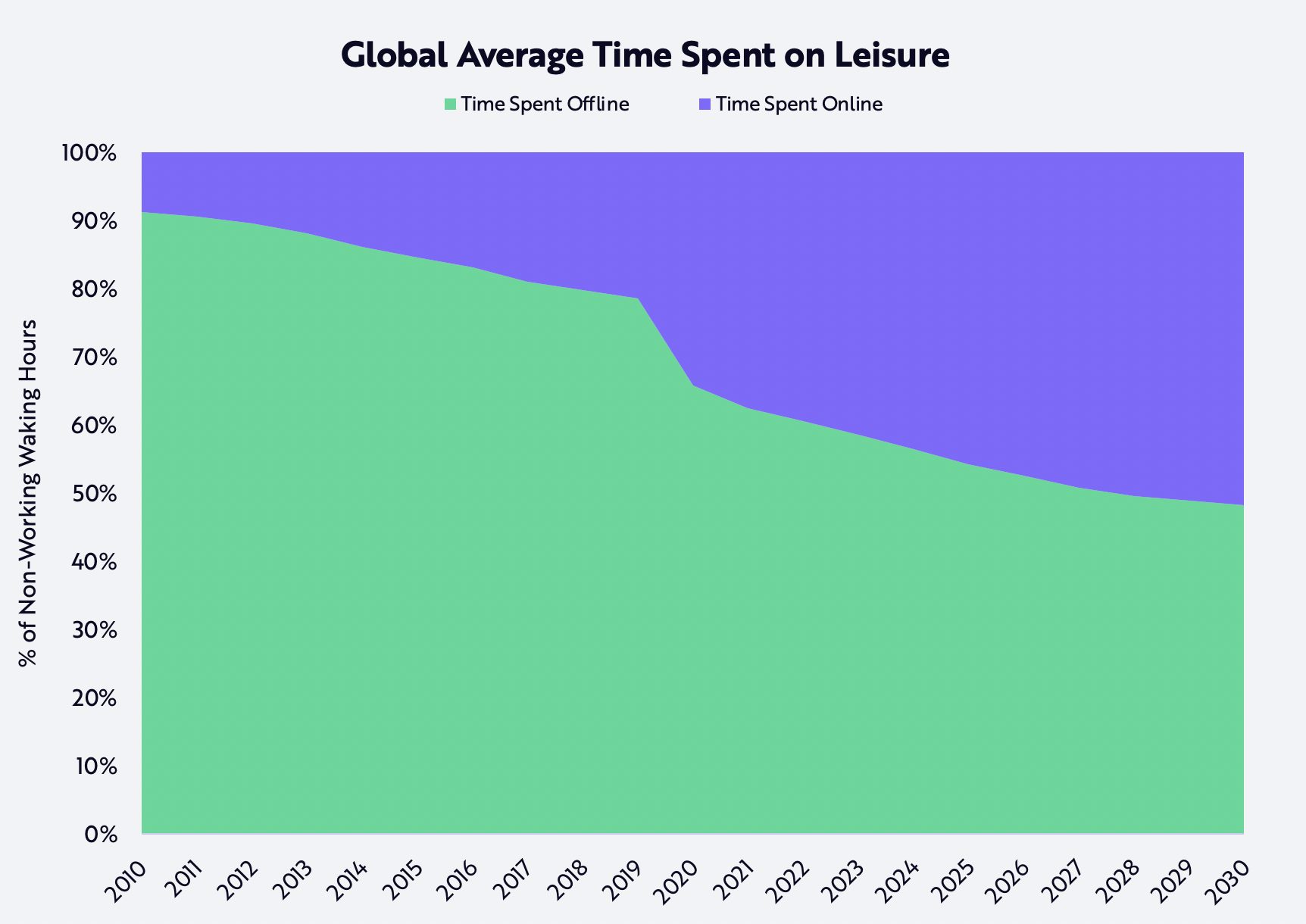 Source: ARK Investment Management LLC, 2021
How brand sales performance is measured
Each brand measures sales performance differently, but broadly speaking, two metrics matter most:
- Conversion rate
Conversion rate is the percentage of prospects who become customers. It can also refer to the conversion rate at each stage after a prospect enters the top of the marketing funnel.
- Estimated number of customers at each stage of the marketing funnel
The marketing funnel sums up the customer journey and behavior profile. It narrows from top to bottom, showing how the number of customers shrinks layer by layer as they move from recognizing a need, to looking for products or services, to actually buying. Marketing funnels also vary with the nature of the product or service being sold. In general, B2B customers don’t buy on impulse, so B2B companies need more complex funnels to find their target audiences.
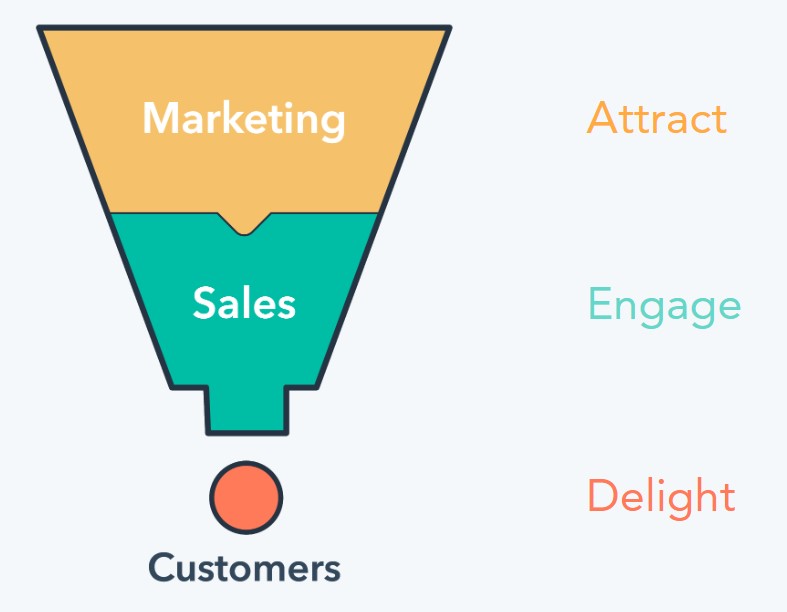 Source: HubSpot, How to Create Content for Every Stage of the Buyer's Journey
Conversion rates and the marketing funnel are closely linked. The most obvious impact of fragmented customer behavior on brand sales today is that teams can’t see clearly what customers look like at each stage of the funnel, so conversion rates at each stage stall or even drop. For example:
- Ad audiences can’t be defined clearly, which lowers ad performance, limits customer touchpoints, and shrinks the number of prospects captured at the top of the funnel.
- Prospects in the middle of the funnel, who already have a basic understanding of the product, can’t be offered the right solution to their pain points, which lowers the final conversion rate.
Pros and cons of CRM as a fix for the fragmented customer journey
Adopting a CRM (customer relationship management) tool on the sales side is a viable solution today. A CRM helps brands record customer data and map customer behavior profiles, while building their own first-party data and reducing reliance on third-party data. Salesforce’s latest State of Sales report also notes that since 2018, CRM has been one of the five sales tools that brand sales teams value most.
But CRM has drawbacks too: long implementation times, plus high implementation and ongoing maintenance costs. These limits show in the fact that more than 50% of brands that actually adopt CRM are concentrated in larger industries that require frequent customer contact, such as dealers, insurance, and real estate.
Yet the fragmented customer journey is a sweeping trend that affects everyone. So what can general retailers, or smaller brands that lack the resources to adopt a CRM tool, do about it?
Social CRM: collect and use customer data in real time
Think of Social CRM as a customer relationship management platform built on social platforms. It combines “the completeness of CRM customer data collection” with “the immediacy of interacting with customers on social media,” extending the power of data to every social touchpoint where sales teams interact with customers on the front line. Social media is no longer just a one-way marketing channel: every interaction with a LINE friend instantly becomes customer data, and you can package audience data at the same time to find more prospects through lookalike audiences and expand your brand touchpoints.
Through interest and preference analysis, customer data can also guide the strategy for every sale, delivering messages that precisely address customers’ pain points and lifting conversion rates. Whether you’re retaining existing customers or winning new ones, you get the best results.
LINE OA vs. OakMega Social CRM: Which One Wins?LINE, the instant messaging app, has become a must-enter space for many marketers. Marketers have a lot on their plates every day, and this article helps you evaluate the interface and features that best fit your team.https://oakmega.com/blog/line-oa-vs-oakmega-social-crm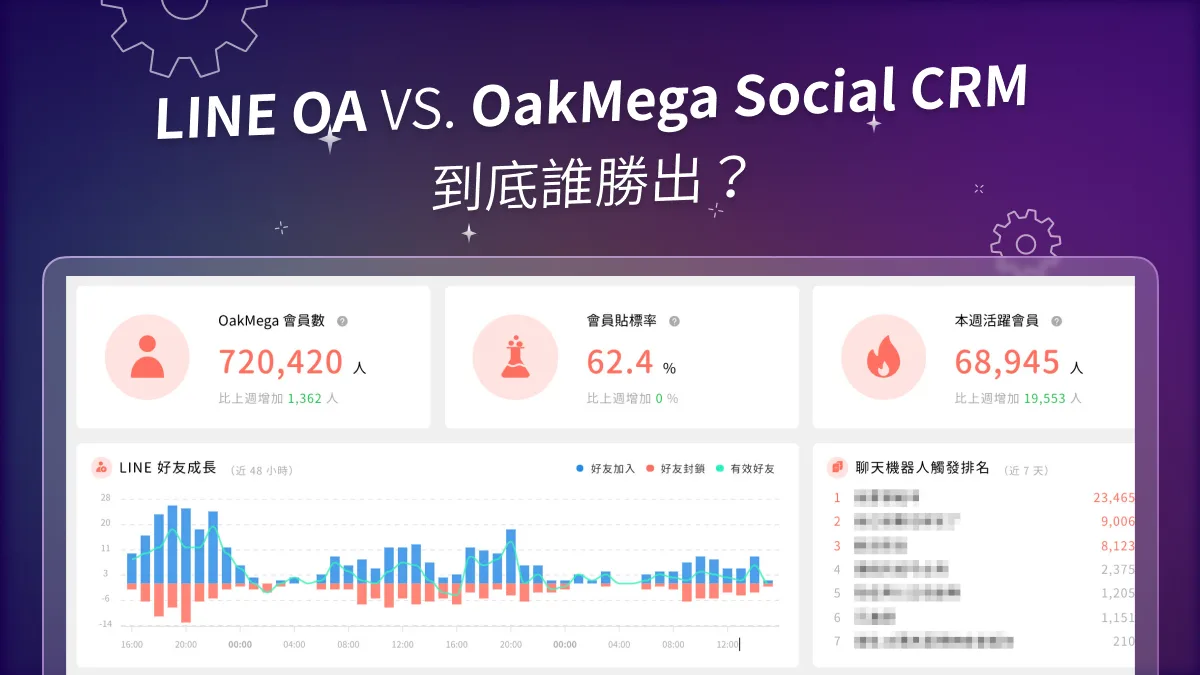
Using customer data in real time is the “data power” brand sales teams need in 2022
According to The LinkedIn State of 2020, 43% of brand sales professionals use sales intelligence tools, such as Apollo for email campaign management and Pipedrive for managing the sales pipeline, up more than 50% from 2018. Digital transformation is clearly an unavoidable trend for brands and their sales teams. But the real key to winning isn’t just owning first-party data; it’s using customer data in real time. For example, by using Social CRM to interact with customers instantly in messaging apps, you can piece together a complete customer behavior profile from a scattered customer journey, then use that “data power” to craft precise sales strategies and expand your touchpoints.