




What Are Segment Tags? How Tagging Powers Your LINE Strategy
Since LINE Official Account 2.0 launched in 2020, businesses have been looking for new ways to run their accounts. Blasting every message to all friends had become too expensive, and brands wanted to understand their LINE friends better. Segmentation means getting to know your friends through tags. When someone adds your account, they are a blank slate: you only know their name, email, and phone number. Conversations, online behavior, clicks, interests, and preferences gradually bring their profile into focus.
 ILING WuProduct Marketing Manager
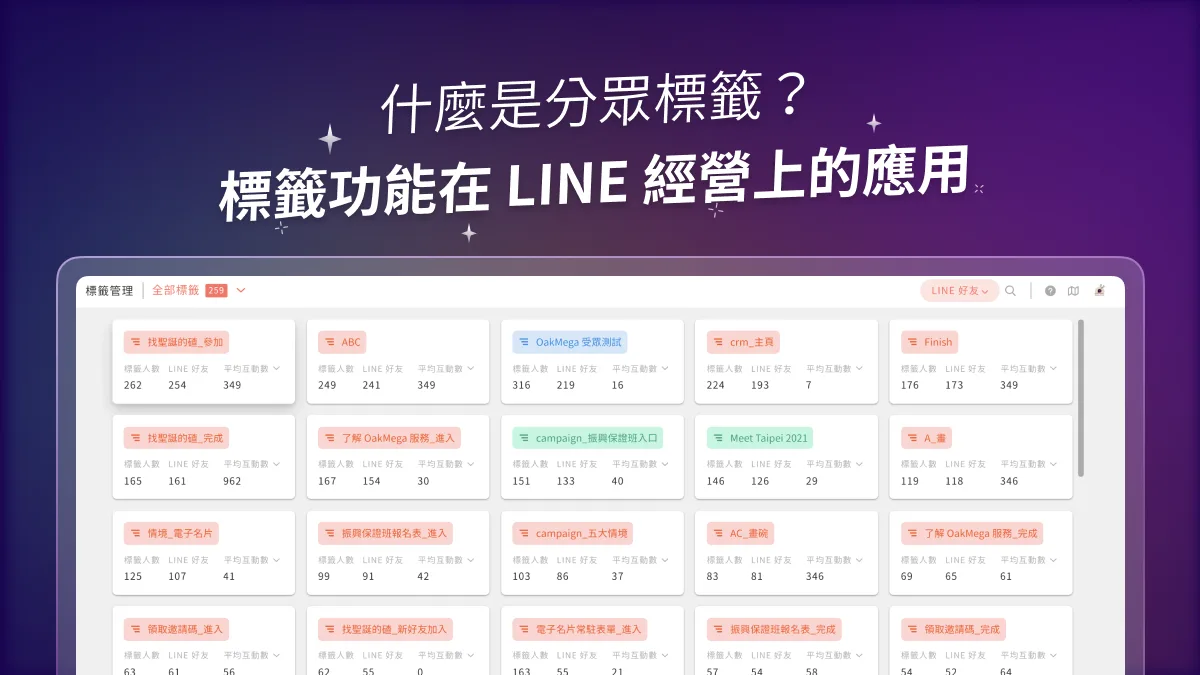
Since LINE Official Account 2.0 launched in 2020, businesses have been searching for new ways to run their accounts. Broadcasting every message to all friends had become too expensive, and brands also wanted to understand their LINE friends better.
Segmentation means getting to know your friends through a variety of tags. When someone adds your account, they are a blank slate: all you know is their name, email, and phone number. Conversations, online behavior, clicks, interests, and preferences gradually bring their profile into focus.
We're often told not to label people, but online, tags are exactly how we get to know our users.
There are three main ways to use tags on LINE today:
1. One platform, multiple verified identities
2. Interest-based segments with tailored content
3. Menus that switch with the usage scenario
One platform, multiple verified identities
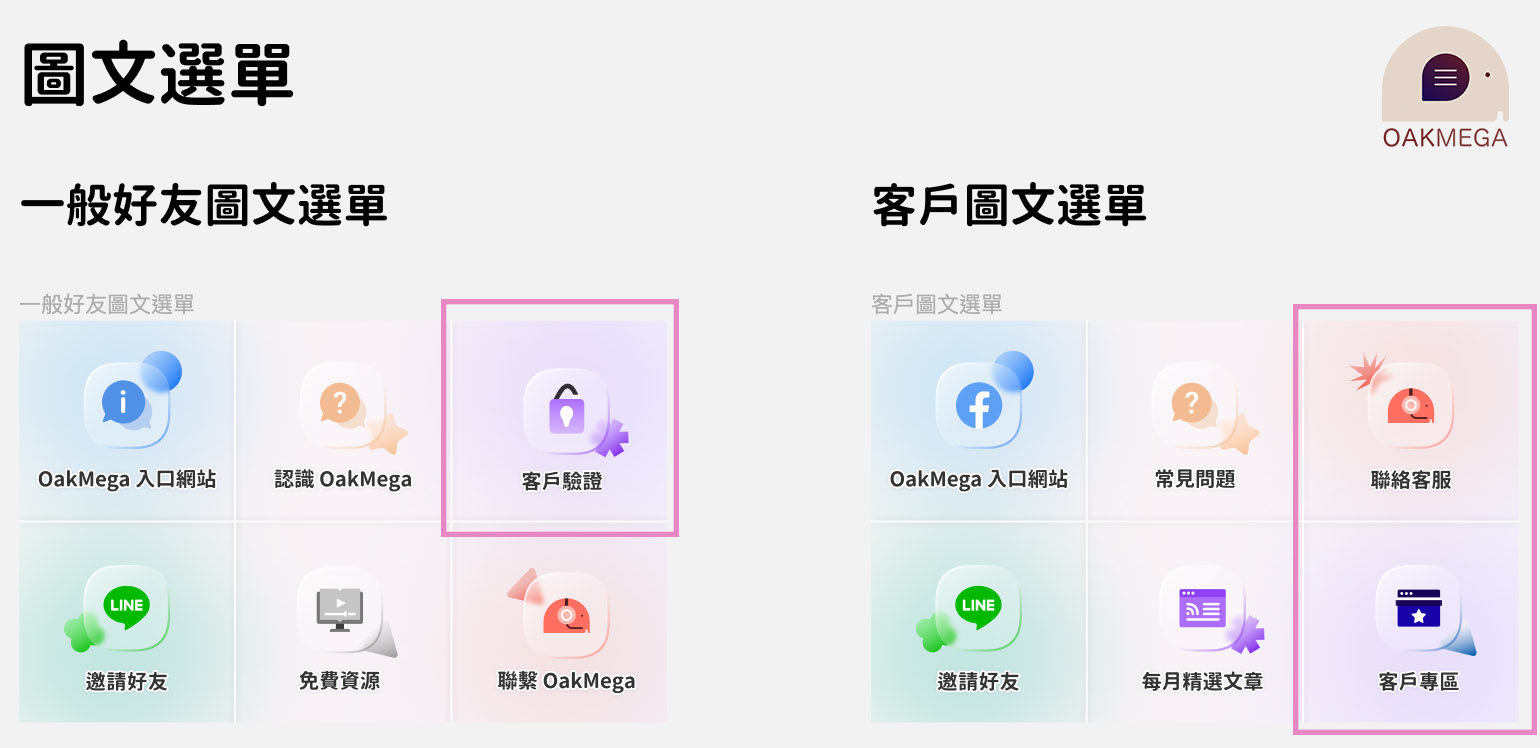 Standard friends can verify as customers; once verified, they unlock “customer-only features” and “dedicated support.”
When member data and dealer information are scattered everywhere, Social CRM proves its value: it brings that information back together on one platform, and member verification forms make it easy to identify each type of user.
Members
Once verified, members can reserve or order products, since these features require a linked identity. For a restaurant, that could mean a pre-order pickup feature available only to linked members, which reduces cancellations.
After verification, everything from booking and pickup to the service survey happens in one place. No more mix of paper and digital records: it all lives together.
Dealers
With a dealer verification form, the menu switches instantly. Your LINE Official Account can connect fully to your existing database, so dealers can quickly check shipping progress, customer orders, and support status.
This closes the information gaps between parties. Dealers pull up data right inside LINE instead of remembering a string of URLs or clearing layer after layer of authentication.
Interest-based segments, tailored content
 Every interest is like a tag stuck on a person. Can you name three interest tags of your own?
In an age of information overload, we have to deliver content with more focus. People only pay attention to topics they care about; keep pushing irrelevant messages and you'll be met with a cold rejection. The next challenge for brands is figuring out what their fans are actually interested in.
Conversation is the best way to learn someone's interests. Through ongoing communication, brands can guide users to click the topics or products they care about. Each step deepens your understanding of your fans, every conversation sharpens their profile, and the brand can adjust its direction to match.
Take YouTube: food videos are everywhere because they draw traffic and fans love them, so lots of creators start making “local food” content. The problem is that they can only hope the algorithm brings in more fans; they can't proactively reach the people who might like their videos.
Information is moving toward more specialized content. Facebook groups are a great example: there are groups dedicated to social media marketing, groups for discussing crypto and NFTs, and groups where copywriters talk shop. As information becomes more specialized, fans start choosing what they consume instead of passively taking whatever brands push at them.
Menus that switch with the usage scenario
When do users open a LINE Official Account?
- In-store: to pull up a virtual membership card
- On the website: to scan a QR code, log in, link their account, and use member points
- For deals: to receive offers or new-product news based on their preferences
If you can design a different interface for each of these scenarios, even a simple button swap helps users get where they need to go faster.
One small change can turn LINE into your brand's Mini App. Take a drink shop: in-store purchases make up the largest share, but the pandemic may push delivery and online ordering higher, and the menu can switch over with a single button.
How to Deliver End-to-End Car Sales Service with LINE Official Account as a Mini AppAs the hub for running your LINE presence, a LINE Official Account can connect every step of the car sales process as a Mini App, from booking test drives to after-sales maintenance, turning passive service into proactive engagement with car owners.https://oakmega.com/blog/automobile-industry-case-study
This lowers the barrier to entry and lets people use LINE more intuitively across different scenarios. At the same time, your LINE Official Account captures first-party data, helping you understand user preferences and plan your next marketing move.
Conclusion
Most brands are still in the early days of using their LINE Official Account. Plenty of simple techniques, from how you arrange text to switching menus by scenario, all the way to integrating offline events, remain largely untapped.
If you can bring more people through online-to-offline integration, more data flows back into your brand's database. Real-time updates sharpen each user's profile, and as people get used to interacting with your account, you'll understand your customers better.