The Growth-Hacking Mindset: How Brands Amplify the Value of First-Party Data with Marketing Visuals to Grow Revenue
Today, brands interact with customers across many devices and channels. Beyond building your own first-party database with Social CRM to understand customer behavior and shape more precise marketing strategies, optimizing every touchpoint to catch customers' attention in a limited window is a growth-hacking mindset that effectively boosts revenue.
 Howard HuangMarketing Specialist

Today, brands interact with customers across many devices and channels. Beyond building your own first-party database with Social CRM to understand customer behavior and shape more precise marketing strategies, optimizing every touchpoint to catch customers' attention in a limited window is a growth-hacking mindset that effectively boosts revenue.
Beyond building first-party data with Social CRM: optimize customer touchpoints with marketing visuals
The most immediate effect of increasingly complex touchpoints is fragmented user behavior. Take a retail brand: customers might receive and browse its messages or ads on social platforms, watch KOL recommendation videos on YouTube, and finally complete the purchase on the brand's website or even a shopping app.
As this example shows, customer behavior is getting harder for brands to predict. At the same time, customers expect brands to respond quickly at every touchpoint, which means brands can't afford to ignore any touchpoint that could win a customer, and must invest more time and money across channels than before.
Research from abroad shows that people's attention spans keep getting shorter. But when a brand's marketing relies more on visuals, customers can absorb at least 65% of the message. Catchy brand and product copy alone isn't enough: images in posts are no longer a nice-to-have but a must.
Build first-party data with Social CRM to meet the new digital marketing challenges of 2022Since the move to a cookieless world, marketers have faced an even tougher road. 2022 is the year to find solutions, and everyone is watching what Google and Facebook will propose. Google dropped FLoC in favor of the Topics API, but it is still being tested and real-world results remain to be seen. As the advantages of third-party cookies disappear, many brands are realizing that all their data sits in someone else's hands: for FMCG and household goods, user data belongs to retail channels. Advertising, long reliant on cookies, is becoming less and less precise, and consumers are increasingly aware of how important their privacy is.https://oakmega.com/blog/social-crm-create-1st-party-data-solution
Three challenges in optimizing touchpoints with marketing visuals
Well-designed images make your copy's message stand out. In practice, though, brands often run so many channels that design teams spend most of their time resizing layouts instead of optimizing marketing visuals, or they lack a professional design team altogether, which seriously undermines the impact of their visuals.
1. Multi-channel image production can't keep up with campaign timelines
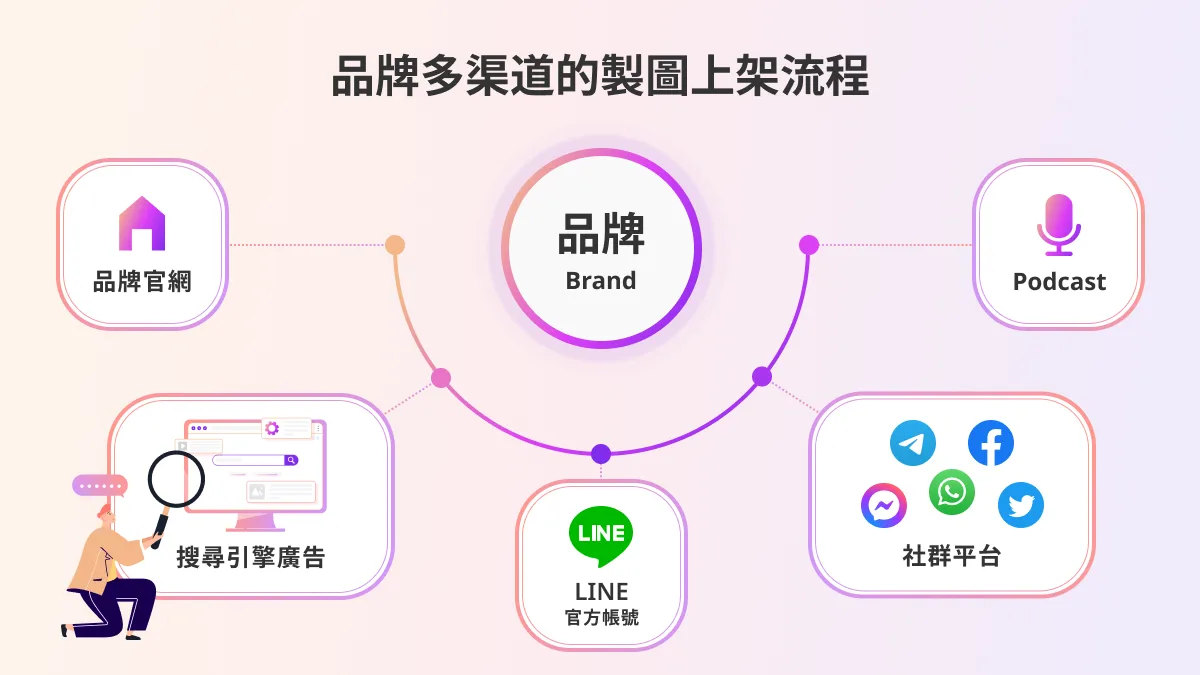
To keep visuals consistent while communicating effectively with customers on every channel, brands have to remake the same copy and visual design to fit each channel's requirements. Running ads on top of that requires even more adjustments, so campaigns often need extra lead time, which hurts efficiency.
Why visual consistency matters for e-commerce growthDesign consistency is crucial for businesses, especially e-commerce brands. It helps brands connect with their audience quickly and reinforces brand recognition over time. Internally, it saves your design team a great deal of time and helps you keep pace with the fast rhythm of e-commerce sales. This article explains what design consistency is, how it benefits brands, and how to put it into practice and build it into your workflow.https://blog.withdipp.com/zh-tw/design-consistency
2. Every e-commerce platform has different image requirements
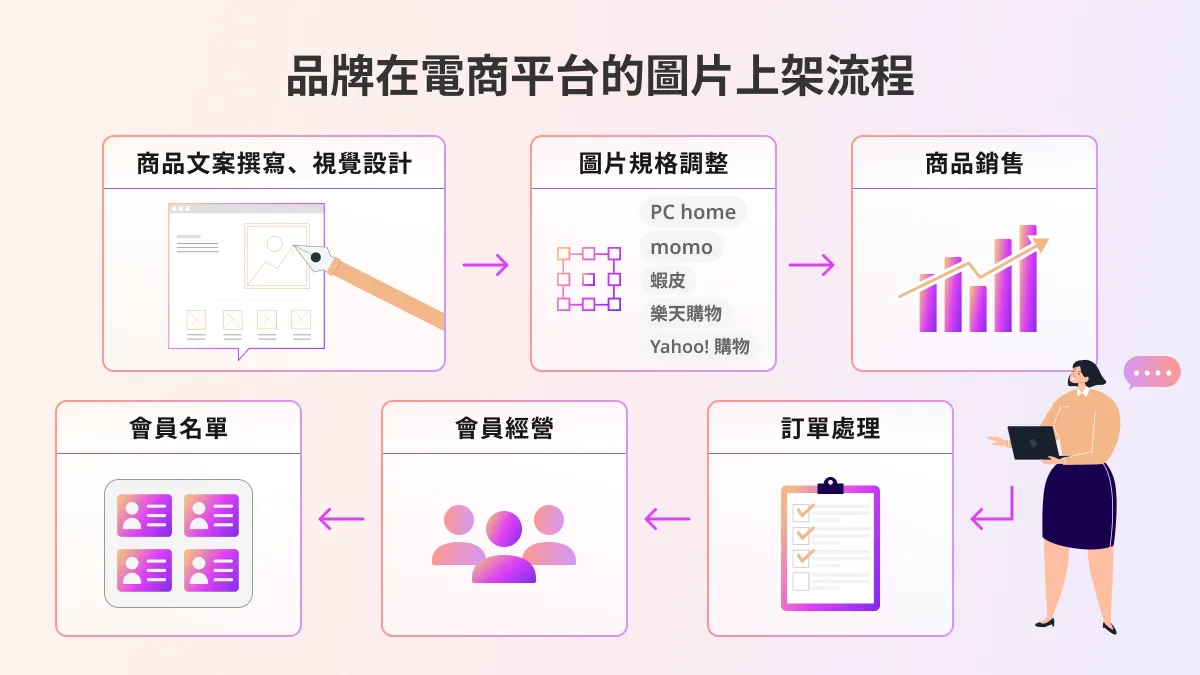
Consider brands selling products to customers through e-commerce platforms. Behind the endless variety of product image cards customers browse on platforms like momo and PChome are marketing and design teams spending huge amounts of time meeting each platform's listing requirements.
For e-commerce and retail, time is a precious cost. Promotional windows are shrinking fast, and every extra minute spent adjusting layouts is one less minute of exposure.
dipp's high-volume image generation helps brands adapt finished marketing visuals to every e-commerce platform's requirements in one go, automating highly repetitive design work.
3. Without a shared platform for marketing and design, communication suffers
Marketing and design teams are key to whether a brand can execute marketing visuals effectively and promote content successfully. Without a repeatable communication process or a collaboration platform, marketing's expectations and design's output can fall out of balance, leading to endless rounds of revisions.
To tackle these challenges in optimizing touchpoints with marketing visuals, brands can use solutions such as dipp and Figma.

Solutions that help brands create effective marketing visuals
1. dipp: a powerful tool for high-volume, multi-channel images
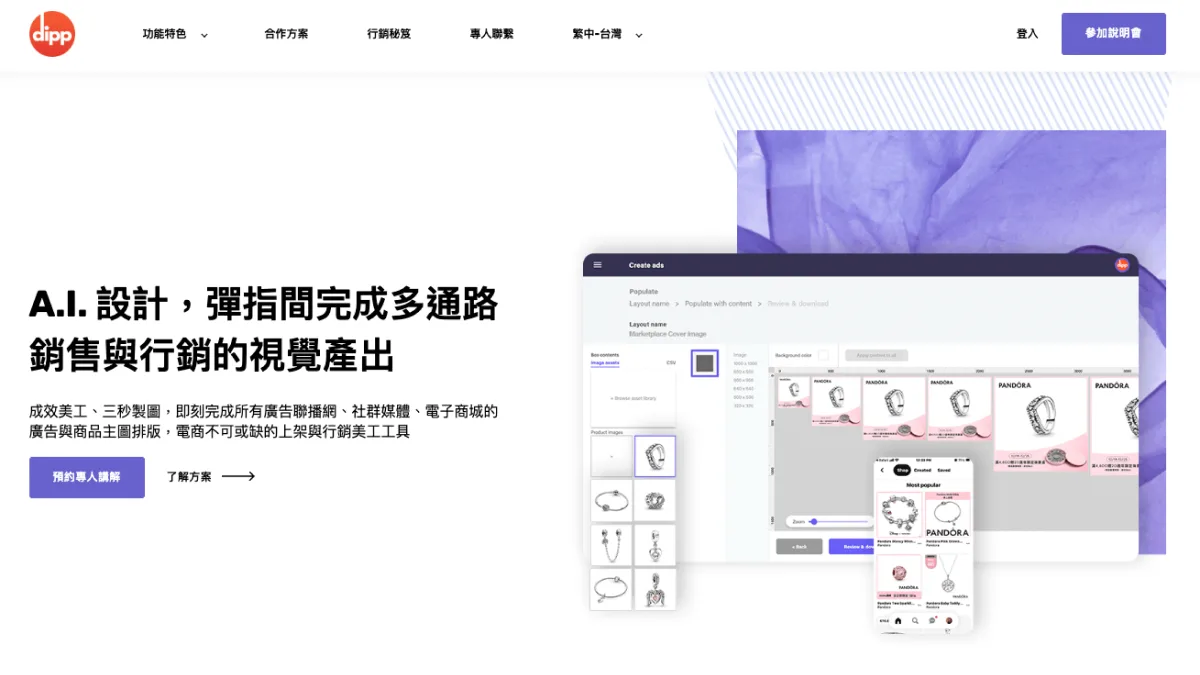
dipp is an AI-powered tool built for brands to produce images at scale. By automating highly repetitive design work, it frees design teams to focus on creating marketing visuals. It integrates with Adobe Photoshop, letting you upload up to 200 finished brand visual files at once and instantly meet each channel's image specs (including dimensions and file size).
dipp's collaborative system also makes producing marketing visuals more efficient. Marketing and even sales teams can use it too, reducing cross-team miscommunication and saving significant time and labor costs.
Take listing products on e-commerce platforms as an example: with dipp's AI tools, brands can quickly generate images that meet each platform's specs. Products go live faster, consumers are less likely to tire of seeing the same ad image, and brands keep pace with every sales season while improving inventory turnover.
What is dipp, the image tool that boosts designer productivity? How is it different from Photoshop and Canva?Designers play a key role in e-commerce workflows, and many tools help them get the job done in a busy process. Photoshop and Canva are common design tools, along with dipp, a bulk design tool that saves huge amounts of time. This article walks through an e-commerce designer's daily work and clarifies how the main design tools on the market, Photoshop, Canva, and dipp, differ and what role each plays in a designer's workflow.https://blog.withdipp.com/zh-tw/what-is-dipp
2. Canva: a template-based design tool
Canva is a template-based design tool for everyone, with nothing to download or install. Using Canva's thousands of templates and assets, you can design images for any purpose, from social posts and website graphics to business presentations, and even build custom templates with your team.
3. Figma: a real-time collaborative design tool
Figma is a cloud-based, real-time collaborative design tool that works in both the browser and a desktop app. Teams can collaborate simultaneously without exporting files to make changes, edit, or review, completing image assets, web pages, app UI/UX, and even wireframes together.
Figma's open design also lets teams flexibly install a wide range of plugins and templates from the Figma Community to meet any design need.
Conclusion
With customer touchpoints so fragmented, optimizing every possible touchpoint with a marketing mindset is the key to whether brands adopting a growth-hacking approach can get the most out of Social CRM's first-party data and grow revenue.
Fill out the form for a free consultation on Social CRM and high-volume image services, and our team will get in touch.