How to Build a First-Party Data Database: CRM Is the Only Real Cure
There are now plenty of first-party data CRM (customer relationship management) solutions, such as DMPs and CDPs. They all respond to tighter rules on collecting third-party data, as privacy regulations like the GDPR force businesses to handle user data with growing care. Yet many voices online are waiting for Google or Facebook to offer more solutions, and some see no real urgency: if Chrome blocked third-party cookies tomorrow, they argue, the urgency alone would bring all kinds of solutions.
 ILING WuProduct Marketing Manager
In our last post, we looked at what marketers should do now that third-party data is being blocked.
Third-party cookies are going away. How should marketers respond?
There are now plenty of first-party data CRM (customer relationship management) solutions, such as DMPs and CDPs. They all respond to increasingly strict rules on collecting third-party data, as privacy regulations like the GDPR require businesses to handle user data with growing care.
Yet many voices online are waiting for Google or Facebook to come up with more solutions, and some see no real urgency. If Chrome were to block third-party cookies tomorrow, they argue, that urgency alone would bring all kinds of solutions.
What are CDPs and DMPs?
Data management lets you use member data more effectively. Some choose a CDP, others a DMP. So which should be your first choice for customer management?
DMP (Data Management Platform)
A DMP collects data from many sources and analyzes it, helping ad platforms target specific audiences for more precise ad delivery.
CDP (Customer Data Platform)
A CDP can be described as a platform that pulls consumer information together. It draws on a company's internal data and external public information to build sharper consumer profiles, then uses that information for marketing.
CDPs and DMPs are the two concepts most often confused, because both:
- Manage customer data
- Help marketers do their jobs better
- Give businesses deeper, richer customer insight
The data a DMP collects is more like a packaged segment. Third-party cookies may hide some of the detail, and it works more by combining data from multiple channels to find potential users. A CDP's data is detailed, including users' names, purchasing habits, email addresses, phone numbers, and more.
What are the benefits of first-party data?
First-party data is fresh data collected directly from users, and it is extremely valuable.
Many businesses already have their own databases: customer email IDs, mobile numbers, names, addresses, gender, age, preferences, and more. This data comes from their own transactions and interactions with consumers. Collected through a CRM system, it also includes customers' purchase data (spend, purchase frequency, and so on).
1st-Party Data
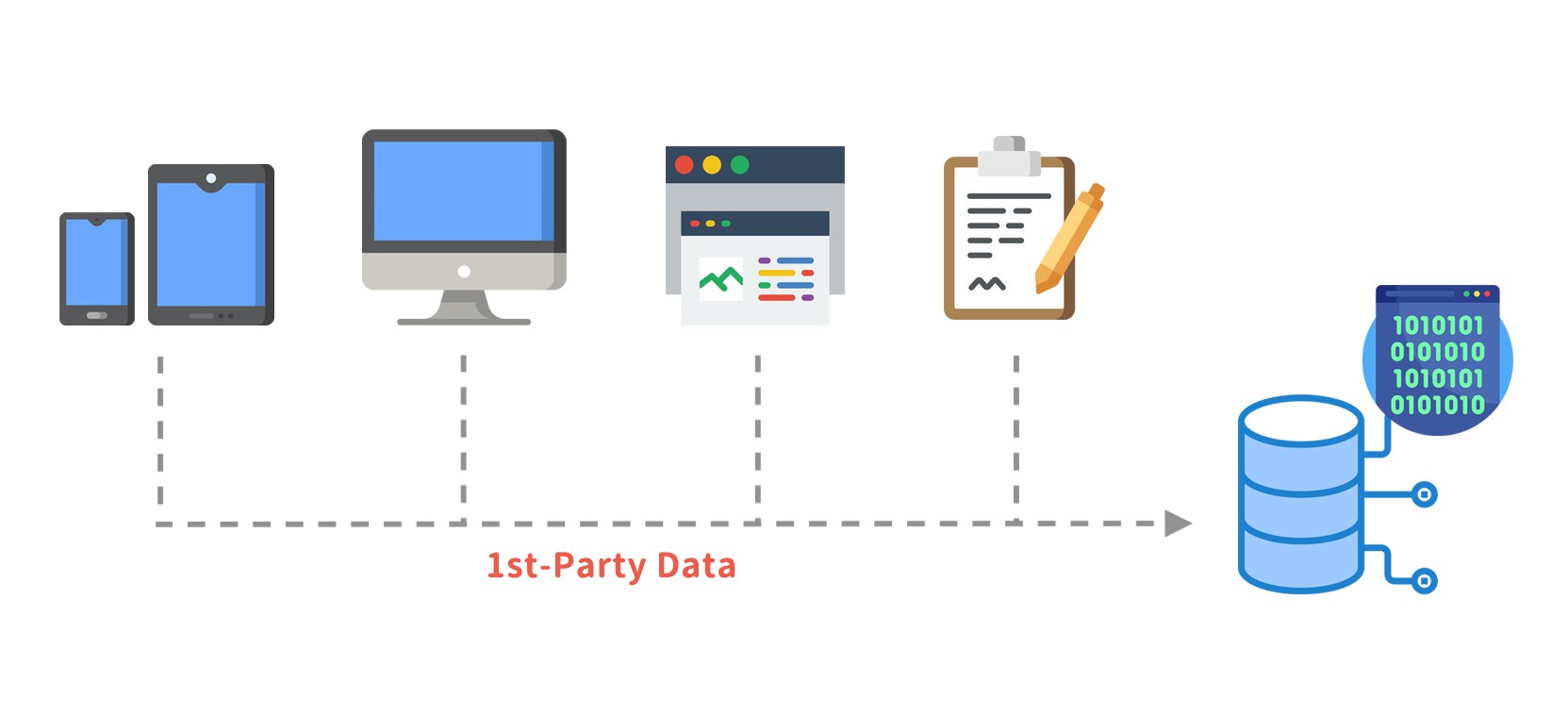
First-party data stores personally identifiable information such as name, email, phone number, and address. Beyond whether someone is a customer of the brand, their purchase information, and channel, third-party cookies (third-party data sources), IP location, device information, and more can also help refine your read on consumers' purchase paths and preferences.
Besides importing CRM data to manage a company's real customers, and collecting data from the company's website, mobile app, offline POS system, or various LINE interactions, you can also connect social platforms to collect user information.
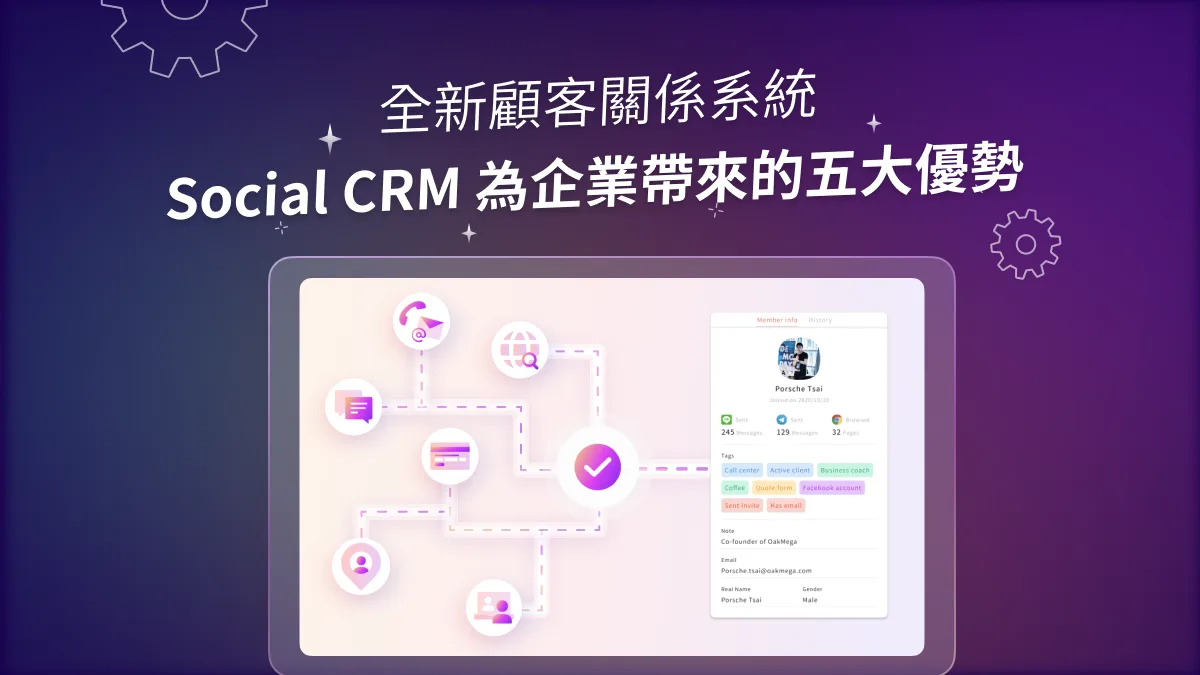
OakMega goes beyond basic LINE member management. Through deep linking, it unifies user identities across multiple platforms and uses AI Mapping to bring everything into a single platform, ready for further use or analysis.
First-party data is personally identifying information that advertisers can use for what's called CRM marketing. With identifiable data, you can analyze what your fans like and keep customers coming back through an Acquire > Engage > Retain loop.
How to choose a CRM membership platform
A CRM system gives businesses up-to-date user information in real time, consolidates all internal customer data, and helps you understand customers through analytics. Sales reps can quickly grasp each customer's status, and marketers can set precise strategies:
- Get the latest data and analytics to help your sales team find opportunities
- Gain deep insight into customers and their needs, and adjust marketing strategy at any time
- Centralize customer information to cut the time spent searching and following up
Some of the better-known CRM platforms today:
Salesforce
 photo from onlinemarketplaces
Salesforce's cloud CRM apps cover sales, service, marketing, and many other uses. They are easy to set up and manage without IT experts: log in and you can immediately start connecting with customers in new ways, with solutions tailored to every business.
Salesforce's revenue grew 29% year over year, and the company expects that performance to continue, forecasting third-quarter revenue of US$5.25 billion. Its system architecture is relatively complete and can adapt as a company grows.
HubSpot
HubSpot doesn't aim to be the only digital marketing tool you use. It aims to help customers Grow Better by providing valuable services. That's why HubSpot built an integration ecosystem, the HubSpot App Partner Program. OakMega is now a HubSpot partner and integrates fully with HubSpot to bring data from every platform together.
FinancesOnline named HubSpot the 2019 Best CRM Software. It integrates with third parties such as Salesforce, Shopify, Microsoft Dynamics, Chatfuel, LINE, BotFat, Pipedrive CRM, SugarCRM, Bigcommerce, Gravity Forms, Base CRM, Google Chrome, Google Dynamics, Snapengage, Dropbox, and more.
- Several bundles to choose from: Marketing, CRM & Sales, and Customer Service Hub
- Personalized email workflows: see which emails, links, and documents customers viewed and when they opened them, so you can personalize your sales approach. Emails are triggered by customers' online behavior and land seamlessly in their inbox at the right time, without the worry of being flagged as spam.
Dynamics 365

Backed by Microsoft's strengths, Dynamics 365 integrates fully with Microsoft's own services and uses Outlook to speed up the entire e-sales process. Its automation features improve your team's efficiency and effectiveness. They reduce repetitive work and eliminate error-prone manual processes, so employees can shift more energy to tasks that create more value for the company.
It runs on the Microsoft cloud to lower operating costs and simplify processes, and integrates with third-party tools such as Power Apps, Microsoft Flow, and Power BI. Its privacy safeguards help businesses meet the requirements of the General Data Protection Regulation (GDPR).
Pipedrive

Pipedrive is built around sales. It organizes sales lists in a back-office dashboard, with the goal of keeping reps focused on selling and closing deals. Setting up an account takes just one minute, and compared with older sales systems that took much longer to learn, it is simple and fast to use.
It can be customized to connect with a company's internal systems. Customer lists from every source can be imported automatically into the CRM for tracking and storage, and customer segments can be sorted quickly.
Conclusion
There are many CRM systems to choose from, so pick one based on your company's situation, sales model, and needs. LINE, for example, lets you collect user data most directly, and BotFat can unify a user's identities across platforms into a single person.
Ultimately, CRM's value lies in user data. Member data enables deeper analysis. With flywheel marketing, businesses put customers at the center, draw more prospects into their services, try to satisfy every person, and make their user experience a happy one.
Social CRM (social customer relationship management) uses social identity to unify user identities with a brand's member data. In our next post, we'll answer the question: What is Social CRM?

📣 OakMega Social CRM: the LINE CRM built for marketers
👏 Your applause keeps us going. Press and hold to clap again and again!